







Building Modular Open Source Electronics with Lukas Henkel


Join us for an in-depth conversation with Lukas Henkel, co-founder of Open Visions Technology, as he shares exciting updates on his cutting-edge open source hardware projects. From modular Linux-based smartwatches to Framework laptop modifications, discover how advanced PCB design techniques are pushing the boundaries of what's possible in open source electronics.
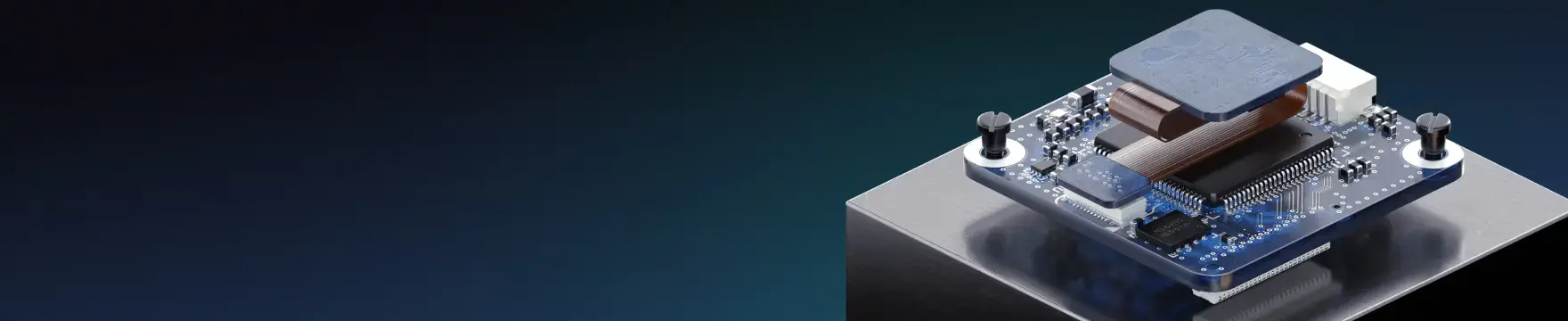
In this episode, Lukas reveals the engineering challenges behind creating a fully modular smartwatch that runs Linux, complete with custom SIP (System in Package) design using HDI PCB technology. Learn about the innovative approaches to packaging multiple modules in an ultra-compact form factor, including the use of specialized low-DK substrates from Thintronics for achieving optimal signal integrity.
Watch the Episode:
More Resources:
- Connect with Lukas
- Lukas on Altium
Transcript:
Zach Peterson
Hello everyone and welcome to the Altium OnTrack podcast. I'm your host, Zach Peterson. Today we'll be talking with Lucas Hankel, co-founder of OpenVision's technology. Lucas has been on the show twice before presenting some very cool open source projects. And if you follow him on LinkedIn, you're probably seeing his updates on the projects he has going on. So I'm very happy to check in with him today on the projects he has in progress at this time. Lucas, thank you so much for being here today.
Lukas
Thanks for having me. Pleasure to be here again.
Zach Peterson
Yeah, yeah, absolutely. I have to say first thing before we start talking a bit more is if anyone out there wants to see what you have going on for the projects that you're working on, they should go check the video description on YouTube and they'll see a link to your LinkedIn page. They can head over there and follow you and get all of those updates. And I have to say, I enjoy seeing those updates pop up in my feed.
Because I always learn something. I always see a new way to do things. And it's pretty cool, especially when you start to look at how you're taking some of these approaches with not just the electrical stuff, but the overall packaging. So I think it's really cool. Yeah, absolutely. So some of the things that you've been working on previously, you had the open source laptop. You had a Coral module, as I recall.
Lukas
Thank you very much.
Zach Peterson
And with the open source laptop, it was pretty interesting because it wasn't just a motherboard. It was like the keyboard and the webcam and the cabling. tell us, what are some of the progress on some of those past projects?
Lukas
Yes.
Lukas
So yeah, let's start with the open source laptop. I think that's a good introduction. I'm not sure where exactly we left the last time, left off the last time, but we've made some progress, especially on the peripherals. So as you mentioned, we have to design a keyboard, we have to design a webcam, we have to design all the interfaces between those sub components. And what we have at the moment is I would say the majority of the peripherals. So we have the whole display,
assembly ready. That's of course the display panel itself, but all the FPCs connecting to the display panel. We have the webcam module and also the keyboard module and trackpad. The trackpad, we still have to test that, but at least the design is ready for testing. So that's something exciting that will happen probably this week or next week. So the biggest part that now is missing is of course the main board. We were struggling with how we
to set up the architecture because as you know using those advanced processors that could handle a Linux operating system but also Windows operating system and while also providing a good user experience accessing this documentation is very very difficult especially for an open source project none of the big names is really thrilled about you publishing all the documentation
So that was something that was holding us back for quite some time, but we now found a good approach on how we would like to deal with that. And that is we are going to use the framework laptop mainboard form factor, meaning in the first phase of the open source laptop project, we can just use one of the framework mainboards.
to provide, I would say, the good user experience. For us, Windows is a must-have and Windows is very hard to do with processors that provide an open documentation. So we thought we go an intermediate step, use basically an off-the-shelf mainboard while we are also working on an open source alternative to the framework laptop mainboard that could then also be of course used in the framework laptop itself. So not just our open source laptop but also the
Lukas
framework laptop 13 that is already out there.
This won't be as powerful as of course the Intel AMD based mainboards that Framework offers, but it's fully open source. You can develop your own drivers. You can even of course dive into the mainboard design itself and modify it. And yeah, that's the approach we're taking right now. So the Framework laptop motherboard form factor with an XP processor and will be compatible both with the Framework 13, but also our laptop design.
Zach Peterson
Now you brought up the track pad and the display panel. Are those off the shelf components or I mean, did you actually like get all the way down to the nitty gritty of like designing the actual like mechanical and electrical interfaces on like the track pad and the display panel? Really?
Lukas
We did, yeah. So the only thing we did not go into detail is getting a custom display panel that's just out of scope and out of budget, But what we did is design all the interfaces directly to the display panel. So that's just an EDP, a display part interface with a few control signals and of course the backlight driver supply.
and rerouted this interface through a small FPC over the hinge directly to the back of the display panel and the same with the trackpad. So the trackpad design is completely custom. We're using an ASIC that evaluates the touch sensor matrix and we're interfacing that with a RP2040, a small microcontroller that then converts this to a standardized USB HID interface. Meaning both the trackpad and the keyboard could be used
standalone because these are just USB devices that you could plug into any laptop or any computer for that matter.
Zach Peterson
And then could you clarify one thing? So you mentioned you're going with an NXP processor for the main board. But I think you said Windows was really difficult to get to run on something like this. the NXP will support processor. Will it ultimately support Windows? No, it won't.
Lukas
No, that's the thing why we've gone this intermediate step with the framework motherboard.
because in the first step, our own main board won't be able to support Windows, but we still want to offer a variant that can support Windows. Later on, we are planning to use a more powerful processor. At the moment, we looking at the Qualcomm X Elite, but of course, the documentation for those is not public. So we have to see how much of that we can actually publish. But I have to say, in the past few weeks or months, Qualcomm has opened up quite a lot when it comes to providing access to the documents.
So there might be a chance that we can even release good insights into the main bot design using a Qualcomm chip.
Zach Peterson
Okay, I've always found that interesting that, you know, those vendors don't want to release even a portion of their documentation publicly because you would think it would, you know, drive use of their products.
Lukas
Yeah.
Lukas
Yeah, yeah, it's curious. I'm not sure exactly what the thought behind this there because what we of course now have access to the documentation, but that's only possible because of the verified company account. And looking at the docs, we can say it wouldn't make reverse engineering their product easier if that is what those companies are afraid about. So I'm not sure what the politics are behind that.
Zach Peterson
Well, and if someone really wanted to reverse engineer it, they would just buy a processor. Yeah, they could do it anyway. So I don't know how the documentation is going to help.
Lukas
They can do it anyway, yeah, definitely.
Lukas
Yeah.
Yeah, I agree. But as I said, now we see a shift at least with Qualcomm. And I know that other vendors might follow up soon, MediaTek being one of them, for example. But we have to see how much of the low level details we can actually share. It's still a bit in question. And that's also one of the main points that has been holding us back with the Laptop project. The peripherals are relatively easy in comparison because there are many very
available of all those chips that you can use. for example for the trackpad there are of course also chips which are pretty closed off when it comes to the documentation but Azotek for example you can find the hardware design documentation, the driver documentation and so on that's all publicly on their website. that makes the design of the peripherals a lot easier compared to the mainboard itself.
Zach Peterson
And so, Qualcomm, did they reach out to you or did you contact them?
Lukas
No, no, we reached out to them and we are of course also working on other client projects at the moment. using Qualcomm chips, we do have access to the ecosystem. But of course, with those projects, it's a different story than the open source projects.
Zach Peterson
Sure, that makes sense. So that's the open source laptop. You are also working on a Coral module and then a IMX module. We called it the Pi MX module, I believe. Give us the updates on those.
Lukas
Yeah, exactly. Sure. So with the Pimax 8 module, I think the last time we've talked about that, we were pretty much finished with the hardware design. I can now also announce that we also finished the software, the BSP side of things. So what we're doing now is basically preparing the Crowd Supply campaign. So we were launching the open source Pimax 8 module on Crowd Supply.
And yeah, it's basically only paperwork at this point. So getting ready for the certifications, setting up all the financial architecture, meaning defining for what price we actually can sell the module, what would be the different price breaks, would be the variance, for example, when it comes to the memory, the storage, and so on. But yeah, the technical side of things is pretty much sorted out. And now it's only the overhead that's missing.
Zach Peterson
Yeah, that and that one was pretty interesting because it's it's almost like a packaging project. I mean, it's essentially just a really small PCB. Right. But it's almost like you're really getting to that. You're really getting to the border where you start to have to actually start doing packaging.
Lukas
Well, not quite. That's more something for the open source smartwatch project. The Pimix 8 module is still, I would say, HDI, as far as you can call HDI standard technology. it's nothing too exotic. It's not something that you see often in open source projects, probably because it's just an expensive technology.
Zach Peterson
Well, that's true. Yeah. I mean, a lot of projects, they're much simpler. And I think part of the reason for that is it kind of helps people learn. Whereas, this is kind of taking it to the next level in terms of open source projects.
Lukas
Yeah, true, but I mean, there are also a of people that would like to learn how to do HDI design, example, and what to look out for when you're doing HDI PCB.
We thought, well, there is something missing when it comes to open source projects and that's just showing how these high density boards are designed. So we thought, well, that's even better, a good opportunity to showcase that on the Pimix 8. And then of course, having a fully open source alternative to the Raspberry Pi C4 models is of course also a huge plus, not only for the enthusiasts, makers, also for industrial customers.
Zach Peterson
Sure, So that product is not necessarily being sold in its own enclosure. That's something that's gonna be sold to customers who just wanna put it on their main board basically as a module.
Lukas
Yeah, yeah. So it's designed as a drop-in replacement for the Raspberry Pi CM4 module. There are lot of, surprisingly many, industrial customers actually using this kind of module for industrial automation, for industrial vision use cases and so on. But of course, mean Broadcom, since you've talked about vendors with closed-off documentation, Broadcom is well known to be one of them. And we were always wondering why
maker-centric development board basically.
Yeah, chose to use Broadcom chips because those chips are the least accessible, I would say. So for us, the obvious choice was to go with a processor that has open documentation that you can just download. So in this case, NXP and provide that to the maker scene because we think a lot of the enthusiasts can build much cooler things with these kind of accessible open source projects than just buying like a Broadcom module of some sorts.
Zach Peterson
Yeah, yeah, I totally agree. Now you mentioned another project that you've been working on, I believe, just a moment ago, which is the open source smartwatch. Yeah, tell us about that.
Lukas
Yes.
Sure, I mean the project started, I'm not quite sure, think something like eight months ago and
Let me remember, I'm not actually sure who kickstarted that at beginning. yeah, right. It was one of our software developers who actually thought, well, I want to develop a Linux based smartwatch. So not just a smartwatch with a microcontroller. I mean, there are a lot of those designs out there already based on the ESP32, for example. But what we wanted to do was provide a smartwatch that is both modular in terms of the hardware, but also easy to work with on a
software level. So that's why we've chosen a processor that can run basic Linux. And this way you open up the smartwatch design to a much wider audience when it comes to software development. Because there are many software developers out there who can design good UIs on a Linux based system. But when it actually comes to going bare metal and writing applications directly in C, not many people are out there that can do that. At least not as
many years, those who feel comfortable working in Linux environment. So yeah, what we're doing is basically designing a modular smartwatch that runs Linux. I can also show you if you like the current status of the design.
Zach Peterson
Yeah, go ahead and start bringing that up. while you do that, let me just ask one question here. So the idea with this open source smartwatch is somebody could write some unique application in C, basically run it as an embedded application on the smartwatch. And they're just piggybacking off of an embedded Linux OS.
Lukas
Yeah, yeah, you can. I mean, you don't have to write your applications in C. You can write it in whatever language you feel comfortable with. Of course, there are some limitations when it comes to the power budget. So running scripts or UIs that are very resource-hungry is, of course, not a good approach for a smartwatch.
but you don't have to go to the lowest level and write C applications for microcontroller. You can just use your tool of choice that runs on Linux.
Zach Peterson
Yeah, I can imagine the Python developers out there doing something interesting on this.
Lukas
Yeah, probably. That's our hope as well. So what I can show you at the moment is the hardware design. I can also dive into the electronics design a little bit later on.
Zach Peterson
So real quick, so for folks who are listening on audio, head over to YouTube and you'll be able to see what we're looking at on Lucas's screen. Right now, we're seeing the actual watch band, the watch body, or the enclosure. And then I think you just put the display on top of it.
Lukas
Yes, exactly. So what you can see here is basically the completed mechanical design for the watch. It's an aluminium body that supports 20 millimeter standard watch bands that you can get off the shelf.
And it has almost all the features that any smart watch you find in the market would have. for example, blood oxygen level, rate monitoring, skin temperature monitoring, all that is integrated into the rear part of the casing. can show you in just a minute how the whole modular approach works.
And then of course you have your digital crown, which is basically a rotary encoder that's also pushable. for navigating through the menu for volume control and whatnot. And then also you have your standard push button, which in our case hides a little secret because it's also not only a push button, but you can also pull that out of the enclosure and get access to a USB-C interface, as you can see here. And this USB-C interface you can use, of course,
for charging but that will also be the access port to debug the system to write your own applications and so on so just to make working with this open source platform a little bit easier. And let me just get that in here. The whole modular approach
comes from the fact that this system is basically three modules sandwiched together. So we have the display assembly, which is a module that can be updated and swapped separately. So in case the display breaks, can just get this module as a replacement part, put that on there and you're good to go. Or you could even use other variants of the display module. For example, we're also working on an E Ink display module.
Lukas
version. That's of course good for daylight applications, for applications where you need an even longer battery life. yeah, this kind of modularity in a smartwatch is, I would say, not that common in the industry at the moment. But we think, especially since it's an open source project, it just provides so much opportunities for customizations or just for custom projects that build on some part of the smartwatch as a basis, probably the
mainboard and the overall frame. But the display module and the back panel, those are relatively simple parts that you can customize yourself. And 3D print with a good SLA 3D printer, for example.
Zach Peterson
Yeah, so I see here now how you get to this modular structure. And this was really interesting because when you first said it's modular, I was wondering how do you make a smartwatch modular? And then you said there's three modules. And now I'm wondering, how do you pack three modules into this very tiny form factor? Because I mean, it's essentially a watch. And you would expect that the actual watch portion isn't going to get too thick.
Lukas
Yeah, I mean that was definitely a challenge to have those three separate modules while not having a thickness that is above, I would say what's typical for these smart watches. So at the moment we had 11 millimeters including this bump on the back side for the PPG sensor. But it was definitely a challenge.
We would have liked to go even more user friendly by getting rid of all those tiny FPC connectors, interconnects, and just use spring-loaded connectors for some sorts. in this case, you could just basically undo those four bolts in the corners and the smartwatch would fall apart into those three separate modules. But you still have to connect those tiny FPC port-to-port connectors. There unfortunately isn't really a way around.
that would make the watch either too expensive or just too bulky.
But yeah, packaging all of that was definitely a challenge. I mean, I can try and see if we can get a cross sectional view here and there you will see there's not much space left in the design. So most of the volume is taken up by some component in there, be that the battery, of course, that's the largest component, but then also the main board with our own SAP on there, that takes up a lot of space as well. So yeah, packaging.
packaging all of that into this tiny form factor was definitely a challenge, for sure.
Zach Peterson
was the next thing I was going to ask you said it's your own SIP that's in here so that's the top module that connects to the display
Lukas
Yes.
Lukas
Yes, I can show you that one as well. So what you can see at the moment is the main board and the large shielding can above the main board.
Zach Peterson
Ahem.
Lukas
And under that shielding can we have a small system package that we've designed specifically for the smartwatch. I can also show you the Altium Designer view of that because that SRP is already finished. We've already tested that to some extent. We're still working on the software side of things. But the power distribution network and so on, so all the basic components are already functioning.
I can show you the design in all of you real quick.
Zach Peterson
Yeah, definitely. So a couple things while you bring that up. So this SIP, this is totally different from the Pi module. So this was custom designed specifically for the watch. But since it's a module, I'm assuming someone could use it for whatever else, right, some other project.
Lukas
Yes. Yes.
Lukas
Exactly. Yeah. Yeah. I mean
Lukas
Yeah, yeah, that's also actually one of the ideas that this will be an off-the-shelf component. So if you're designing your own variable solution or just any solution that requires space efficient compute, you can just use this SIP and don't have to worry about all those very fine-pitched components and expensive PCB technologies.
Zach Peterson
And then on that SIP module, you said you had a shielding can. I think the most common usage of a shielding can, or maybe most perceived common usage, is for EMI issues, shielding. Was that the reasoning that you have here, or did you need it for mechanical purposes?
Lukas
Yes.
Lukas
Mm-hmm. Yeah.
Lukas
Both actually. since we decided to go offer this SIP as an off-the-shelf part, it's of course easier to have, I would say, a fully enclosed solution, not only from the feature set and functionality side of things, but also from the electrical side of things. So if you put a shielded module in your system, you can be very confident that this module is not causing you any EMI issues. The shielding also makes automated
assembly a bit easier. mean, in the end, of course, the SIP will be an over-molded module. So it's also easy to handle that in a pick and place machine. But in the first version, we are not offering this module in an over-molded package, but only with the shielding can on top. And there also a pick and place machine now has an anchor point to pick the module out from a tray or from a table and place it on your own custom PCB.
Zach Peterson
Yeah, I can imagine also the shielding can giving just a little bit more mechanical robustness as well in this stack of modules. So maybe protection from mechanical shocks, dropping it, that kind of thing.
Lukas
Yes. Yes, definitely.
Lukas
Yeah, yeah. And especially if you're implementing or if you're integrating this module in your own variable, where I guess space is just as much constrained as in our own smartwatch design, you probably have components directly above the SIP. Be that FPCs, for example, or I don't know, other boards where you only have a very, very small gap between the SIP and your board that stacks on top.
And if you have some kind of flexure in your device or just dealing with tolerances, you don't want to run the risk of those components touching. So what you can do now is just put a little insulating film on top of the shielding can. You can stack your PCBs on top of that or route your PC on top of that. And you're not running risk of shutting anything out or something like that.
Zach Peterson
I see. OK. And so here on screen, you have the SIP brought up in Altium Designer. So I can see a few things in here. It looks like there's multiple. you already turned on the other view. I was going to say, it looks like there's multiple BGAs. Not surprising, given that it's a very small form factor. A lot of the space is taken up by the main processor, it looks like.
Lukas
Yes.
Lukas
and
Well, it's actually the memory. So in this case, both the storage and memory takes up most of the space. That's also a reason why many vendors like Qualcomm, for example, provide those POP package-on-package components where you can basically stack the memory and the storage on top of the SoC. Or what Apple does, for example, in their smartwatch SIP, they are sourcing the memory as their die.
Zach Peterson
Okay.
Zach Peterson
.
Lukas
gluing that on top of the main SOC and bonding it back down to the main carrier PCB. But what we are doing here is using a package that combines both an EMC and the LPD for DRAM in one package. And we're interfacing that with the main SOC, which is actually the smaller package with the higher pin density that you can see on the right side here.
Zach Peterson
So with this PCB, having multiple BGAs, high pin count, especially on that processor here in the lower right corner, obviously going to be HDI. Yeah. OK. So here you would have, I don't know what the pitch is, but probably 3 or 4 mil outer layer, blind buried vias. And that's how you're doing the fan out from the processor. Because that's what looks like to be the smallest pitch is that main processor.
Lukas
Yeah, yeah, that's true. So the main processor has a pitch of 0.4 millimeters. That's still, I would say, pitch that's manageable when it comes to selecting the PCB technology and the PCB vendor. If you go below that, so for example, 0.35 millimeters or 0.3 millimeters, it gets really difficult even finding a good vendor or reliable vendor that can manufacture your PCBs. So we were a bit
lucky in this case, the processor that we are using is the iMX8 ULP, also from NXP. And we were lucky in the sense that the package is still manageable with, I would say, somewhat common PCB technologies. It's still a high-tech PCB. So in this case, we're looking at a 10-layer, any-layer design, so meaning there's a laser wire between each layer on the PCB, which is, of course, great for routing density because you can switch from any layer to any other layer that's
that's also where the name is coming from. So you're not using up space in the layer stack with through-hole vias, which is often a problem with through-hole via layer stacks that most of the space on the routing layers is actually taken up by vias and not by the actual routing itself. This is not a problem with any layer design. And that's also the reason why you're using it here. But still to break out the 0.4 millimeter package,
you need very small vias. So in this case we're using vias with a diameter of 200 microns and the drill itself is 85 microns. The line width and spacing is still somewhat standard with 75 microns.
But once you go below that, if you're using a 0.35 millimeter package, for example, you need space tracing, trace spacing and trace widths of 50 microns or even 45 microns. And there are very few PCB vendors who can manufacture that reliable.
Zach Peterson
Yeah, I was just going to say at 75 microns, you're kind of right at the limit of what a lot of US fabricators can do. And I don't produce in Europe, but I would imagine it's probably the same in Europe.
Lukas
Yes, yes, definitely, definitely.
That's also one reason why we've chosen that approach because while it's still a high tech board that's also rather expensive to manufacture, it's still accessible to the people who would like to modify this board, for example, because there are just enough PCB vendors who can manufacture this. There's still something a bit special about this design, and that is we are using a new substrate from a company called Thintronics. It's a Silicon Valley based startup.
They are working on high tech substrates with very low decay. So in this example, we are looking at a permittivity of around two, maybe even a bit lower. And what this allows us to do is still hit our impedance targets while using 75 micron trace widths, but while also having prepreg layers that are
very thin, so in our case it's 35 microns layer height. And if you're not using a very low decay substrate with 75 micron trace width and those very small or very thin preprex you won't be able to hit your impedance target. But with this substrate it's still possible even with a PCB that's only 0.5 millimeter in total thickness with 10 layers, 10 signal layers.
Zach Peterson
Yeah, when I was, I had worked with Thintronics for a brief time. And when I was working with them, the materials were still a bit far from commercialization. And I haven't been in contact with the guys at Thintronics since we separated. But it sounds like they've made enough progress to the point where they can at least get you a sample to build.
on their material.
Lukas
Yes.
Yes, yes. There are also some interesting updates and I don't think I can share them yet, but this applies to exactly what you just said, which vendor will manufacture the SIP using the Thentronix material, how accessible is the Thentronix material. So there might be some interesting development that we can hopefully share really soon, but it's definitely now something that can be considered for commercial projects.
Zach Peterson
Very cool, very cool. Well, I would encourage anyone who is listening out there who's interested in that to, again, go take a look at the link in the video description, head over to LinkedIn, follow Lucas, and you'll be able to learn all about that stuff when it comes out.
Lukas
Exactly, yeah, that's right.
Zach Peterson
So this is one of the projects that I've seen you post about quite a bit recently. What else do you have in the pipeline? Is there anything that you can share?
Lukas
Well, we working on a few things. Not all of them are open source, but some of them will definitely be accessible to the consumer electronics market, I would say. One thing, for example, I already mentioned that we using the Framework Laptop mainboard, now also on our open source laptop.
But we also working on different modules for the framework ecosystem. So one of those modules is an SDR module that slots into the back of the Framework Laptop 16. So the Framework Laptop 16 is a bit unique because it has an expansion bay where it can slot in a graphics card, which for a laptop is quite unusual. But that also means that there is an expansion bay available
where you have a high bandwidth interface, 3D host processor. So in this case, it's a PCI Express Gen 4, I think with eight lanes, if I'm not mistaken, and also power, of course. And you can do a lot with this kind of bandwidth and this kind of power. And what we are doing is integrating a software defined radio into the form factor of the graphics card that can be slot into the back of the laptop. And you can use that as a signal analyzer. actually started
this project for a customer in the defense space. So the idea is to use this module as a signal intelligence system for counter US use cases, meaning we can basically record and decode communication from UAVs to the ground station. That's how this project actually started. But it's much more than that. It's, as I said, an SDR system that you can use just as that, but also
as a signal analyzer for scientific use cases, for lab use cases and so on. And I actually have the prototype of the shell here, so I'm not sure if you can see that, but that's how the expansion shell looks like. In here we will have of course the cooling solution and in the middle sits the SDR module itself with the compute and you then just slot that back into the framework Laptop 16 where you can interface
Lukas
over PCI Express with this exact module.
Zach Peterson
Now, when you brought up SDR, Software Defined Radio, my mind immediately went to, oh, defense applications. And because you're doing it on a laptop, it's something that somebody in the field could use.
Lukas
Yes, yes, exactly.
Zach Peterson
Did you get an inquiry for this to do this kind of thing or did you guys just come up with the idea?
Lukas
A bit of both, I would say. So we did tell our customer what's possible in theory and how we can design electronics for defense applications that is a bit more reasonably priced, let's say. And one way to do that is to go a bit more into the direction of typical consumer electronics. I mean, of course, there are drawbacks. This is not something that will be shock and vibration proof to the same extent as is required.
by the MILF standards of course. But it's a unit that's very cheap to replace in comparison and as long as you're not using it I would say on the battlefield itself but behind the lines let's just say this is still a very very viable solution.
And there are other use cases, of course, in security applications where you could make use of such a versatile system because you can decode basically anything between 70 megahertz and six gigahertz or even jam because what we're doing here is we're integrating a two-volt power amplifier. So you can also transmit quite a bit of power. So it's a very, very versatile system that paired with the Framework Laptop 16 and the Compute.
that comes with the Tremoloop Top 16, you can do quite a lot with such an architecture.
Zach Peterson
And then you're going to make the files for this SDR module public as well. No, you're not. OK.
Lukas
No, this won't be public. mean, there are also, of course, some concerns when you make something like that public who will use those kind of files. You don't have that under control. we will make the operating system somewhat accessible so that you can write your own decoders that could then run on the FPGA, for example. But the hardware design won't be public for the system.
Zach Peterson
And then last thing, you mentioned it's a PCIe Gen 4 8-lane interface. I think that's probably good enough for some accelerator expansion cards, if you were going to do like an AI accelerator. Would you agree?
Lukas
yeah, for sure. Yeah, that's plenty of bandwidth. Usually most of the accelerators are the ones that we are working with, also for our smaller module. For example, on the Pimix 8, we are now also integrating the Halo 8 accelerator. These are usually only four-lane PCI Express interfaces. And that's plenty for, I would say, your standard use cases where you have one or two cameras that are streaming at 4K and 30 FPS, for example.
Zach Peterson
You
Lukas
So yeah, 8-lane interface, PCI Express Gain 4, that's plenty of bandwidth to play with.
Zach Peterson
Very cool. Very cool. Well, again, third time saying it. I hope everyone that's listening will head over to YouTube, look in the video description and find that link to Lucas Henkel on LinkedIn. Or of course, just go on LinkedIn, search for Lucas. I'm sure you'll see all of his awesome posts with all these project updates come up. Lucas, this has been so cool to talk to you. I always love getting these updates on this projects. And as all this is rolling out, I'm sure we'll talk again.
hopefully soon in the future.
Lukas
Sounds great, yeah, thank you very much.
Zach Peterson
Thank you so much for being here today. For everyone that's out there listening, we've been talking with Lucas Hankel, co-founder of OpenVision's Technology. If you're watching on YouTube, make sure to hit the like button, hit the subscribe button. You'll be able to keep up with all of our podcast episodes and tutorials as they come out. And last but not least, don't stop learning, stay on track, and we'll see you next time. Thanks, everybody.

About Author
Related Resources
Related Technical Documentation
Solutions for Every Role and Team
- Discover and evaluate design options earlier
- Develop in one shared workspace
- Scale with control and compliance
- Connect every stage of hardware development
Learn More
Thank you, you are now subscribed to updates.