









What Every Hardware Startup Should Know About Sourcing Electronic Components


In my last blog I gave a broad overview of the electronic component purchasing landscape. This time I’m going to dive deeper into how to source electronic components, with a focus on issues of particular interest to hardware startups.
NRND - Here be Dragons
Most component manufacturers manage the "lifecycle status" of their components. The biggest red flag when working on a new design is a lifecycle status of “NRND” (Not Recommended for New Designs). You may have no problem buying small volumes of these components, but when you’re scaling up for a production run and you can’t source enough chips from an authorized distributor you're going to be very, very unhappy. NRND parts are typically still for sale, but the manufacturer is steering new designs toward a replacement.
You can find lifecycle status information on manufacturer websites, or through Octopart's lifecycle status data.
Authorized vs. Non-Authorized Distributors vs. Brokers
Authorized distributors only source components directly from the manufacturer so you can be sure that the components you receive are authentic and have been stored and handled correctly. Buying from an authorized distributor or directly from the manufacturer is the recommended ways to buy components.
We clearly indicate which distributors are authorized on Octopart and we display them above everyone else.
You might find that authorized distributors have no stock but a non-authorized or “independent” distributor does. Buying from an independent carries some risk, such as receiving damaged or counterfeit parts. The ERAI monitors this channel and can help you in mitigating risk if you need to go there.
Sometimes you really can’t find a part in stock anywhere and you need a broker to scour the excess inventories of other companies. This is the riskiest, and often most expensive way to procure components. If you’re designing a new device and you’re working with a broker to procure parts, you’re doing it wrong.
Compliance Documentation
The time to collect documentation on RoHS and REACH compliance is during the design phase. Don't wait until you've designed your board around a non-compliant part! Compliance documentation is also available through the component manufacturer, or through us.
Shop Around
If you’re designing around a type of chip manufactured by more than one company, take advantage of your leverage! A few calls to salespeople can yield great results, especially if you can convince them that your product is going to have big volume down the road. Distributors sometimes receive pricing incentives from manufacturers to get the manufacturer’s part into a new design and you may be able to get some of those pricing incentives passed down to you.
Identify Alternates, Avoid Single Sources
If possible, choose parts that have drop in replacements made by multiple manufacturers, and specify exactly which are acceptable replacements in your bill of materials (BOM). This is good practice not only with semiconductors, but with passive components too. Your contract manufacturer will thank you. No one likes a stopped assembly line because of an unavailable single-sourced part.
Watch Out for Partial Reels
At volume, you’ll get better pricing if you buy full reels. If you need 4000 chips and each reel holds 2500, and after buying two reels, you'll be left with a partial reel of 1000 unused chips. Contract manufacturers may not credit you for partial reels so don’t assume you’ll only get charged for the parts you use. Come to an agreement about what happens to excess beforehand.
Scaling Up, Get More Than Just Better Pricing
In addition to better pricing when you scale up your purchasing volume, you can also negotiate better payment terms, allowing you to postpone payment of the components until 30 days (or more) after delivery. Or you may be able to get a distributor to guarantee available stock at a fixed price in the future which mitigates the risk of parts going out of stock and price fluctuations. It’s worth making some phone calls and shopping your BOM around to different distributors to see what kind of deal you can get.
Sign Up for the Octopart Newsletter
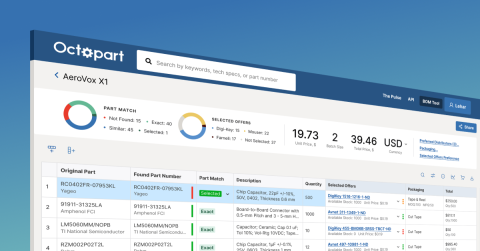
Our newsletter is a monthly source of all things component-related. Sign up here! And of course, use Octopart to find the parts you're looking for. Ready to source your first production run? Upload your BOM to Octopart to compare distributors and check lifecycle status.
Frequently Asked Questions About Sourcing Electronic Components
What does the NRND lifecycle status mean?
NRND stands for Not Recommended for New Designs. The manufacturer still sells the part, but is steering new designs toward a replacement, so check the lifecycle status before you commit a part to a new board.
What is the difference between an authorized distributor and a broker?
Authorized distributors source components directly from the manufacturer, so you can be confident the parts were stored and handled correctly. Independent distributors and brokers buy excess inventory from other companies, which adds risk, such as damaged or counterfeit parts.
When should a hardware startup collect RoHS and REACH compliance documents?
Collect compliance documentation during the design phase, before your board is built around a non-compliant part. The component manufacturer can provide it.
Why list alternate parts in your bill of materials?
Specifying approved drop-in replacements from multiple manufacturers keeps your contract manufacturer from stopping the assembly line when a single-sourced part becomes unavailable.
Why avoid partial reels?
Contract manufacturers may not credit you for unused chips left on a partial reel, so agree beforehand on what happens to the excess.

About Author
Related Resources
Related Technical Documentation
Table of Contents
- NRND - Here be Dragons
- Authorized vs. Non-Authorized Distributors vs. Brokers
- Compliance Documentation
- Shop Around
- Identify Alternates, Avoid Single Sources
- Watch Out for Partial Reels
- Scaling Up, Get More Than Just Better Pricing
- Sign Up for the Octopart Newsletter
- Frequently Asked Questions About Sourcing Electronic Components
- What does the NRND lifecycle status mean?
- What is the difference between an authorized distributor and a broker?
- When should a hardware startup collect RoHS and REACH compliance documents?
- Why list alternate parts in your bill of materials?
- Why avoid partial reels?
Solutions for Every Role and Team
- Discover and evaluate design options earlier
- Develop in one shared workspace
- Scale with control and compliance
- Connect every stage of hardware development
Learn More
Thank you, you are now subscribed to updates.