
What Is PLM (Product Lifecycle Management)?

At a Glance
Learn what is PLM and why it matters. Discover how modern product lifecycle management keeps designs, BOMs, and decisions aligned from idea to production.


Hardware teams are great at designing products. What’s been notoriously hard for them is keeping track of everything surrounding the design as it moves from idea to reality, and through the duration of its use. That’s where PLM, or Product Lifecycle Management, makes life easier.
From conception to retirement, PLM keeps hardware teams on the same page and makes sure the end user gets the most out of your hardware. However, PLM has been a “necessary evil” for decades, and teams have found themselves putting up with using clunky legacy PLM tools rather than wholeheartedly embracing them.
But PLM exists for a reason. Over time, important files get copied, BOMs drift, decisions made in email or Slack threads get lost, and months later, no one remembers why a component was chosen or which version actually shipped.
This is the problem PLM was created to solve, and it's significantly better in 2026.
Key Takeaways
- PLM helps engineering teams keep track of what they’re building, how it’s changing, and why those changes were made.
- PLM exists because designs, BOMs, and decisions easily drift out of sync as products move from design to production.
- Rather than replacing CAD or ERP tools, PLM connects them, acting as a shared source of truth across engineering, manufacturing, and supply chain.
- Modern PLM focuses on clarity and coordination, reducing errors caused by version confusion, manual handoffs, and lost context.
- As hardware teams move faster with more complex products and global suppliers, PLM helps preserve product knowledge over time.
Why PLM Exists
Many teams just starting out in hardware can get by without PLM early on, relying on Google Sheets or Excel to act as the repository of all knowledge. When teams are small, that can work well enough. But as the product lifecycle grows and the team grows, management can quickly become complicated. This is where PLM starts to make a clear difference:
|
With PLM |
Without PLM |
|
Single source of truth for designs |
Information scattered across spreadsheets, drives, and emails |
|
Clear revision history with approvals |
Version confusion over what’s approved, in production, or experimental |
|
Accurate, connected BOMs |
BOM drift as parts change without clear documentation |
|
Preserved decision context explaining why changes |
Design rationale is lost when projects end, or people leave |
|
Smoother collaboration across engineering |
Manual handoffs that increase errors and slow teams down |
A Product Lifecycle Example
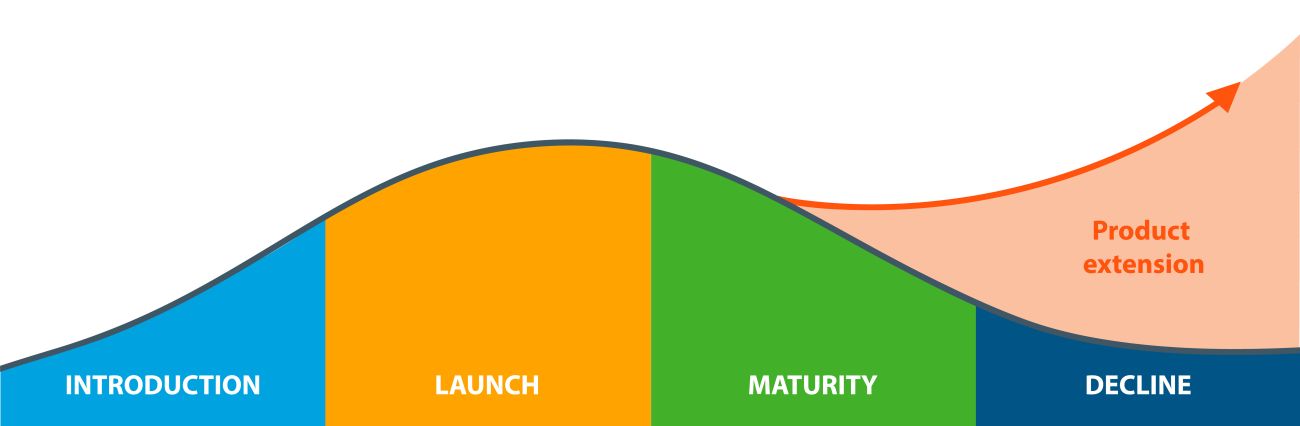
The stages of a typical product lifecycle are:
- Introduction
- Growth
- Maturity
- Decline
During the lifecycle, which can be years or even decades, many updates and revisions occur, each with its own slew of tracking and documentation requirements. For example, a single hardware change can ripple across CAD models, BOMs, supplier availability, and manufacturing plans. Without a shared system, those ripples are easy to miss and often lead to increased human errors and missed deadlines.
PLM was created to reduce this risk. It provides a single source of truth where design files, BOMs, revisions, approvals, and context are all in one place.
The Real Problems PLM Solves
Version Confusion
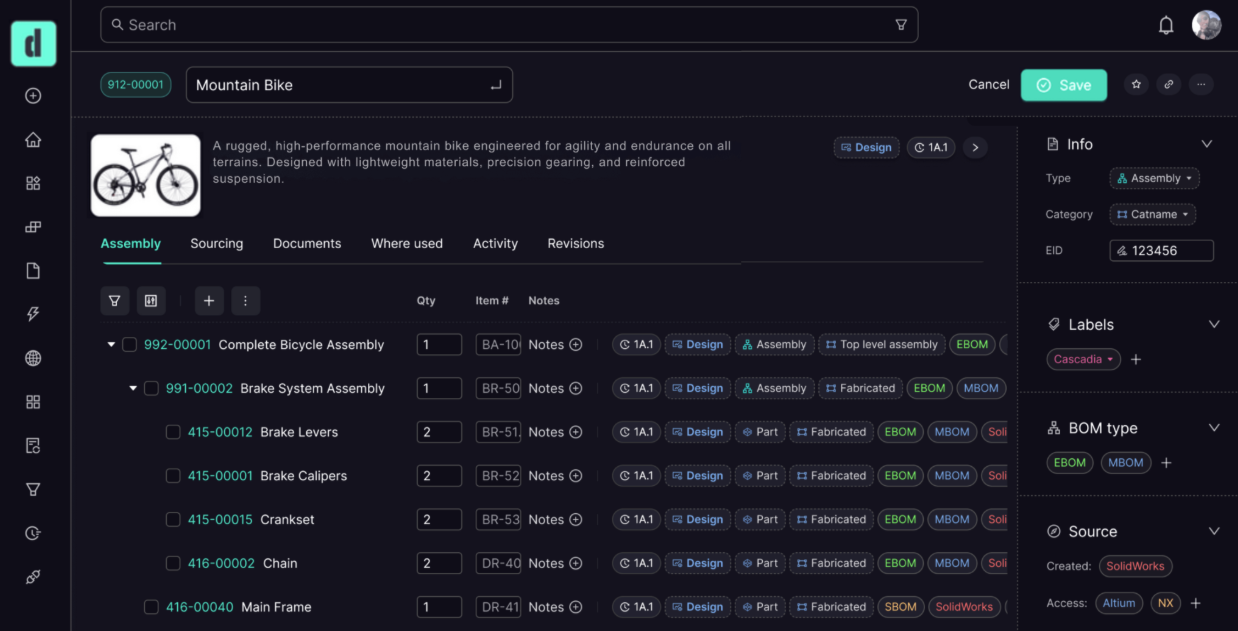
PLM brings structure to version confusion by tying versions, changes, and approvals together. When someone references a revision, it has a clear and traceable meaning.
BOM Accuracy
Bills of Materials (BOM) often start clean but degrade over time as components change, alternates are introduced, and supply constraints appear. PLM links BOMs directly to the designs they support, making it easier to maintain BOM accuracy.
Lost Decision-Making
PLM also addresses a quieter problem: lost decision-making. Without PLM, the reasons decisions were made disappear when projects end, or people move on. With PLM, that context stays attached to the product, creating continuity across iterations, no matter what changes the team undergoes.
A Simple PLM Example
Imagine a team developing a new industrial sensor. Early prototypes pass basic testing, but thermal performance doesn’t meet expectations. The enclosure needs better ventilation, which requires a mechanical redesign and the addition of a small fan.
Without PLM, that change might involve updating CAD files, editing a spreadsheet BOM, messaging manufacturing via email, updating/uploading files on Google Drive, and just hoping no wires get crossed among the couple of dozen people on the project.
With PLM, the enclosure redesign becomes simply a new revision that’s documented within the system. The BOM update is directly linked to that change. The reason for the update is documented. Approvals are recorded. Anyone downstream can see not just that something changed, but also why it has been changed.
How PLM Evolved With Better Software
PLM has a reputation for being heavy and difficult to adopt. Historically, that reputation was due to the complicated and dense legacy software that has been available, mostly for enterprise-level teams. Often, you’d need a dedicated engineer just to maintain the PLM software itself.
Modern PLM Features
Thankfully, modern PLM has changed for the better, and engineers actually want to use it now. Cloud-based systems, better CAD integration, and more intuitive workflows are lowering the barrier to entry. Instead of forcing teams to adapt their processes to rigid tools, newer PLM approaches aim to fit into how today’s agile engineers already work.
Automation and emerging AI capabilities are also starting to play a big role. For example, using natural language to interact with a PLM tool (via a team’s integration of an LLM of choice) can help unify disparate teams who may have different terms and syntax for similar ideas.
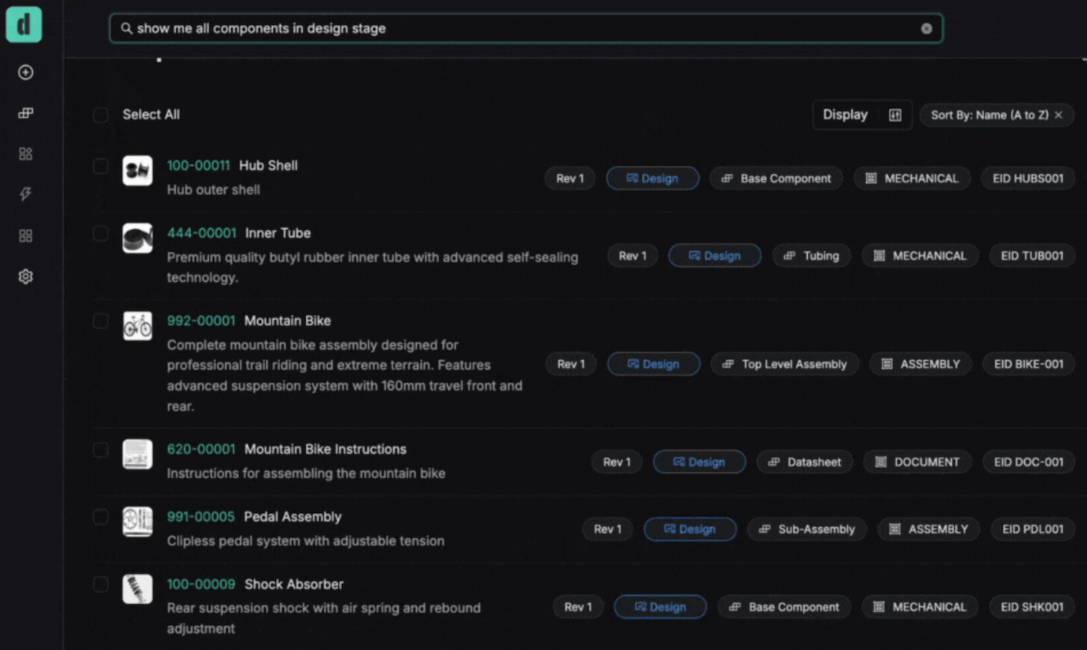
These systems can help surface risky changes, highlight outdated components, or flag supply constraints earlier. This reduces manual effort without removing human judgment, making modern PLM more of a value-add than just file storage.
Hardware development is moving faster, with smaller teams and more global collaboration. At the same time, supply chains are less predictable, and products are more complex.
In that environment, durable product knowledge becomes a competitive advantage. Modern PLMs help teams move quickly without losing control by making sure the product itself carries its own history.
Frequently Asked Questions About PLM
What is the main purpose of PLM?
The primary purpose of Product Lifecycle Management (PLM) is to keep product information accurate, traceable, and shared across teams. PLM helps prevent errors caused by outdated designs, mismatched BOMs, or undocumented changes as a product evolves.
Is PLM only for large companies?
No. While PLM has traditionally been associated with large enterprises, modern PLM tools are increasingly used by small and mid-sized hardware teams that need better visibility and coordination without heavy overhead.
What problems does PLM help prevent?
PLM helps reduce:
- Version confusion between design revisions
- BOM mismatches between engineering and manufacturing
- Lost design decisions and undocumented changes
- Errors caused by manual handoffs between teams
When should a hardware team consider PLM?
Teams often start considering PLM when:
- Multiple people are editing designs and BOMs
- Products require frequent revisions
- Manufacturing feedback arrives earlier in development
- Tracking changes becomes harder than making them

About Author
Related Technical Documentation
Table of Contents
Solutions for Every Role and Team
- Discover and evaluate design options earlier
- Develop in one shared workspace
- Scale with control and compliance
- Connect every stage of hardware development
Learn More
Thank you, you are now subscribed to updates.