









Design for Sourcing in Practice: Choosing Parts You Can Actually Source

At a Glance
This article emphasizes the importance of integrating sourcing considerations into the design process for electronic products. With rising supply chain challenges, the article outlines how adopting a "Design for Sourcing" approach can prevent costly procurement issues that may not surface until production phases.


Supply chain failures don’t start at procurement. They build quietly from the moment a BOM is created without clear visibility into sourcing risks.
A single-source IC with a 52-week lead time, an MLCC approaching end-of-life, or a MOSFET with no footprint-compatible alternates can turn a stable design into a procurement challenge. When these risks are identified late, production schedules may already be locked, engineering changes can be costly, component requalification can take weeks, and delivery commitments become harder to meet.
Design for Sourcing helps teams identify these risks early by balancing electrical performance with sourcing reliability from the start.
Key Takeaways
- Design for Sourcing means considering component availability, product lifecycle, and sourcing options along with electrical requirements during the design process.
- Single-source dependencies, long lead times, and overlooked lifecycle risks can lead to costly redesigns and production delays.
- Checking distributor stock, manufacturer options, lifecycle status, and approved alternates during component selection helps keep a design buildable if supply conditions change.
- Octopart makes Design for Sourcing practical by giving engineers visibility into component specifications, distributor availability, pricing, lifecycle status, inventory trends, and alternate options during component selection.
What is Design for Sourcing?
Design for Sourcing means selecting components that meet design requirements while keeping alternate options open if supply conditions change.
This is becoming more important as component lifecycles get shorter and supply chains are becoming unpredictable. Semiconductor components that had expected lifecycles of around 30 years in 1970 can now have lifecycles of less than 10 years in many cases. This means a part that meets all the design requirements today could become difficult to procure or reach end of life much sooner than expected.
Traditionally, engineering focuses on form, fit, and function, while procurement gets involved later to manage pricing, lead times, and supplier availability. This is where most design decisions start to break down. Design for Sourcing brings both perspectives together early in the design process. This means asking a few additional questions during design:
- Is this part readily available from multiple distributors?
- Does it have multiple qualified manufacturers?
- What is its lifecycle status?
- Are there drop-in alternates if supply tightens?
Where Designs Typically Break Down
Some sourcing risks are easy to overlook during component selection. Common examples include:
- Single source dependency: A design depends on one manufacturer or a component with no qualified alternates.
- Lifecycle blind spots: Components approaching NRND or EOL are selected without considering how they will be replaced when they are no longer available.
- Lead time volatility: Lead times for certain components, particularly semiconductors and some passive components, can be much greater than the design team anticipates.
- Late procurement involvement: The procurement team is not involved until after the Bill of Materials (BOM) has been finalized.
These problems don’t always show up immediately. They surface during prototype builds, ramp-up, or worst, during mass production.
The cost of a forced redesign goes beyond the component itself. The following estimates, from a scenario Accuris describes for a mid-complexity aerospace, defense, or automotive design, show the potential financial impact of sourcing-related design changes.
Cost Category | Estimated Range | Frequency |
Engineering rework | Per change event | |
Post-freeze change | Per change event | |
Re-verification and | Per substitution | |
Production delay (lost | Per program | |
Spot market premium | Per purchase order | |
Post-installation failures | Per incident |
What My Supply Chain Experience Has Taught Me About Design for Sourcing
As an electronics engineer working in the supply chain, I’ve seen closely how designs that are technically solid, thoroughly reviewed, and fully approved can still fail when they reach production.
The problem was never electrical performance. It was component availability.
In the programs I’ve worked on, I’ve seen how difficult things can get when a critical component becomes unavailable after the design is frozen. Finding a replacement is not as simple as sourcing another part. It usually means going back to the design teams, checking compatibility, validating the alternates, and managing the impact on production schedules.
So now, I no longer see sourcing as something that begins when procurement receives the BOM. I see it as a design consideration that needs to be addressed from the beginning.
Design for Sourcing Checklist that I Personally Follow During Component Selection
Start with function, not a fixed part
This gives the design team more flexibility to consider different parts that meet the technical requirements, without becoming dependent on a single manufacturer or part number.
Check availability across the market
A part held in stock by several authorized distributors is a safer choice.
Validate multi-source options
Identify whether technically suitable components are available from multiple manufacturers.
Review lifecycle status early
Check for EOL notifications, NRND status, and other lifecycle risks before approving a component. A component that meets today's requirements may create a long-term supply problem if it is close to discontinuation or has limited future availability.
Build alternates into the BOM
Evaluate suitable alternatives and include approved options in the BOM from the beginning.
Plan for supply challenges
If this part goes on allocation tomorrow, can we keep production running without redesign?
Answering that question involves more than checking stock availability. It means making sure the alternate fits the existing footprint, matches the pinout and electrical requirements, meets thermal and regulatory requirements, and passes any necessary validation before it can be used in production.
That’s why I always use tools like Octopart when selecting components. It makes it easier to check availability, lifecycle status, and alternate parts in one place, giving me a clearer picture of what's available in the market before making a final decision.
How Design for Sourcing Helps Prevent Sourcing Problems
In a traditional workflow, sourcing issues are often addressed only after the design is finalized, while Design for Sourcing takes a different approach by building component availability, lifecycle status, and alternate options into the process from the start.
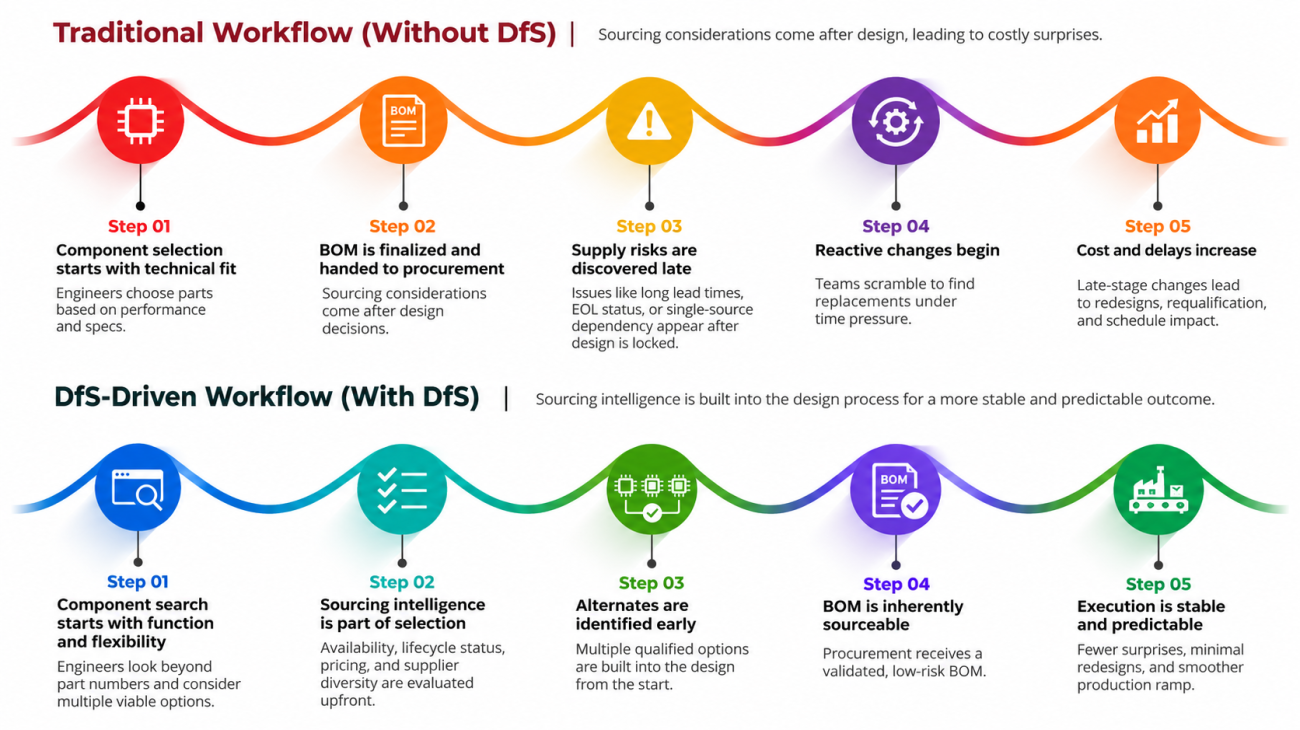
There are a few additional things worth checking to understand how reliably a component can be supplied during production.
A few important factors to look at are:
- Distributor Stock Availability: Verify how many authorized distributors physically hold sufficient stock.
- Inventory History: Look at historical stock levels to identify whether component availability is stable or fluctuates over time.
- Manufacturer and Regional Diversity: Check whether the component can be sourced from multiple manufacturers and suppliers across different regions.
- Lead Time vs. Production Schedule: Compare supplier lead times with the production plan to identify potential supply gaps.
- Alternative Component Availability: Identify suitable replacement components that meet electrical and footprint requirements before finalizing the design.
Evaluating these factors early helps engineering teams make informed component selections while giving procurement better visibility into future supply requirements.
Component Families That Offer Greater Flexibility
Passive components, linear regulators, and discrete semiconductors are often available from multiple manufacturers, giving teams more options when sourcing parts. The 1117 regulator family, with parts from Texas Instruments (LM1117), onsemi (NCP1117), STMicroelectronics (LD1117), and Diodes Inc. (AZ1117), often shares one SOT-223 footprint, though dropout voltage and output capacitor requirements still need checking in each datasheet. Another good practice is to prioritize components available in multiple package options, as this can make replacements easier when availability becomes an issue without major PCB layout changes.
If you want a deeper look at how to approach alternates and package-level flexibility, I’ve covered this in more detail here:
How Octopart Makes Design for Sourcing Practical
Design for Sourcing becomes easier when engineers can review the electrical performance and supply chain considerations together, from the initial component search to the final BOM. Octopart supports this process by bringing component specifications, manufacturer information, distributor stock availability, pricing, lifecycle status, inventory history and alternate part options in one place.
This matters because component changes after design freeze are common. In a March 2026 survey of 439 professionals by Accuris and Fuld & Company, 51% said more than 11% of their designs require component changes after the design freeze.
With Octopart, You Can:
- Find suitable components: Use parametric search to filter parts by technical specifications, package type, and other design requirements.
- Compare sourcing options: Compare manufacturers, check how many distributors hold stock, and compare volume-based pricing.
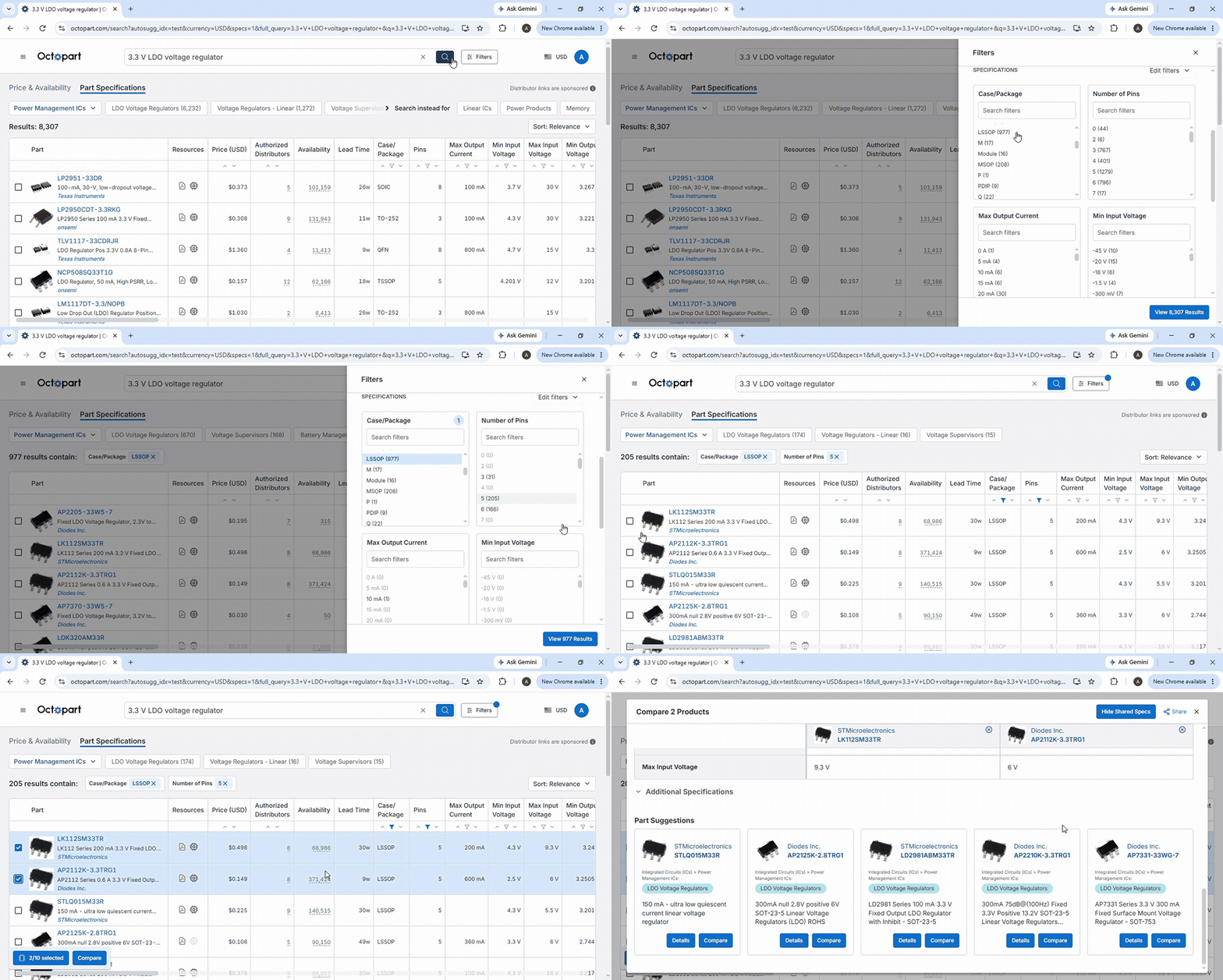
- Identify lifecycle risks: Check component lifecycle status, including Active, NRND, and obsolete, and spot parts marked last time buy.
- Review inventory and pricing trends: Use up to 12 months of inventory history and price trends to understand availability patterns and identify potential supply risks before committing to a component.
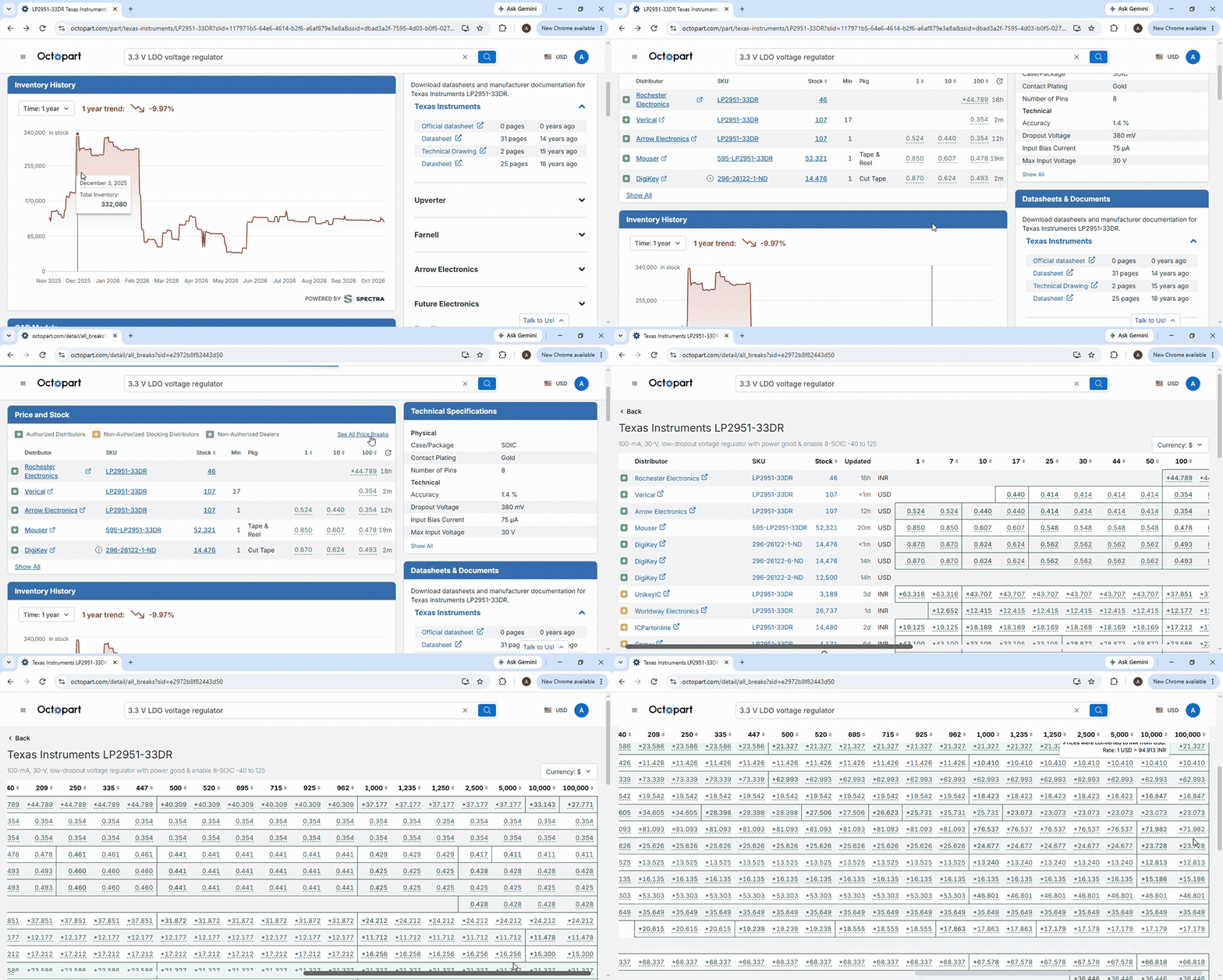
- Evaluate alternatives: Use the Alternates tab on the part page to explore potential replacement parts, compare specifications, and review datasheets before qualifying alternates.
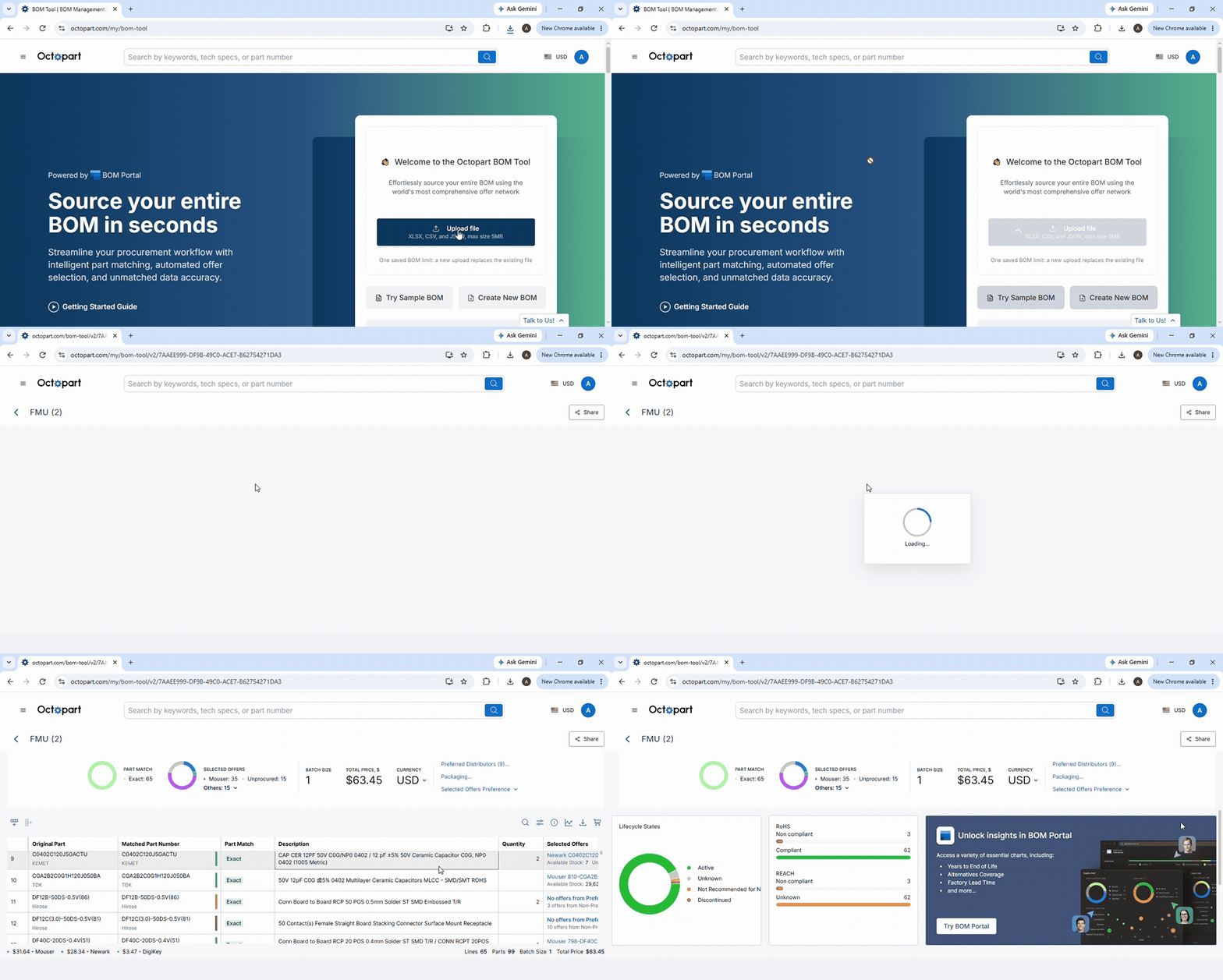
- Review the BOM: Use Octopart’s BOM Tool to match components and review distributor offers, pricing, stock availability, and lifecycle status across the entire BOM.
Conclusion
Identifying supply chain risks before finalizing design helps to mitigate those risks more easily. A part that meets the electrical specification isn’t necessarily a good choice if it has a long lead time, limited distributor inventory, an unknown lifecycle status, or no viable alternatives.
Design for Sourcing helps engineering and procurement teams evaluate more than component specifications by taking availability, lifecycle, and sourcing options into consideration at the outset. This can help to avoid unexpected shortages, expensive redesigns and late changes to components, while making BOMs more flexible and easier to manage.
Start designing with sourcing in mind. Upload your BOM to the Octopart BOM Tool to see component stock, pricing, and lifecycle status for every line before layout starts.

About Author
Related Resources
Related Technical Documentation
Table of Contents
- Key Takeaways
- What is Design for Sourcing?
- Where Designs Typically Break Down
- What My Supply Chain Experience Has Taught Me About Design for Sourcing
- How Design for Sourcing Helps Prevent Sourcing Problems
- Component Families That Offer Greater Flexibility
- How Octopart Makes Design for Sourcing Practical
- Conclusion
Solutions for Every Role and Team
- Discover and evaluate design options earlier
- Develop in one shared workspace
- Scale with control and compliance
- Connect every stage of hardware development
Learn More
Thank you, you are now subscribed to updates.