









Will Component Supply Loosen Up in 2027? The Category-by-Category Outlook

At a Glance
This article explores the complex landscape of component supply and pricing projections for 2027, emphasizing the challenges that systems engineers face when finalizing their Bill of Materials (BOM) decisions.


As a systems engineer works through the final block diagram for an industrial edge controller shipping in 2027, she needs to lock in a handful of BOM decisions: DDR4 or LPDDR4 memory and its density, the eMMC, the MCU family, and the MLCCs and MOSFETs in the power stage. Once the architecture closes later this quarter, those choices get harder to change. And the cost model behind them, built back in the spring, assumes component prices will ease in the second half of 2027.
The latest manufacturer guidance and analyst forecasts point to a different situation. DRAM and high-capacitance MLCCs are expected to remain tight, while select MCUs and power devices will see increasing prices and long lead times. So for most of that BOM, 2027 is unlikely to loosen up.
Key Takeaways
- Memory forecasts diverge: Micron expects tighter conditions through 2028, Gartner sees DRAM price relief in late 2027, and TrendForce expects NAND supply to loosen in the second half of 2027.
- MLCCs split by case size: high-capacitance and high-voltage parts are expected to stay short through the first half of 2027, while standard-case lead times are relatively stable.
- MCU and power device prices and lead times are rising: some ST automotive MCU prices have risen 15 to 20%, and power device lead times are generally above 30 weeks, according to TrendForce News.
- Build sourcing flexibility into the architecture now: memory footprints with more than one supplier, MLCC case sizes with stocked alternates, and MCUs with a pin-compatible part from a second manufacturer.
- Three trade-policy dates fall in the design cycle: November 27, 2026, January 10, 2027, and June 23, 2027.
Memory Will Account for Most of 2027’s Market Growth
In its Spring 2026 forecast, World Semiconductor Trade Statistics (WSTS) projects the semiconductor market will grow roughly 27% in 2027, from USD 1.5 trillion to about USD 1.9 trillion. That’s an increase of about USD 400 billion, and memory alone accounts for nearly two-thirds of that increase, rising 32% to about USD 1 trillion. Logic and micro trail at 27% and 20%. Further back are the categories that fill many of the sockets on a typical industrial board: discretes, sensors, analog, and optoelectronics, all forecast to grow a modest 5% to 7.6%.
2027 Components – From Tight to Hard to Call
Most components will fall into one of these groups, sorted by where supply and pricing are likely headed.
Supply Condition | Components | What to Do Before the Architecture Closes |
Tightening | Conventional DRAM supply, enterprise SSDs, select MCUs and power devices, high-performance SiC devices and high-power modules, high-capacitance and high-voltage MLCCs, and mid-capacitance consumer MLCCs | Design in second sources and budget on current quotes |
Holding steady | Standard-case MLCC lead times | Check GRM part numbers against Murata’s discontinuations |
Mixed signals | Consumer NAND, where demand is weaker; DRAM pricing after mid-2027, where forecasts differ | Check stock and lead time on the exact part number, and model late-2027 DRAM price relief as an upside scenario |
Too little data to call | Connectors, tantalum capacitors, inductors, GaN devices, FPGAs | Ask suppliers for exact-part lead times |
DRAM Stays Tight Into 2027
TrendForce expects conventional DRAM contract prices to rise 10 to 15% quarter over quarter in Q4 2026, a slower pace than earlier in the year, though in a November 6 release it said DRAM price increases would “gain further momentum” in Q1 2027. In its September 30 guidance, Micron expects memory and storage supply-demand conditions to be “much tighter” in calendar 2027 and 2028 than in 2026. CEO Sanjay Mehrotra said on the earnings call that “more than 75% of our output is already committed” for 2027. SK hynix said in October that long-term agreements cover more than 50% of its 2027 and 2028 capacity.
Gartner is more optimistic, forecasting DRAM price relief from late 2027 into the first half of 2028. Micron expects its first new Idaho fab to begin wafer output in mid-2027 and its Tongluo facility to start meaningful shipments around the same time. But Micron notes that new fabs reach meaningful output a few quarters after production starts. For early-2027 builds, continued pressure is the safer planning assumption, while later builds may see some easing.
If your design uses DDR4 or LPDDR4, lifecycle adds another layer of risk. By June 2025, Micron had sent end-of-life notices to PC and data center customers for both, but it reportedly continues supplying long-term automotive, industrial, and networking customers. In May 2026, it started 1-alpha DRAM manufacturing at its Manassas, Virginia, fab for long-lifecycle versions of both, and expects qualified production by the end of 2026.
NAND Splits Between Enterprise and Consumer
NAND contract prices are projected to rise 15 to 20% quarter over quarter in Q4 2026, according to TrendForce, with enterprise SSD the one memory category where it expects price growth to accelerate. Client SSD pricing is more flexible, and eMMC and UFS demand is weak, as PC makers and smartphone brands draw on existing inventory.
For industrial eMMC planning, 2027 forecasts differ: TrendForce expects NAND supply to loosen in the second half, while Micron expects the industry to remain supply constrained in both 2027 and 2028. Softer consumer demand doesn’t guarantee better availability for industrial-grade parts, so check stock and lead time on exact eMMC part numbers.
High-Capacitance MLCCs Tighten While Standard-Case Parts Hold
In a September 24 release, TrendForce reported that leading Japanese and Korean suppliers are cutting consumer MLCC supply as they move capacity toward AI applications, and it expects mid- to high-capacitance consumer parts to tighten. The same release said Murata will discontinue some general-purpose GRM consumer types and some automotive-grade parts, with orders accepted until 2028 and final shipments in 2029. For designs using GRM parts, check affected part numbers now.
In August, TrendForce reported standard-case lead times relatively stable at 14 to 18 weeks and high-capacitance and high-voltage parts at 15 to 20 weeks. DigiKey lead-time data, though, put some Samsung Electro-Mechanics high-capacitance parts near 40 weeks. Samsung Electro-Mechanics raised prices by 30% across its entire MLCC portfolio on August 1. In an October 29 update, TrendForce forecast the high-end MLCC shortage to last through the first half of 2027, and Murata said new capacity is unlikely before 2028.
MCU and Power Device Prices and Lead Times Climb
In its Q3 2026 results, STMicroelectronics said demand “remains well above supply” and that distribution inventory “continued to track below our standard target.” According to TrendForce News, citing EE Times China, some ST automotive MCU prices had already risen 15 to 20% before a third 2026 price increase in August, and a November report says ST plans another increase on selected products from January 1, 2027.
For power devices, the August report put lead times generally above 30 weeks, with some reaching 52. It also said Infineon’s July increase raised automotive power device prices by 10 to 20%. On its November 10 earnings call, Infineon CEO Jochen Hanebeck said “lead times continue to stretch further,” and the company reported emerging supply tightness in high-performance SiC products and high-power modules. These figures apply to select families, so ask suppliers for exact-part lead times and allocation terms before the schematic is finalized.
Trade-Policy Dates to Track
Three dates belong on your design-cycle calendar:
- November 27, 2026: China’s suspension of its gallium, germanium, and antimony export ban to the US is set to end. Beijing extended a separate pause on rare-earth export controls to January 10, 2027, but as of mid-November it hadn’t extended this one. A lapse could affect GaN device supply.
- January 10, 2027: the US-China trade truce ends unless it’s extended again, according to Treasury Secretary Scott Bessent.
- June 23, 2027: a second Section 301 tariff on Chinese semiconductors, held at 0% since December 23, 2025, rises to a rate the Office of the US Trade Representative must announce at least 30 days in advance.
Separately, listed Chinese semiconductors under Harmonized Tariff Schedule (HTS) headings 8541 and 8542 have carried a 50% Section 301 tariff since January 1, 2025. Record each critical part’s country of origin and tariff classification now, next to its footprint and second sources, so procurement can assess which lines the June 23 rate could affect.
Where to Add Sourcing Flexibility Before the Architecture Closes
Choose Memory With More Than One Supplier
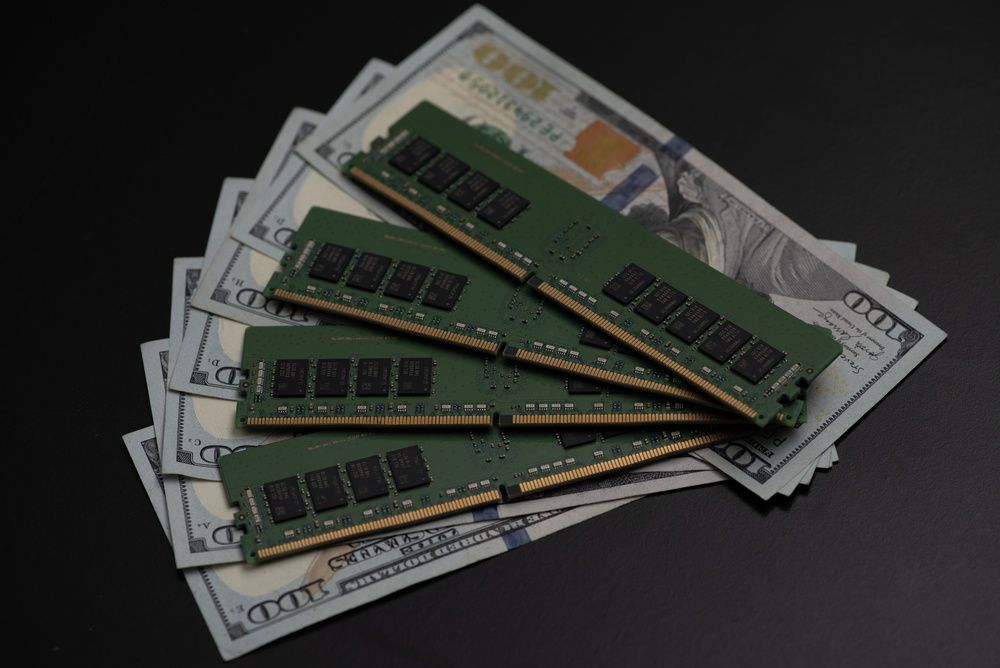
Start with densities and packages that at least two manufacturers offer, and check which other memory types the processor supports in case the first choice tightens. For the eMMC, several manufacturers offer parts in the JEDEC-standard 153-ball BGA package, creating options for qualified second sources.
On the cost side, base the memory budget on current supplier quotes, with a contingency for further increases, and model late-2027 price relief as an upside case. Octopart’s median price, calculated at a quantity of 1,000, is a quick starting point until quotes come in. For more coverage of design options, see our Pulse article from March 2026 on designing hardware through the memory shortage.
Leave Room for Alternates in the Power Stage and MCU
For the power stage, favor MLCC case sizes and values that several manufacturers stock, especially for high-capacitance parts. Choose MOSFETs in an industry-standard package such as 5 x 6 mm DFN, confirm pinouts match, and leave enough margin in voltage, current, and thermal ratings for more than one part to fit the socket. A shared footprint is a starting point, but also confirm eMMC boot behavior and temperature grade, MLCC capacitance under DC bias, and MOSFET gate drive and safe operating area before calling a part a qualified alternate.
For MCUs, a family with pin-compatible parts across memory densities adds flexibility, but those parts share one manufacturer’s supply. For a true second source, choose a pin-compatible part from another manufacturer and verify pin functions, peripherals, and boot behavior before layout. A hardware abstraction layer limits the firmware rework if you later need to switch to the second-source MCU.
Check Lifecycle Status and Inventory History Before Layout
Review each critical part’s lifecycle status and 12-month inventory history on its Octopart part page. To see the whole BOM at once, load your full parts list into the BOM Tool, which shows lifecycle status for every line, so you can spot any parts marked not recommended for new designs (NRND) or end of life (EOL). Follow up with the manufacturer on any line with an unclear status.
Plan for a Tight 2027
Before any Q1 2027 BOM freezes, put the memory, high-capacitance MLCC, MCU, and power device lines on a watchlist. For the controller in the opening, that also means rerunning the cost model with flat or rising prices instead of the second-half easing it assumed. See Set Your Component Watchlist Now, Not After the Shortage to learn how. For procurement, Building a Supply Risk Plan That Survives 2027 walks through creating a sound sourcing plan.

About Author
Related Resources
Related Technical Documentation
Table of Contents
Solutions for Every Role and Team
- Discover and evaluate design options earlier
- Develop in one shared workspace
- Scale with control and compliance
- Connect every stage of hardware development
Learn More
Thank you, you are now subscribed to updates.