












5 Ways Automated Engineering Workflows Reduce Admin Overhead for Hardware Teams

At a Glance
Discover how automated engineering workflows cut admin overhead. Learn five ways to streamline reviews, releases, and task tracking for faster hardware design.


Engineers often spend too much of their workweek managing administrative processes rather than actually designing components.
Automated engineering workflows help hardware teams standardize design reviews, release management, component approvals, and project administration without increasing manual oversight. By connecting engineering data, approvals, and manufacturing deliverables through repeatable digital workflows, organizations can improve design quality, reduce administrative effort, and maintain consistency throughout the hardware development lifecycle.
This transition restores engineering focus to design, not process management. Instead of spending Friday afternoon manually generating output files, an engineer can focus on improving a critical circuit. Teams can reduce risk by implementing structured, automated systems that reliably and consistently handle these repetitive tasks. When organizations remove the manual overhead, they do not just save time, but improve employee satisfaction and reduce the likelihood of costly human errors that delay manufacturing schedules.
Key Takeaways
- Automating routine administrative tasks directly connects engineering output to project goals, reducing miscommunication and accelerating development cycles.
- A structured workflow should include automated design reviews and standardized release processes to minimize manual errors and prevent costly manufacturing rework.
- Centralizing project creation and task tracking accelerates team onboarding by establishing predictable, repeatable processes that require less manual intervention.
The Cost of Manual Admin in Hardware Engineering
Why do manual workflows create bottlenecks in hardware engineering? Manual workflows rely on human memory and constant context-switching, which inherently limit scalability. As engineering organizations scale, inconsistent manual processes become increasingly difficult to manage across electrical, mechanical, manufacturing, and procurement teams.
These delays compound throughout the product lifecycle. When an engineer wastes a day cross-referencing a BOM against supplier websites, that is a day lost in the prototyping schedule. If that delay forces the team to pay expedited manufacturing and shipping fees to meet a hard product launch deadline, the manual process has actively degraded the project's profit margins. This demonstrates why process efficiency is an engineering imperative, not just a management concern.
When the foundational processes are undefined or manual, the resulting confusion manifests as missed deadlines and defective prototypes. This is where a platform like Altium Agile Teams comes in. By automating these foundational processes, organizations establish a single source of truth that guides the engineering team without constant manual oversight.
Five Practical Approaches to Workflow Automation
By addressing the most common administrative bottlenecks, hardware teams can significantly reduce their overhead. The most effective engineering workflows automate repetitive administrative activities while preserving engineering oversight, review accountability, and traceability throughout the product lifecycle. Here are five practical ways to implement automated workflows in a hardware engineering environment.
1. Automating Design Reviews
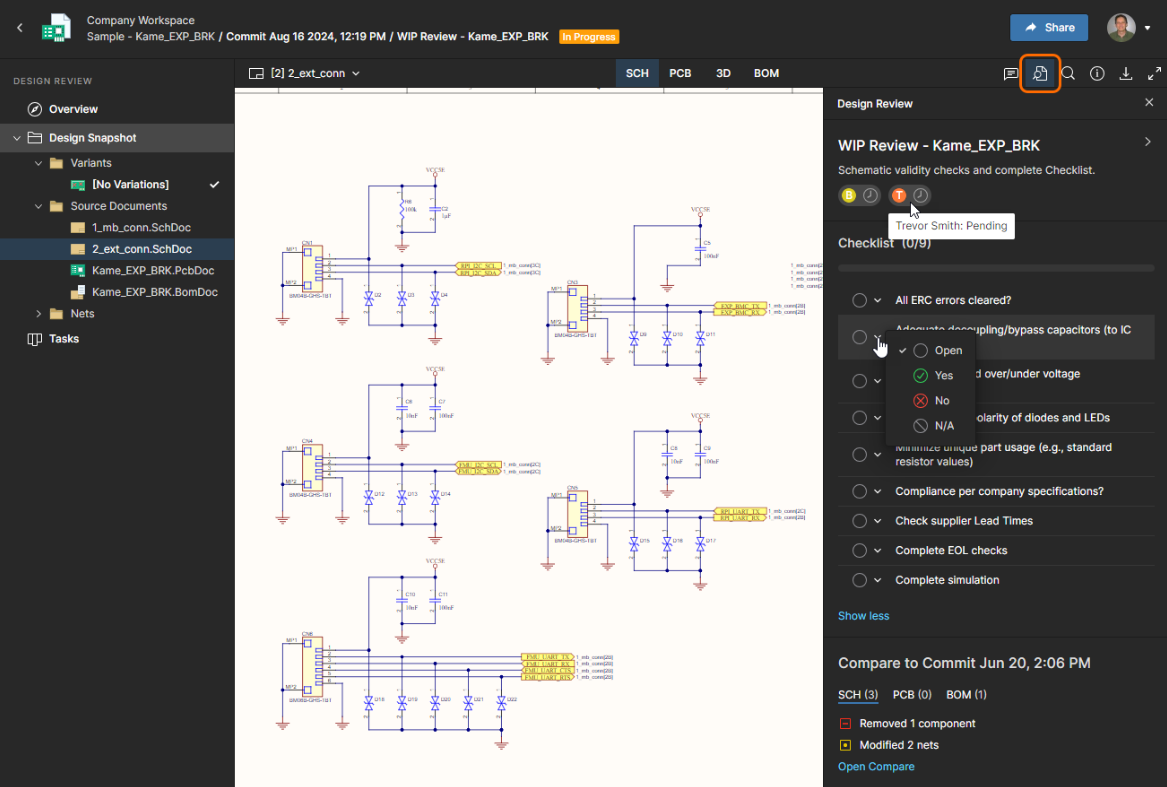
Design reviews require engineers to track down approvals, compile feedback from disparate sources, and manually update tracking sheets. This unstructured approach often leads to version-control issues, where a stakeholder reviews an outdated document instead of the current design. Structured design review workflows improve engineering governance by ensuring approvals, comments, and design decisions remain connected to the latest project revision.
By automating this workflow, the system takes over the administrative routing. For example, Altium Agile Teams streamlines this with real-time, in-browser commenting and structured sign-offs. When a design reaches a specific milestone, the automated workflow notifies required reviewers, such as electrical, mechanical, and manufacturing leads, at the appropriate time. The system enforces the review process, ensuring that a design cannot move to the next phase without the required electronic signatures. This reduces rework by preventing unapproved or flawed designs from advancing to the prototyping phase.
2. Streamlining Part Requests
Part request automation standardizes how new components are vetted, approved, and added to a company's centralized library.
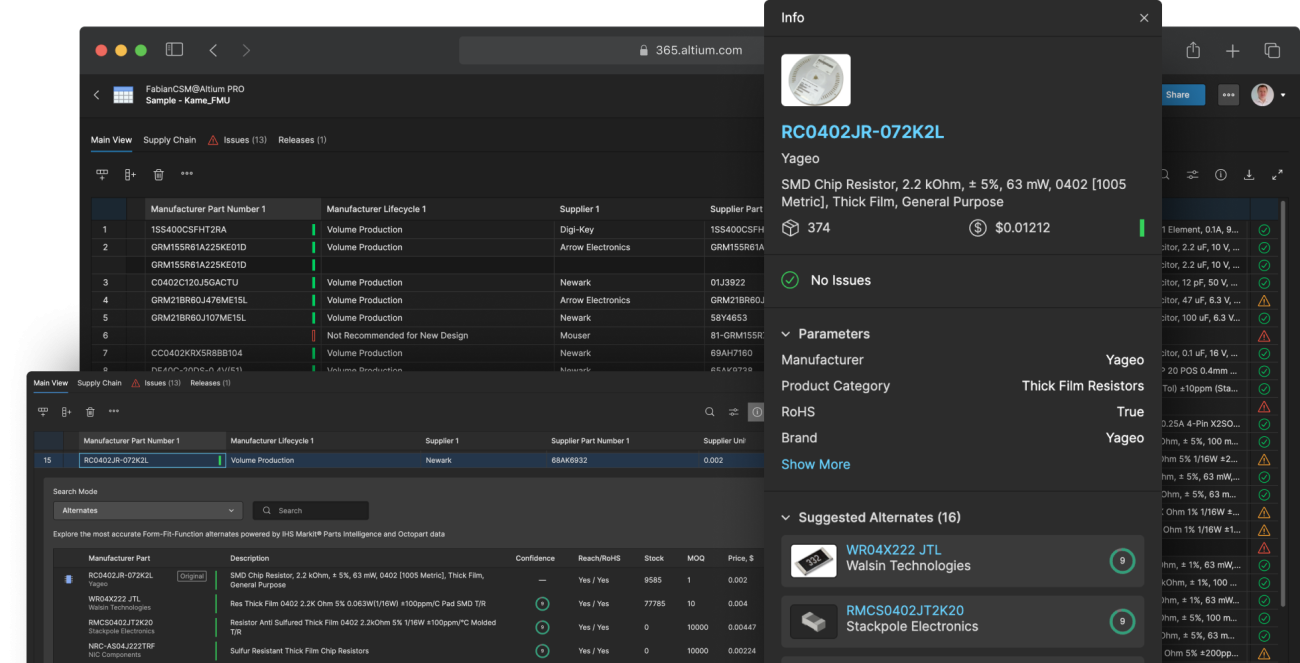
Hardware teams frequently lose time verifying component availability, compliance, and electrical specifications. Component approval workflows become increasingly important as supply chain volatility and lifecycle changes require continuous validation throughout product development. Manual part requests often consist of informal messages or fragmented emails, leading to duplicated efforts or the accidental selection of obsolete components. When engineers lack a clear process for requesting new parts, they may create duplicate components, polluting the library and causing downstream procurement issues.
An automated workflow forces a structured approval process. Altium Agile Teams handles this by managing BOM data in a cloud portal with a live connection to component supply chain data, rather than relying on clunky spreadsheets. When an engineer requests a new component, the system prompts them for necessary parameters, queries real-time lifecycle data, and automatically notifies librarians or procurement managers for approval. Teams can reduce risk by ensuring only vetted, available parts enter the design ecosystem.
3. Standardizing Release Processes
Release automation automatically generates and shares manufacturing files when a design is approved.
Manually generating Gerber files, BOMs, assembly drawings, and pick-and-place files is tedious and prone to human error. If an engineer accidentally exports the wrong layer or forgets a single drill file, it can delay manufacturing by days and incur extra fees. Standardized release workflows also improve engineering traceability by ensuring manufacturing packages, design revisions, and release approvals remain synchronized.
Standardized release automation guarantees that every required document is generated consistently and stored centrally. Upon final approval, the automated workflow generates the exact file formats required by the manufacturer, pulling directly from the verified design data. Beyond simply saving time, this automated consistency is crucial for compliance and auditability. If a product fails in the field, organizations need a definitive record of exactly which design files were sent to the manufacturer. Automated release processes create an immutable digital paper trail, ensuring teams can trace a manufactured board back to the exact version of the design data that produced it.
4. Simplifying Project Creation
Project creation automation uses digital templates to instantly generate standardized folder structures, schematic sheets, and permission settings for new designs.
Starting a new project manually often leads to inconsistent folder structures, misplaced files, and incorrect design rules, making cross-team collaboration difficult. Standardized project templates reduce variability between engineering teams and help organizations maintain consistent design practices as projects grow. When engineers structure their projects differently, finding specific documentation requires asking the original designer for directions.
By automating project creation, engineering managers ensure every new design starts with the same baseline. An engineer simply selects a project template, and the workflow automatically provisions the workspace, applies the correct company templates, and assigns the appropriate access rights. This consistency leads to faster onboarding, as new engineers learn a single, predictable structure rather than navigating a maze of idiosyncratic file locations.
5. Centralizing Task Tracking
Task-tracking automation links actionable items, feedback, and assigned duties directly to the hardware design data they reference. Context-aware task management reduces communication overhead because design feedback remains linked directly to engineering data rather than external documents or email threads.
Centralizing and automating task tracking directly within the engineering environment means that clicking on a task takes the engineer directly to the physical location of the problem. If a reviewer flags a trace that needs rerouting, the automated task system associates that feedback with the exact coordinates on the PCB layout. This eliminates the need for lengthy explanatory emails and ensures that all tasks are resolved before the design is released.
Manual vs. Automated Workflows
Comparing manual and automated engineering workflows highlights how standardized processes improve consistency, traceability, and collaboration across hardware development teams. Take a look at how manual and automated systems handle everyday engineering tasks.
Workflow Component | Manual Approach | Automated Approach |
Design Reviews | Chasing approvals via email; compiling disparate feedback manually. | Automatic routing to predefined stakeholders with centralized commenting. |
Part Requests | Unstructured chat requests missing critical lifecycle data. | Standardized input forms with automatic supply chain and lifecycle checks. |
Release Process | Manually generating, naming, and zipping output files individually. | One-click generation of consistent, complete manufacturing packages. |
Project Creation | Manually copying old projects or building custom folder trees. | Template-driven generation of standardized, compliant project environments. |
Task Tracking | Managing disconnected spreadsheets lacking specific design context. | Tasks linked directly to individual components and schematic sheets. |
Practical Implementation Steps
Transitioning away from manual overhead requires deliberate planning. A structured workflow should include clear definitions and incremental rollouts. Successful workflow automation should be implemented incrementally, with measurable improvements to engineering efficiency, design quality, and process consistency at each stage. Here is a practical approach to implementing workflow automation in a hardware team:
- Identify which tasks consume the most engineering time and cause the most friction. Part creation bottlenecks and manual release generation are typically the most effective places to start.
- Map the required approval chains, data inputs, and outputs for each process.
- Do not attempt to automate every engineering process simultaneously. Start with one example, such as standardizing project templates, to build team confidence before moving to complex, multi-stage release workflows.
- Assign a dedicated administrator or ECAD librarian to manage the automated workflows, ensuring that the templates and approval routing rules remain up to date with organizational changes. A tool like Agile Teams makes this simple by letting you securely manage stakeholders with role-based team permissions and centralized license management.
- Track the time saved on administrative tasks and monitor the reduction in manufacturing rework. Use these data points to prove the value of the automated systems and justify further optimizations.
Manual admin work slows down your hardware team and causes errors. By automating your engineering workflows, you get to spend your time actually designing products. This might work for you. Learn more about Altium Agile Teams and see how it connects your electrical, mechanical, and procurement teams in one structured workspace.
Frequently Asked Questions
How does workflow automation impact the team onboarding process?
Automation makes onboarding significantly faster. Because foundational processes are standardized through templates and automated routing, new engineers do not need to memorize complex, undocumented company procedures. The system actively guides them through the correct workflow.
Can automated workflows handle exceptions or unique project requirements?
Yes. While automation enforces a baseline standard, modern workflows are highly configurable. They can be designed with conditional logic to route specific requests to different stakeholders based on project type, budget threshold, or specific compliance requirements.
Do automated release processes integrate with external manufacturing systems?
Yes, most automated engineering workflows integrate directly with ERP or PLM systems. This ensures automated outputs, like BOMs and fabrication files, are reliably transferred to procurement and manufacturing partners, eliminating manual data entry.

About Author
Related Resources
Related Technical Documentation
Table of Contents
- Key Takeaways
- The Cost of Manual Admin in Hardware Engineering
- Five Practical Approaches to Workflow Automation
- Automating Design Reviews
- Streamlining Part Requests
- Standardizing Release Processes
- Simplifying Project Creation
- Centralizing Task Tracking
- Manual vs. Automated Workflows
- Practical Implementation Steps
- Frequently Asked Questions
- How does workflow automation impact the team onboarding process?
- Can automated workflows handle exceptions or unique project requirements?
- Do automated release processes integrate with external manufacturing systems?
Solutions for Every Role and Team
- Discover and evaluate design options earlier
- Develop in one shared workspace
- Scale with control and compliance
- Connect every stage of hardware development
Learn More
Thank you, you are now subscribed to updates.