






Drone Electronics Supply Chains Revealed: What Procurement Leaders and Design Teams Need to Know

At a Glance
Understand drone electronics supply chains beyond the airframe. Learn why resilience depends on hidden component risks, modular stacks, and digital thread discipline.


Drone supply chains now sit at the intersection of electronics, software, geopolitics, and procurement. The most important shift is that buyers are no longer just evaluating aircraft platforms, but they are assessing a modular stack of materials, components, flight software, compliance controls, and approved alternatives.
This article explains how commercial and military drone ecosystems increasingly share the same electronics base, why resilience depends on understanding the stack below the first tier, and how digital design platforms help turn a fast-moving component web into a controlled engineering system.
Key Takeaways
- Drone supply chains are now best understood as modular electronics ecosystems, not just aircraft platforms.
- The same commercial component base often underpins both civilian and military drone capability.
- Resilience depends on looking below the first tier into batteries, sensors, semiconductors, radios, and approved alternatives.
- Procurement is moving from platform buying to stack buying, with stronger emphasis on interoperability, compliance, and update speed.
- Digital thread discipline helps teams manage BOM risk, design changes, approvals, and release control more effectively.
By 2025, drones were reportedly engaging 80 to 85 percent of frontline targets in Ukraine, a sign that unmanned systems had moved from the edge of warfare to its centre. At the same time, the Atlantic Council reported that the global UAV market was valued at $31 billion in 2023, with China holding what it described as a near-insurmountable lead in small UAV development and use. Put those two facts together and the conclusion is hard to ignore: drone supply chains are no longer just a procurement topic but a strategic issue, an industrial issue, and an electronics design issue.
Drones are disruptive not just for their aerial capabilities, but for how they are built on the ground. Their supply chain is a complex web of materials, software, and electronics. Because commercial and military systems share a common base of motors, batteries, sensors, and chips, drone warfare effectively operates on the same logic as the broader electronics industry.
Open-Source Flight Stacks and the Rise of Modular Architectures
The overlap between military and civilian supply chains matters more than many people realize. The small and medium drones shaping military doctrine are often built from the same kind of dual-use components that support inspection drones, agricultural drones, delivery drones, and mapping platforms. Military programs are now leveraging commercial off-the-shelf components as a starting point, then moving toward more secure and specialized electronics as scale, threat, and mission demands increase.
In order to move quickly to mass-produced drones that can be deployed in high numbers on the battlefield, open-source designs are now appearing in areas once dominated by proprietary defense architectures. Open-source autopilot stacks such as PX4 and ArduPilot give developers a faster route to build, test, adapt, and scale airframes and control systems without waiting through long proprietary development cycles. Militaries are not becoming open-source purists, rather they are becoming more pragmatic about speed, interoperability, and vendor flexibility.
The Blue UAS model makes the point well. Defense organizations increasingly want interoperable, vetted components and software that can be verified, compared, and inserted into programs more quickly than legacy acquisition timelines allow. Open-source software and modular systems are attractive because they shorten the path from problem to fielded capability and reduce the risk of vendor lock-in.
Feature Comparison: Commercial vs. Military Drone Electronics
Commercial and military drones often share the same electronics foundation, but defense buyers place greater weight on resilience, interoperability, cyber assurance, and compliance.
Aspect | Commercial Drones | Military Drones |
Primary Focus | Delivery, inspection, mapping, agriculture | Speed, resilience, interoperability |
Component Sources | Commercial off-the-shelf (COTS) | COTS + proprietary + vetted alternatives |
Flight Software | Open-source (PX4, ArduPilot) | Open-source + closed-source hybrid |
Supply Chain Model | Simple vendor lists | Complex, contested networks |
Upgrade Cycle | Ad-hoc, rapid iteration | Formal, longer acquisition timelines (evolving) |
Compliance Requirements | Minimal regulatory overhead | High (cyber assurance, traceability) |
Procurement Approach | Platform buying (sealed airframe) | Stack buying (modular, interoperable) |
Key Risk Focus | Cost and availability | Sourcing, supply concentration, dual-use exposure |
Update Speed | Days to weeks | Historically years; now shifting to software pace |
How Drone Procurement Is Changing
Procurement is changing because of this shift. Instead of buying a drone as a sealed platform and waiting for years for a formal upgrade, defense buyers increasingly want a faster route to verified, swappable capability. Recent U.S. defense initiatives, including the Blue UAS framework and the Army’s digital UAS Marketplace, point to a more agile model in which solutions are pre-vetted, comparable, and easier to order or adapt.
The logic is broader than drones alone. Aerospace and defense program performance is often constrained in the seams between functions, suppliers, and programs. Drone procurement forces those seams into the open by making buyers ask harder questions about radios, batteries, sensors, compute modules, software governance, and compliance pathways rather than stopping at the airframe itself.
Where the Real Supply Chain Risks Sit
This shift brings real risk. Analysts have warned that Chinese dominance in parts of the UAV industry creates national security and sourcing challenges, while even leading Western manufacturers still depend on China for important inputs. The real weak points are often not glamorous. They are magnets, chips, cells, connectors, composite materials, and the second-tier suppliers behind them.
That matters because the drone electronics problem is now a bill-of-materials problem as much as it is a flight problem. That is why mapping the supply chain below the first tier matters so much. A program may appear diversified at the platform level but still carry concentrated risk deeper in the stack, especially in batteries, sensors, semiconductors, propulsion, and data-link components.
A More Useful Way to Think About Drone Dominance
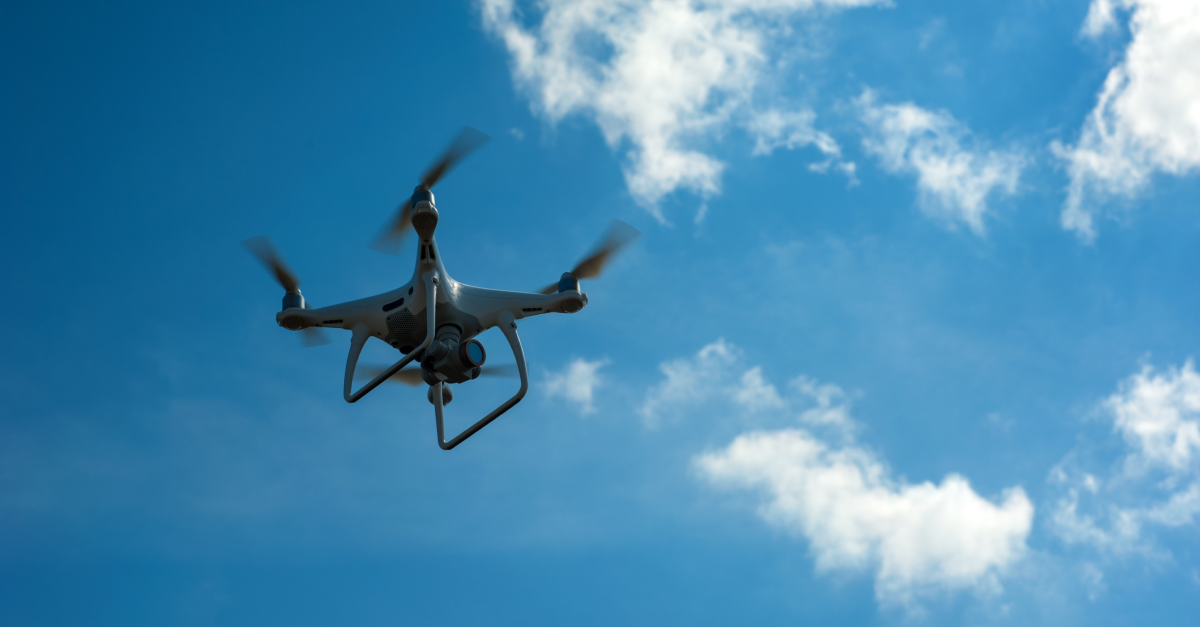
The broader lesson is that drone dominance is becoming less about who can sketch the best airframe and more about who can manage a fast, trusted, modular electronics ecosystem. Open-source autopilots, interoperable component frameworks, and digital marketplaces all point to the same change: procurement is shifting from buying fixed platforms to buying adaptable systems backed by evidence, approved alternatives, and a resilient digital thread.
The most resilient procurement questions now sit below the platform level:
- Where do the critical parts come from?
- Is the flight stack open, modular, and governable?
- Can cameras, radar, and compute modules be swapped quickly?
- What compliance and sourcing constraints apply?
- How fast can the design be updated and re-released?
Supply chains are shifting from simple vendor lists to contested networks of materials, software, verification, and sourcing controls. Design teams are being asked to carry more of that burden on the electronics workflow itself. That is why digital engineering platforms still matter, even when they sit one layer away from the battlefield. They help teams turn a messy component web into a controlled engineering system.
How Altium Agile Teams Enables Drone Supply Chain Control
Altium Agile Teams connects procurement, program management, and design engineering in a shared digital environment where approved parts, lifecycle states, and supplier alternatives are visible in real time. Teams can trace every design change back to requirements, and release version-controlled baselines with full audit trails, without slowing innovation. In supply chains mixing commercial components, sovereign alternatives, open-source software, and fast-moving compliance requirements, that kind of integrated control becomes a competitive advantage.
Frequently Asked Questions
What components create the greatest supply chain risks for drone manufacturers?
The highest risks often involve batteries, semiconductors, sensors, motors, radios, connectors, and magnets. Teams should track source concentration, lifecycle status, approved alternatives, and country of origin across the full BOM.
Why are defense organizations adopting modular drone architectures?
Modular architectures allow defense organizations to replace radios, sensors, compute modules, batteries, and software without redesigning the entire aircraft. This reduces vendor lock-in and makes it easier to respond to component shortages, new threats, and changing mission requirements.
How does the Blue UAS framework support secure drone procurement?
Blue UAS provides vetted drone platforms and components that meet U.S. defense sourcing and security requirements. It gives buyers a faster way to compare approved solutions without repeating the entire evaluation process for every purchase.
How can engineering teams manage component obsolescence and sourcing risks in drone designs?
Teams should track lifecycle data, supplier status, and approved alternatives within the design workflow. Version-controlled BOMs also help ensure substitutions are reviewed and documented. Altium Agile Teams helps designers and procurement managers complete these tasks as part of drone design projects.

About Author
Related Resources
Related Technical Documentation
Table of Contents
- Key Takeaways
- Open-Source Flight Stacks and the Rise of Modular Architectures
- Feature Comparison: Commercial vs. Military Drone Electronics
- How Drone Procurement Is Changing
- Where the Real Supply Chain Risks Sit
- A More Useful Way to Think About Drone Dominance
- How Altium Agile Teams Enables Drone Supply Chain Control
- Frequently Asked Questions
- What components create the greatest supply chain risks for drone manufacturers?
- Why are defense organizations adopting modular drone architectures?
- How does the Blue UAS framework support secure drone procurement?
- How can engineering teams manage component obsolescence and sourcing risks in drone designs?
Speed at Scale. Structured Repeatability. Secure Flexibility.
- Start up fast with out‑of‑the‑box workflows
- Collaborate using ECAD‑MCAD codesign tools
- Manage BOMs with live supply chain part data
- Manage access and security as teams scale
Contact Us
Thank you, you are now subscribed to updates.