




Electronics Design Governance: Balancing Innovation with Compliance

At a Glance
Improve electronics design governace with embedded workflows and permissions. Reduce rework, ensure compliance, and accelerate releases.


Clear design governance is not the enemy of innovation. When permissions, workflows, lifecycle states, and review paths are built into the design environment, teams move faster because they spend less time chasing approvals, resolving version confusion, or rebuilding compliance evidence. Take a look at how embedded digital governance can turn control from a manual burden into a practical advantage for electronics teams working at speed.
Key Takeaways
- Strong electronics design governance reduces ambiguity and speeds execution by making authority, status, and next steps visible.
- Permissions, workflows, design reviews, and lifecycle states work best when they are embedded directly in the design environment.
- Good governance standardizes handoffs and evidence, not engineering creativity.
- The biggest gains usually come from tightening a few high-risk transitions and formalising a few high-friction workflows.
- In regulated and fast-growing environments, digital governance improves both compliance readiness and day-to-day delivery speed.
Why Electronics Design Governance Matters More Than Ever
McKinsey found that 70 per cent of manufacturers had already started Industry 4.0 pilots, but only 29 per cent were capturing value at scale. One reason was not a lack of ideas. It was unclear governance and weak organizational anchoring. In other words, many companies did not fail because they moved too slowly. They failed because they tried to innovate without a clear system for how decisions, approvals, and changes should flow.
Electronics development has become denser, faster, and more interconnected. A board is rarely just a board now. It touches firmware, software, sourcing, compliance attributes, lifecycle decisions, manufacturing constraints, and often a wider digital thread that runs into PLM, ERP, and quality systems. That makes product development more powerful, but it also makes it easier for teams to lose control of the basics. A part may be technically correct but not approved for use. A design snapshot may look current but not be the released baseline. A review may happen, but the evidence may sit in an email instead of in a traceable record.
That is why design governance matters more than it used to. It is no longer enough to rely on experienced people remembering the right path. Growth, geographic spread, and regulatory pressure expose the limits of informal methods very quickly. What worked for a small co-located team can become fragile when multiple engineers, librarians, reviewers, and manufacturing stakeholders are all working against the same programme.
Governance often gets framed as overhead, but that usually reflects poor implementation rather than the concept itself. When governance is vague, manual, or inconsistent, it feels like friction. When it is clear and embedded in the toolset, it does the opposite. It reduces ambiguity, makes authority visible, and keeps work moving. Strong governance gives engineers confidence that they are designing with the right parts, following the right review path, and releasing against the right state.

Why Governance Gets a Bad Name in Engineering Teams
Governance has a branding problem because many people have experienced the worst version of it. They think of duplicated forms, unclear sign-off paths, review boards that change their rules midstream, and long waits for decisions that add no obvious value. In that environment, the word governance becomes shorthand for delay.
That reaction is understandable. A process that is not clear, repeatable, or proportionate does not feel like control. It feels like bureaucracy. If release approval depends on tribal knowledge, the organization is not governed but simply exposed to risk in a more formal tone.
The answer is not to strip out control but to redesign control, so it supports the flow of work. Good governance answers a few practical questions quickly and consistently:
- Who is allowed to act?
- What state is this item in?
- What must happen before it moves forward?
- Where is the evidence that the right path was followed?
If the team can answer those questions in seconds, governance starts to feel like infrastructure rather than interruption.
Governance as an Enabler of Speed, Quality, and Scale
The strongest case for governance is not compliance alone. It is speed. Most engineering delays are not caused by the existence of rules. It is caused by uncertainty around the rules. Designers pause when they are not sure whether a component is approved. Reviewers slow down when they cannot see the latest baseline. Quality teams get pulled in late when there is no reliable trace of what changed and who approved it. Procurement loses time when release maturity does not match component maturity.
Embedded governance removes that decision noise. Permissions define who can perform critical transitions. Workflow logic guides common activities such as new component requests, design reviews, and release preparation. Lifecycle states show whether a part or design is still in draft, suitable for prototype, ready for production, or obsolete. Review records capture what happened as the work happens, instead of forcing teams to rebuild the story later.
That matters because scale breaks informal systems first. As organizations grow, governance becomes the difference between repeatable execution and permanent exception handling. Teams that can trust their statuses, approvals, and release signals do not just satisfy auditors more easily. They iterate faster because they are not constantly stopping to verify the basics.
Manual Governance | Embedded Digital Governance |
Approvals hidden in email | Role-based permissions |
Unclear release authority | Visible lifecycle states |
Version confusion | Structured design reviews |
Late compliance evidence | Traceable workflow evidence |
High rework and audit pain | Faster release with stronger control |
The Four Questions Good Electronics Design Governance Should Answer
A useful governance model does not need to be complicated, but it does need to be explicit. In practice, strong systems answer four questions very well.
- First, who can do what? Release authority, library authority, and review authority should never be ambiguous. Teams move better when ownership is visible and role-based.
- Second, what state is this design or component in? A clear lifecycle model is one of the fastest ways to reduce confusion. Engineers, sourcing teams, and manufacturing stakeholders should be able to tell immediately whether something is experimental, prototyping, production-ready, or retired.
- Third, what must happen before release? The answer may include a design review, a library check, completion of compliance attributes, or an approval-based transition. The important point is that the path is visible and repeatable.
- Fourth, how do we prove what happened later? Auditability should not depend on memory. A strong platform creates traceable evidence as a by-product of real work through approvals, comments, review records, transition history, and version control.
How Permissions and Roles Reduce Friction
One of the fastest ways to create chaos in electronics development is to leave authority unclear. If everyone can promote components or release designs, errors spread quickly. If nobody knows who is allowed to move an item forward, the team slows to a crawl. Role-based permissions solve both problems at once.
When permissions are embedded, engineers do not need to guess whether a release is valid. The system knows whether the user has the authority to make the transition. Librarians and approvers do not have to reconstruct intent from message trails. The history of the item shows what changed, who changed it, and how it moved through its lifecycle.
This is a governance feature, but it is also a human one. Clear permissions reduce conflict because they reduce unclear ownership. Specialists can focus on their role instead of negotiating it every week. That makes governance feel less like policing and more like a shared operating model.
Why Workflows Turn Policy into Action
Policies stored in a file share do not move work. Workflows do. This is where digital governance becomes much more practical than manual control. High-friction activities such as new component requests, design reviews, and publishing into downstream systems benefit from visible task flow, assigned ownership, and consistent checkpoints.
Take the new component process as an example. In many teams, it begins with an email, becomes a spreadsheet, and then fragments into side conversations about part data, compliance attributes, footprint readiness, and approval status. That is not governance but a memory test. A structured workflow replaces that fragmentation with one controlled path.
The same principle applies to reviews. A design review is far more valuable when reviewers, comments, checklists, snapshot comparisons, and outcomes are captured as part of the process. Then the review does not just improve the design but also creates evidence that the design was assessed in a consistent and traceable way.
Lifecycle States Protect Innovation from Itself
Innovation needs room to move. It also needs guardrails. Without lifecycle control, teams can mistake speed for readiness and release immature designs or components before the organization is truly prepared. That is when prototypes drift into production, obsolete parts remain in active designs, or unapproved library items get reused because nobody can see their real status.
Lifecycle management solves this by making maturity visible. Early states support exploration and prototyping. Later states apply tighter control as items approach release and reuse. The goal is not to suppress experimentation but to stop experimental work from being mistaken for approved work.
This is one of the most practical ways governance accelerates delivery. By shifting risk left, lifecycle logic helps teams catch maturity problems before release meetings, before procurement, and before manufacturing. It is easier to solve a status issue in design than to explain it once the product has moved downstream.
Standardize the Handoffs, Not the Thinking
One common fear is that stronger governance will flatten creativity. Good governance should do the opposite. It should standardize the handoffs that create risk while protecting the thinking that creates value.
That means standardising release criteria, review evidence, naming conventions, core metadata, and approval paths. It does not mean forcing every design problem into the same technical solution. Engineers still need room for judgement, trade-offs, and invention.
This distinction matters because standardization works best when it is purposeful. The aim is not to erase variation but to remove avoidable variation in the mechanics of control. A common governance backbone can still support different business units, product families, and regulatory contexts if the framework is flexible enough to adapt where needed.
Why This Matters in Regulated and Growth Environments
Governance becomes especially important when a business is scaling or operating under tighter compliance expectations. A five-person team can sometimes survive on informal practices for longer than it should. A larger organization cannot. The number of interfaces grows, the cost of rework rises, and the exposure created by weak traceability becomes far more visible.
In regulated settings, the pressure is even greater. Version control, approved baselines, design review evidence, controlled change, and traceability are not administrative preferences. They are core elements of product confidence. When records are fragmented, organizations do more than slow down. They weaken their ability to explain and defend what was built, what changed, and why the released configuration is trustworthy.
That is why digital governance platforms matter. Their real value is not simply that they store data in one place but that they connect status, workflow, role, and proof inside the same environment where design decisions are made.
Altium Agile Teams: A Practical Starting Point
Altium Agile Teams turns governance from a separate process into a built‑in part of the design environment, where permissions, workflows, and lifecycle states are applied directly to projects, components, and releases.
Role‑based access ensures that only the right people can approve or promote designs, while structured workflows guide common activities such as design reviews, component approvals, and release preparation without relying on manual coordination.
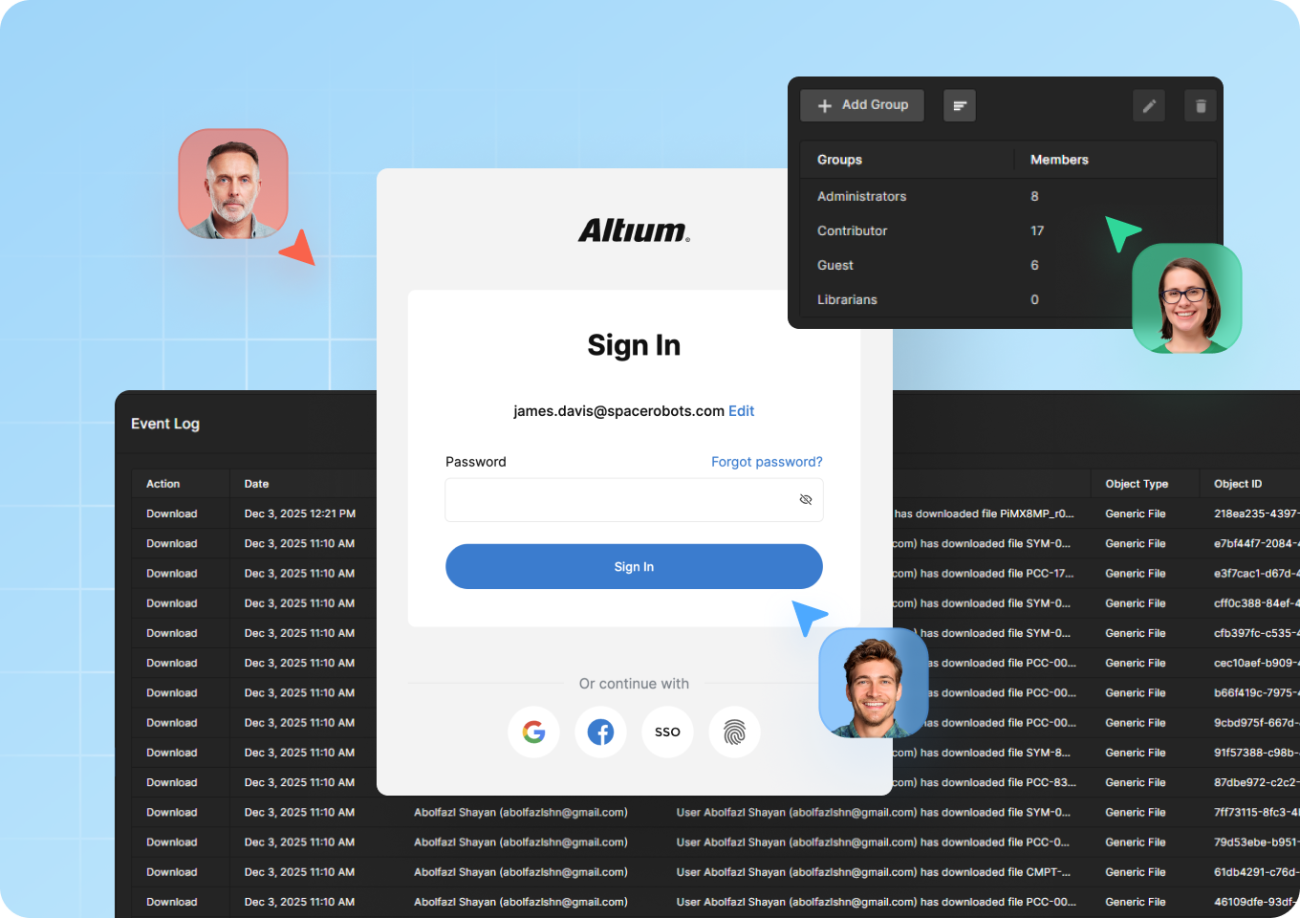
Lifecycle states make design and component maturity immediately visible, so teams can differentiate between experimental, prototype, and production‑ready data at a glance.
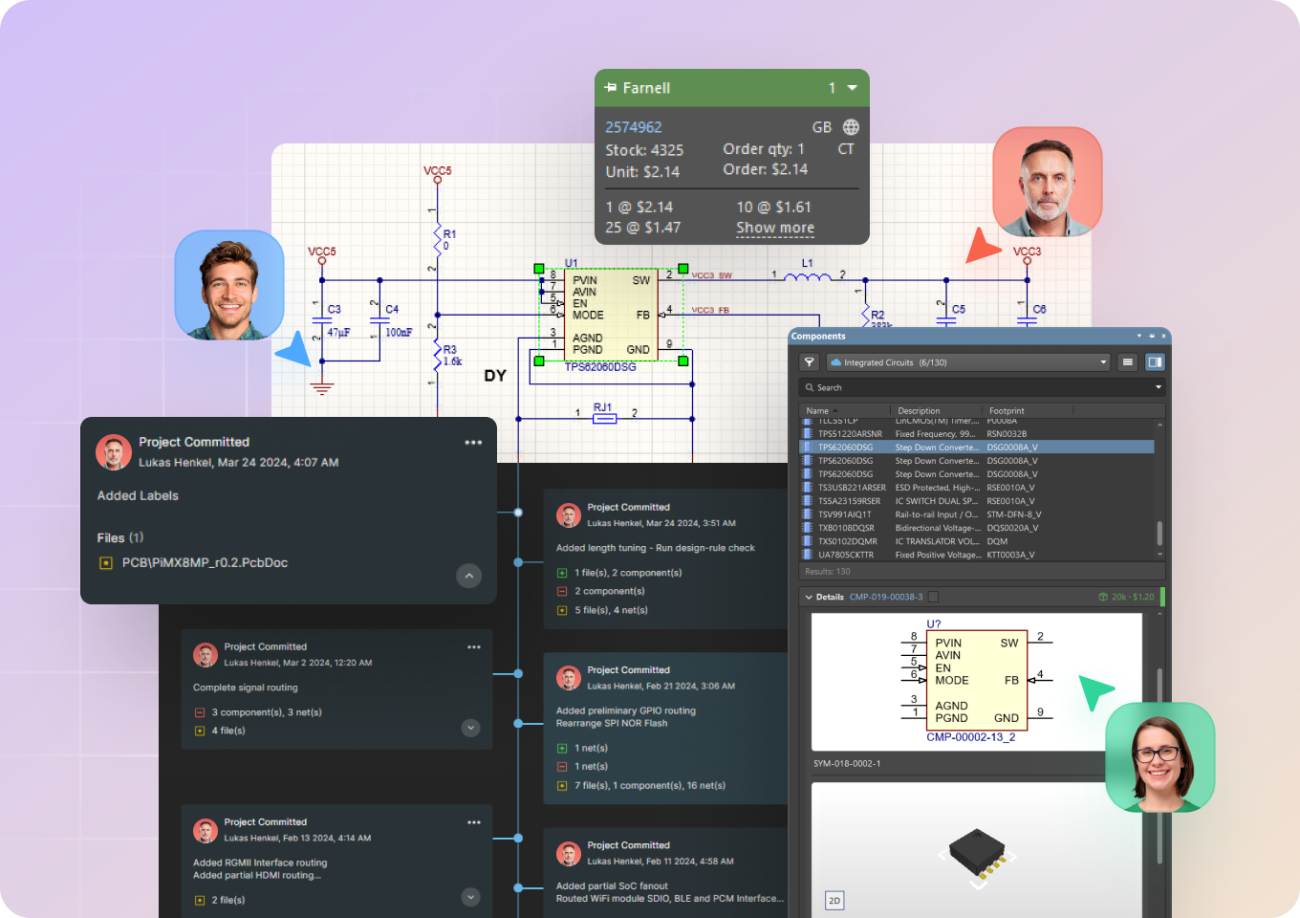
At the same time, review comments, change history, and approvals are captured in context, creating traceable evidence automatically as part of everyday work rather than as an after‑the‑fact exercise.
The Best Governance Feels Built In
Innovation does not thrive in chaos. It thrives in clarity. The companies that move fastest are rarely the ones with no rules. They are the ones with rules that are proportionate, visible, and embedded in the way work already happens.
That is the promise of modern electronics design governance. Permissions define authority. Workflows turn policy into motion. Lifecycle states show what is safe to use and when. Structured reviews create proof without demanding a second round of administrative effort. When these controls are integrated into the design environment, compliance stops feeling like a bolt-on burden.
The result is not less creativity but cleaner creativity, faster decisions, stronger traceability, and a development system that scales without depending on heroics. That is why governance, done well, should be seen as a design accelerator rather than a design brake.
Learn more about Altium Agile Teams →
Frequently Asked Questions About Electronics Design Governance
What is electronics design governance?
Electronics design governance refers to the structured way teams control how designs, components, and changes move through the development lifecycle. It includes permissions, workflows, lifecycle states, and review processes that ensure designs are accurate, approved, and traceable from concept to release.
How does design governance impact engineering speed?
Good governance accelerates engineering by removing uncertainty. When design status, approvals, and ownership are visible, engineers spend less time chasing information or fixing preventable errors. Embedded governance reduces rework, shortens review cycles, and enables faster, more confident releases.
What are the key elements of effective digital governance in electronics design?
The most effective systems combine:
- Role-based permissions to control authority
- Lifecycle states to show design maturity
- Structured workflows for reviews and approvals
- Built-in traceability for compliance evidence
These elements work best when integrated directly into the design environment rather than managed manually.
How can teams improve governance without slowing innovation?
The key is to standardize high-risk processes, not engineering creativity. Teams should focus on clarifying ownership, formalizing critical workflows, and making design states visible. This approach reduces friction in handoffs while preserving flexibility for design decisions and innovation.

About Author
Related Resources
Related Technical Documentation
Table of Contents
- Key Takeaways
- Why Electronics Design Governance Matters More Than Ever
- Why Governance Gets a Bad Name in Engineering Teams
- Governance as an Enabler of Speed, Quality, and Scale
- The Four Questions Good Electronics Design Governance Should Answer
- How Permissions and Roles Reduce Friction
- Why Workflows Turn Policy into Action
- Standardize the Handoffs, Not the Thinking
- Why This Matters in Regulated and Growth Environments
- Altium Agile Teams: A Practical Starting Point
- The Best Governance Feels Built In
- Frequently Asked Questions About Electronics Design Governance
Solutions for Every Role and Team
- Discover and evaluate design options earlier
- Develop in one shared workspace
- Scale with control and compliance
- Connect every stage of hardware development
Learn More
Thank you, you are now subscribed to updates.