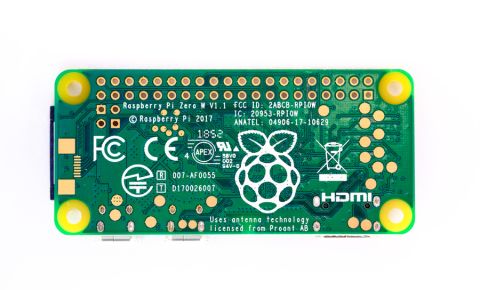



I’ll admit, I’m a big fan of Raspberry Pi. This set of inexpensive boards packs plenty of general purpose computing power into a small form factor, it easily connects to a LAN/WiFi and is accessible via SSH, and its memory is easily expandable with a micro SD card. It’s also easy to get a new prototype embedded application up and running directly from your laptop. The one aspect that prevents its application as a production-grade embedded system
There are numerous resources available that can enable you to bring AI into your product line. However, if you are new to AI, the path from prototype to production can seem daunting. There are new technologies to consider, making developing an AI model a very different beast compared to traditional linear programming. Estimating the processing and memory resources you’ll need can seem somewhat challenging as well. While implementing AI can be
AI technology is quickly changing how devices interact with the world. Traditionally, a programmer has to predetermine how a system will react to the various and unpredictable circumstances that can arise in real-world scenarios. With AI, a model can be trained that captures desired reactions in such a way that the model can reliably provide desired reactions to circumstances that were never anticipated. One challenge for developers new to AI is
Autonomous vehicles are slowly becoming an important part of the automotive industry. Many believe fully autonomous vehicles will soon be driving alongside humans, and technology companies are in a race to deploy fully autonomous vehicles. In December 2018, Waymo, the company that emerged from Google’s self-driving car project, officially started its commercial self-driving car service in the suburbs of Phoenix. Companies like May Mobility, Drive
When it comes to electronics, consumer devices like smartphones and Alexa tend to get all the attention. However, according to Alun Morgan at Ventec International Group, “about 23% of PCBs produced worldwide are used in electronics equipment for manufacturing applications.” The numbers only go up when you include other non-consumer categories that support manufacturing operations, such as automotive, telecom, power generation/distribution, and
Create your next embedded application with a Raspberry Pi CM4 dev kit. Once you’ve finished development, you can deploy your application on a custom carrier board.
Depending on your relationship with Altium, the services offered on the Altium Platform will be experienced from within Altium Designer and through the platform's browser-based interface. This page takes a look at the latter and provides an overview of what you'll see when you register an Altium Account and sign in to the Altium Platform Interface. For the latest information on the security,…
Requirements Portal is under continuous development. This page outlines new features and enhancements made to Requirements Portal in key updates. Update - 21 September 2026 This release includes bug fixes to enhance the overall functionality and user experience. Update - 3 September 2026 [collapse collapsed class="" title="Key Highlights" id="key_highlights_update_3_september_2026" data-inclusion…
How MCAD CoDesigner supports Harness Design MCAD CoDesigner’s Harness support integrates the ECAD and MCAD models of the harness. The goal is to allow the harness geometry to be designed in MCAD and then transferred back to ECAD, as the physical parameters (lengths) of the harness elements. The common (and essentially similar) element between the ECAD and MCAD environments is that the schematic…
Accessing the ECAD-MCAD Harness Synchronization Capabilities Note that not all features described on this page are available in all installations of Altium MCAD CoDesigner. Refer to the Feature Availability panel on the right for more information. Harness synchronization is currently available for PTC Creo (MCAD CoDesigner 3.5 and later) and SOLIDWORKS (MCAD CoDesigner 3.6 and later), support for…
Altium CoDesigner for Siemens® NX™ is only available for designers with an Altium Enterprise Solution. Altium CoDesigner for Siemens NX moved out of Beta in Altium CoDesigner 3.0. Altium CoDesigner is an interface for transferring printed circuit board designs between the ECAD and MCAD design domains. Once the CoDesigner add-in has been added to your MCAD software, CoDesigner can pass design…
Parent page: Installing & Configuring Altium CoDesigner Altium CoDesigner is an interface for transferring printed circuit board designs between the ECAD and MCAD design domains. Once the CoDesigner add-in has been added to your MCAD software, CoDesigner can pass design changes back and forth. Design changes are passed through an Altium Workspace, which acts as a bridge between the ECAD and MCAD…
Altium CoDesigner is an interface for transferring printed circuit board designs between the ECAD and MCAD design domains. Once the CoDesigner add-in has been added to your MCAD software, CoDesigner can pass design changes back and forth between your MCAD software and your Altium ECAD software. Design changes are passed through an Altium Workspace, which acts as a bridge between the ECAD and MCAD…
Altium CoDesigner is an interface for transferring printed circuit board designs between the ECAD and MCAD design domains. Once the CoDesigner add-in has been added to your MCAD software, CoDesigner can pass design changes back and forth. Design changes are passed through an Altium Workspace, which acts as a bridge between the ECAD and MCAD domains. ► Check the version compatibility between your…
Altium's MCAD CoDesigner technology connects the mechanical and electrical design domains, allowing the mechanical and electronic engineers to pass the loaded PCB back and forth between the two domains. In your Altium design software, this is achieved through an extension that loads and extracts board and component data from the PCB editor, the MCAD CoDesigner extension. In the MCAD software the…
Solutions for Every Role and Team
Discover and evaluate design options earlier
Develop in one shared workspace
Scale with control and compliance
Connect every stage of hardware development
Learn More