







Designing Products that Survive US–China–EU Electronics Trade Wars

At a Glance
This article shows how engineering and sourcing teams build flexibility into their BOMs through alternate components, regional sourcing strategies, and smarter HS-code planning to create and ship electronics products that can survive the wave of global trade disruption.


One line on a customs document can determine whether your product clears at a 10% or a 50% duty.
Modern electronics no longer move through a single country. A PCB designed in the U.S., fabricated in Taiwan, assembled in Vietnam, and final-packed in China may travel through four different trade environments before it reaches the customer. A small change in the sourcing path, assembly location, or HS classification can change your entire project cost by more than the hardware itself.
That’s the reality of today’s U.S.-China-EU electronics trade environment. Duties on China-origin components no longer arrive as one-time shocks. They keep changing, forcing companies to rethink how products are designed, sourced, and manufactured.
This article shows how engineering and sourcing teams build flexibility into their BOMs through alternate components, regional sourcing strategies, and smarter HS-code planning to create and ship electronics products that can survive the wave of global trade disruption.
What’s Actually Happening in Trade Right Now
If you’re designing or sourcing electronic components in 2026, global trade decisions now reach directly into day-to-day engineering and sourcing choices. A component that made financial sense last quarter may suddenly become difficult, expensive, and risky to source today.
The U.S.: Section 301 and Section 122
Originally introduced during the U.S.-China trade war, these tariffs still apply across a wide range of China-origin electronic components, including PCBs, semiconductors, connectors, and subassemblies. More recently, new Section 122 measures have added another layer of cost pressure.
The EU: Strategic Autonomy Is Driving Policy Pressure
Europe, meanwhile, is tightening regulations such as RoHS, REACH, and WEEE, with REACH now tracking more than 197 substances. In some cases, RoHS violations can carry fines of up to €100,000 per incident.
China: Export Controls
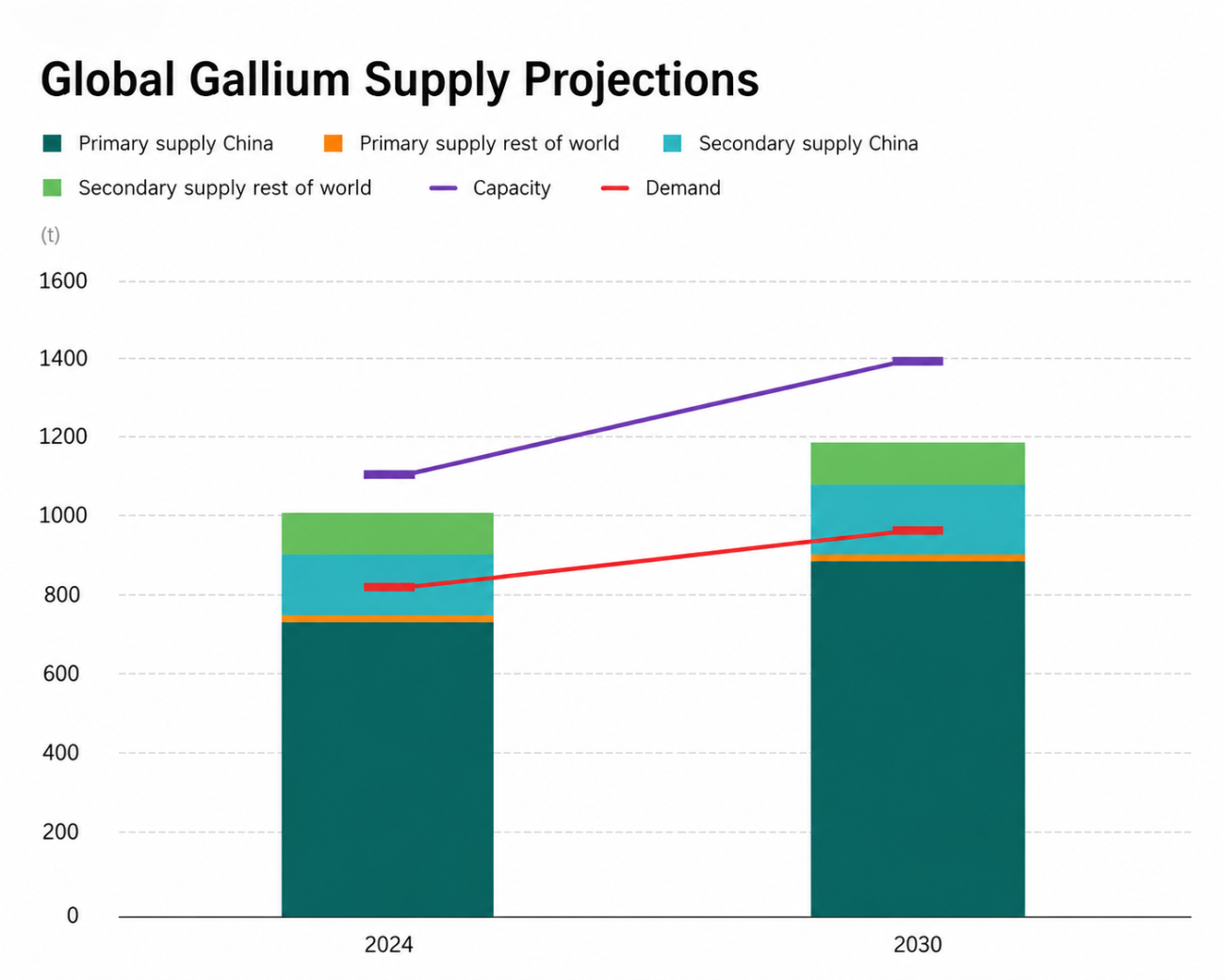
China’s response hasn’t been limited to tariffs. Instead, it has focused on controlling upstream materials. With China controlling roughly 98% of global gallium production and about 68% of germanium production, export restrictions on these materials, both critical for semiconductors and RF applications, have introduced a different kind of supply chain risk.
The combined effect of U.S. tariffs, EU compliance requirements, and China’s export controls is creating an electronics market where volatility is becoming a structural challenge rather than a temporary one.
- A PCB sourced from China may carry a tariff penalty in the U.S.
- The same PCB may face stricter compliance requirements in Europe.
- The materials inside that PCB may be subject to export controls from China.
In practice, tariffs, compliance rules, and export controls have become part of the design process itself.
Where the Risk Sits in Your BOM
Tariffs don’t land evenly across a BOM. To design for resilience, you need to know where the pressure builds.
Printed Circuit Boards (Bare & Assembled) 8534
- Typical sourcing regions: China, Taiwan, Vietnam, South Korea
- Tariff exposure: High (especially China-origin into the U.S.)
- Switching difficulty: Medium-High
PCBs remain one of the most tariff-exposed parts of the electronics supply chain. More than 60% of global PCB production capacity is concentrated in China, particularly for high-volume and complex multilayer boards. As a result, companies importing China-origin PCBs into the U.S. often face 25% duties under Section 301.
Current U.S. Tariff Rates on PCBs by Country of Origin
Country | Type | Standard Rate | Exemption | Global Tariff | Total |
China | 2L and 4L FR4 PCBs | 25% | -25% | 10% | 10% |
6L+, Flex and Non-FR4 PCBs | 25% | 0% | 10% | 35% | |
Malaysia | All PCB Types | 0% | 0% | 10% | 10% |
Moving production to Malaysia or Taiwan sounds straightforward, but it rarely is. Qualification cycles, yield differences, supplier-specific process capabilities, and capacity constraints make transitions slower than expected.
Semiconductors (Discrete, Analog, Power) 8542
- Typical sourcing regions: Taiwan, China, Malaysia, Philippines, Europe
- Tariff exposure: Medium (varies widely by type and origin)
- Switching difficulty: High
China-origin semiconductor ICs currently face a 50% effective duty rate under Section 301. By comparison, the same parts originating in Taiwan, Malaysia, or the Philippines face only the 10% under `Section 122. Taiwan alone accounts for roughly 90% of advanced logic foundry output below 10nm, and no realistic near-term substitute exists.
Tariff rates summarized for Semiconductors
Origin | Section 301 | Section 122 | Effective rate |
China (packaged) | 50% | 10% | 60% |
Taiwan / Malaysia / Philippines | 0% | 10% | 10% |
Mexico (USMCA-qualifying) | 0% | 0% | 0% |
Redesigning around a gallium-dependent RF or power device can take 12 to 18 months when validation, qualification, and testing are included.
Passive Components (MLCCs, Inductors) 8533, 8532
- Typical sourcing regions: Japan, South Korea, Taiwan, China
- Tariff exposure: Low to Medium
- Switching difficulty: Low to Medium
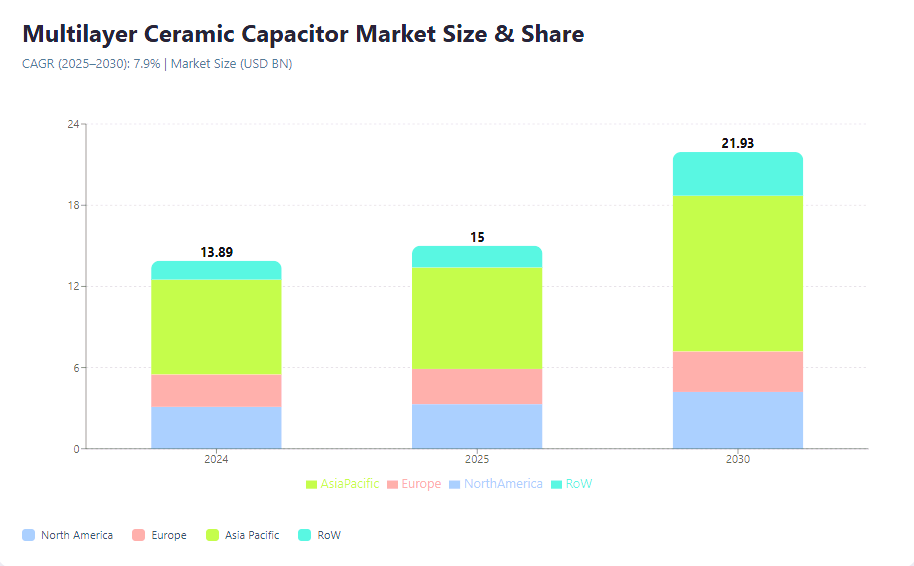
Japanese and Korean manufacturers dominate the high-quality MLCC market, with the top five suppliers controlling roughly 70% of global revenue.
China-origin MLCCs under HS 8532, resistors under HS 8533, and inductors under HS 8504 currently face tariff rates up to 35%, typically combining 25% Section 301 tariffs with the 10% Section 122 surcharge.
Meanwhile, the same parts sourced from Japan, South Korea, or Taiwan face only the 10% under Section 122.
Tariff rates summarized for Passive components
Origin | Section 301 | Section 122 | Effective Rate |
China | 25% | 10% | 35% |
Japan / South Korea / Taiwan | 0% | 10% | 10% |
Mexico (USMCA-qualifying) | 0% | 0% | 0% |
Substitution is usually easier than with semiconductors. Standardized footprints, comparable specifications, and multiple qualified suppliers provide flexibility, especially when alternate sourcing was considered during the design phase.
Connectors & Electromechanical Parts 8536
- Typical sourcing regions: China, Vietnam, Mexico, Eastern Europe
- Tariff exposure: High (especially for China-origin goods)
- Switching difficulty: Medium
China alone accounts for roughly 35-40% of Asia-Pacific connector consumption, and Asia-Pacific itself represents more than 55% of global connector demand, making China the single largest concentration point for both connector production and consumption worldwide.
Many China-origin connectors effectively carry a combined 35% duty: 25% from Section 301 Lists 1 and 2 tariffs, layered with the additional 10% Section 122 global surcharge.
Tariff rates summarized for Connectors & Electromechanical Parts
Origin | Section 301 | Section 122 | Effective Rate |
China | 25% | 10% | 35% |
Vietnam / Eastern Europe | 0% | 10% | 10% |
Mexico (USMCA-qualifying) | 0% | 0% | 0% |
Unlike semiconductors, alternatives do exist, but switching isn’t always straightforward. Mechanical fit, mating cycles, tooling, and certifications all create friction.
How Leading Teams Are Designing Products for Trade Resilience
Leading engineering and sourcing teams are no longer treating tariffs as a procurement issue alone. They’re designing products with regional flexibility, alternate sourcing paths, and trade exposure in mind from the very first schematic review.
1. Designing for Multi-Region Pricing from Day One
A part may look cost-effective because it moves through a China-centered supply chain today. But that cost advantage can disappear overnight once tariffs, duties, freight fluctuations, or export restrictions enter the equation.
The question is no longer simply “What is the cheapest part today?” It is “Which sourcing path remains stable under changing trade conditions?”
What to Evaluate and Apply During Design
Step 1: Compare Regional Pricing
Look beyond the lowest quoted price. Comparing costs across regions and distributors gives you a clearer picture of how sourcing decisions impact manufacturing costs in different markets.
Step 2: Review Manufacturing Footprint
Check where components are manufactured, assembled, and packaged. Understanding the country of origin helps identify potential tariff exposure and geopolitical risks.
Step 3: Assess Supply Routes
Evaluate how components move from a factory to an assembly site. Components that depend on tariff-sensitive regions or congested logistics corridors may carry additional supply risks.
Step 4: Calculate Landed Cost
Look beyond unit price by including freight, duties, taxes, and distributor surcharges. This provides a more accurate view of the true delivered cost.
Step 5: Document Risks in the BOM
Flag tariff-sensitive, long-lead-time, and single-source components directly in the BOM or AVL. Making sourcing risks visible helps teams make informed decisions throughout the product lifecycle.
Decisions depend on up-to-date supplier information. Platforms such as Octopart help teams compare stock availability, pricing, and supplier coverage across regions, making it easier to identify potential cost exposure before tariffs, logistics constraints, or regional shortages impact production.
2. Designing with Qualified Alternates
Most companies treat alternate components as a backup option. In today's environment that approach no longer works.
What a “Good Alternate” Actually Means
A true alternate is not simply a similar-looking part in AVL. It needs to meet several practical conditions:
- Comparable electrical performance
- Compatible footprint or minimal PCB layout changes
- Similar thermal behavior and reliability characteristics
- Different manufacturing origin or supply chain exposure
The last requirement is often overlooked. If your primary and alternate parts ultimately depend on the same country, packaging ecosystem, or upstream material flow, you’re not diversified; you just have two versions of the same risk.
A More Practical Design Strategy
Instead of approving a single component, leading teams qualify multiple parts from different manufacturing regions.
For example:
Component Type | Primary Source | Alternate Region |
Power IC | China-linked packaging | Malaysia |
Connector | China manufacturing | Vietnam |
Analog IC | Taiwan supply chain | Germany or U.S. |
One of the most overlooked variables in tariff resilience is HS code classification. Tariffs are applied based on HS codes, not product descriptions. Small design changes can shift a product into a different classification, resulting in dramatically different duties.
Electronics Component Landed Cost Comparison - US Import (May 2026)
Component | Origin | Unit Price ($) | HS Code | Tariff (%) | Landed Cost ($) |
Microcontroller (MCU) | China | $0.400 | 8542.31 | 50% | $0.60 |
Taiwan | $0.420 | 8542.31 | 10% | $0.46 | |
Malaysia | $0.430 | 8542.31 | 10% | $0.47 | |
MLCC Capacitor | China | $2.800 | 8532.24 | 35% | $3.78 |
Japan | $3.600 | 8532.24 | 10% | $3.96 | |
South Korea | $3.200 | 8532.24 | 10% | $3.52 | |
PCB, 6 Layers or more | China | $2.500 | 8534.00 | 25% | $3.13 |
Taiwan | $3.200 | 8534.00 | 10% | $3.52 | |
Vietnam | $3.000 | 8534.00 | 10% | $3.30 | |
Connector, | China | $0.180 | 8536.90 | 35% | $0.24 |
Mexico (USMCA) | $0.240 | 8536.90 | 0% | $0.24 | |
Japan | $0.220 | 8536.90 | 10% | $0.24 | |
Logic IC / | China | $0.350 | 8542.31 | 50% | $0.53 |
Taiwan | $0.380 | 8542.31 | 10% | $0.42 | |
South Korea | $0.400 | 8542.31 | 10% | $0.44 |
China 2–4-layer PCB exclusion expires May 31 2026 - rate rises to ~180% after that date. Landed cost = unit price × (1 + tariff).
Tariff sources: Section 301 (FR 2024-21217) · Section 122 (FR 2026-03824) · hts.usitc.gov
For example, semiconductor-related duties are often tied to classifications under categories such as:
- HS 8541: discrete semiconductor devices
- HS 8542: electronic ICs
Historically, HS classification was a post-production compliance task handled late in the product lifecycle. Leading teams now involve trade compliance and customs specialists much earlier in product development so tariff exposure can be evaluated early.
Conclusion
In practice, every critical component should be evaluated through three lenses simultaneously:
- Technical fit
- Long-term supply continuity
- Exposure to tariffs, export restrictions, and geopolitical risks.
The companies managing trade volatility today are not waiting for the next tariff announcement or supply disruption. They are building flexibility into their products from the start through qualified alternates, regional sourcing options, and early HS-code awareness.

About Author
Related Resources
Related Technical Documentation
Table of Contents
Solutions for Every Role and Team
- Discover and evaluate design options earlier
- Develop in one shared workspace
- Scale with control and compliance
- Connect every stage of hardware development
Learn More
Thank you, you are now subscribed to updates.