









From Panic Buying to Partnerships: Locking in Supply for the Long Haul

At a Glance
Shift from panic buying to strategic sourcing. Discover how multi‑year supplier partnerships and data insights improve resilience and reduce supply risk.


The advantages of shifting from short-term (and therefore, inherently short-sighted) buying to long-term strategic procurement have been documented since the pandemic. During the chip shortage, procurement teams were forced into survival mode: spot buys, broker sourcing, and stockpiling wherever supply was available. These tactics kept lines running, but despite lead times more than double historical norms (semiconductor lead times peaked at roughly 26–27 weeks in 2022), they introduced long-term risk and inflated costs.
Transactional sourcing can address immediate shortages, but it leaves companies exposed to volatility, allocation risk, and cost spikes.
Resilience isn’t just about reacting faster but about anticipating disruption across interconnected supply chains. It’s a shift from firefighting to foresight.
When capacity, material, or stock is constrained, multi-year contracts and the relationships behind them stabilize supply. These agreements are now central to securing allocation and avoiding last-minute sourcing risk. Many OEMs now operate on 2 to 5-year supply agreements paired with volume commitments or shared forecasts, securing priority allocation and more stable pricing.
When logistics falter, inventory keeps production moving. But shifting from “Just-in-Time” to “Just-in-Case” and accumulating excess stock isn’t a viable long-term solution. In electronics manufacturing, carrying costs are often estimated at roughly 20% to 30% of inventory value annually, and excess stock can also create obsolescence exposure, write-down risk, and redesign costs.
Why Electronics Supply Chains Are Especially Exposed
Several converging pressures make proactive procurement non-negotiable:
- Shorter Product Lifecycles: Rapid innovation in AI, EVs, and IoT is compressing component lifecycles, increasing the likelihood of end-of-life events mid-production. Hundreds of thousands of electronic components now reach end-of-life (EOL) every year, with average lifecycles shrinking to just two to five years.
- Concentration of Critical Materials: Inputs such as copper foil, high-purity silicon, and rare earth elements are geographically concentrated, exposing the supply chain to geopolitical risks.
- Persistent Constraints: Legacy nodes (28nm and above) used widely in automotive and industrial electronics continue to face tight supply-demand conditions.
- High Cost of Redesign: Obsolescence-driven redesigns can range from $20,000 to nearly $2 million, with additional exposure from post-obsolescence pricing spikes of 10–15x.
To be sustainable, resilience must be pragmatic, protecting margins while fitting within existing workflows. Many strategies fail here, overcorrecting and adding cost and complexity without improving supply assurance.
The shift now is toward structured, long-term supplier engagement that balances flexibility with commitment.
Multi-year agreements, volume commitments, and early design-in collaboration are becoming standard practice, not just for the largest OEMs. These approaches don’t remove risk, but redistribute it. Suppliers gain predictability. Buyers gain priority access, more predictable pricing, and clearer allocation pathways.
Locking in a component is no longer just a technical decision but a supply decision.
Procurement as a Differentiator
Companies that combine commercial agreements with supply-side visibility are better positioned to maintain production without overextending cost or inventory.
Procurement teams, equipped with the right data, can act as orchestrators of supply continuity, deciding when to commit, dual-source, or pivot based on real conditions rather than assumptions.
That visibility (into inventory trends, lifecycle status, pricing movement, and alternates) enables smarter trade-offs and turns procurement into a forward-looking function rather than a reactive one.
How Octopart Helps
Octopart supports this shift by making supply-side intelligence more accessible and more actionable earlier in design and sourcing workflows. It strengthens supplier negotiations and enables long-term agreements grounded in real market data rather than reactive assumptions.
By exposing up-to-date inventory data, inventory trends, and lifecycle insights, Octopart helps teams evaluate supply risk before committing to a part or supplier. Engineers and buyers can identify viable alternates, compare sourcing options, and understand where supply is concentrated or constrained.
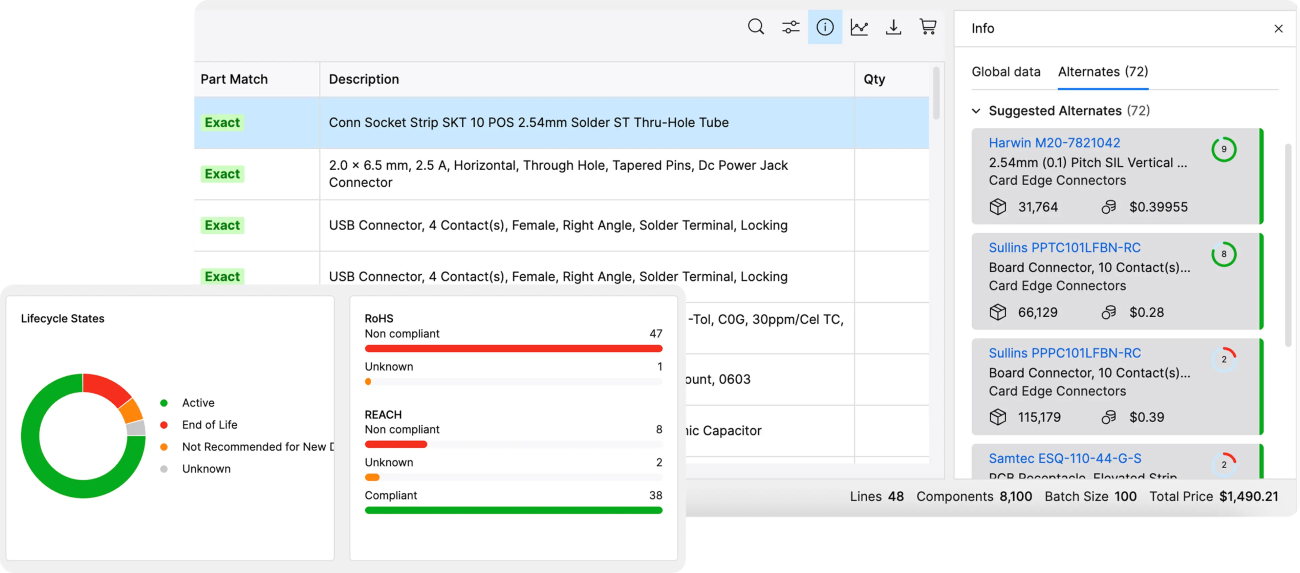
This isn’t just visibility but leverage. Teams can enter supplier discussions with data in hand, structure smarter volume commitments, and align sourcing decisions with long-term availability rather than short-term urgency.
The result is fewer last-minute spot buys, lower excess inventory risk, and stronger, more intentional supplier partnerships.

About Author
Related Resources
Related Technical Documentation
Table of Contents
Solutions for Every Role and Team
- Discover and evaluate design options earlier
- Develop in one shared workspace
- Scale with control and compliance
- Connect every stage of hardware development
Learn More
Thank you, you are now subscribed to updates.