









Electronics Manufacturing Surges with Reshoring Initiatives

At a Glance
Explore the $1.5T reshoring surge and see why, from AI growth to just-in-case model, electronics are moving to home soil in 2026.


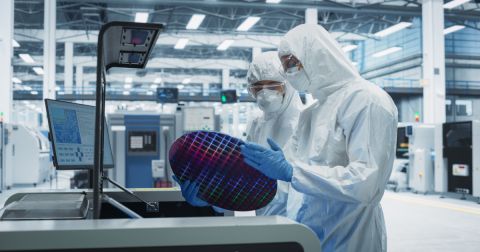
The time for speculative mega-projects and flashy press releases is officially behind us. As we move through 2026, the electronics industry has entered a new phase defined by the sound of pouring concrete and the hum of high-speed robotic lines on home soil. Massive fabrication sites across North America, Europe, and Asia are no longer just blueprints intended to soothe anxious shareholders; they are now the physical hedge against a world where global instability is the only constant.
Between 2024 and 2030, global fab investments are projected to hit a staggering $1.5 trillion. This isn't just a bump in the road but a full-scale electronics renaissance. We are seeing a structural shift where the ability to fabricate a circuit board or a semiconductor locally is viewed as the ultimate form of modern sovereignty.
Key Takeaways
- The industry has moved from the just-in-time model of 2010 to a just-in-case reality in 2026, where availability is the primary metric of success.
- Semiconductors are reaching a historic peak of $975 billion in annual sales this year, with generative AI chips accounting for nearly half that revenue.
- Regionalization is driven by physical risks, like the 10 million gallons of water a single fab consumes daily, and geopolitics.
- High-wage regions are staying competitive by using physical AI and agentic AI to manage labor costs and market volatility.
From Just-in-Time to Just-in-Case
To understand where we are, we have to look back at the efficiency at all costs era of 2010. Back then, the industry lived and died by the just-in-time philosophy, which prioritized the lowest possible unit cost above everything else. In 2026, that playbook will be thrown out. We have moved into a just-in-case reality, where guaranteed availability is the only metric of success that actually matters to the bottom line.
This shift is being supercharged by the AI infrastructure boom. The global semiconductor industry is projected to reach a historic peak of $975 billion in annual sales this year. In fact, Generative AI chips alone are expected to account for roughly half of all global chip sales in 2026, totaling nearly $500 billion in revenue. With that much value on the line, waiting for the next shipment is no longer a viable business strategy.
The Geography of Risk: Lessons from Taiwan
The push for regional manufacturing isn't just about politics but also about physical fragility. For years, the industry ignored the single point of failure created by over-centralization. The Taiwan droughts of 2021 and 2024 served as a global cautionary tale, illustrating how a lack of water can bring the world's most advanced supply chains to a grinding halt.
The resource requirements for these facilities are almost hard to fathom:
- Daily Water Consumption: A single mega-fab can consume 10 million gallons of ultra-pure water (UPW) every day.
- Urban Comparison: That is roughly equivalent to the needs of a city of 120,000 people.
- Global Impact: Some reports suggest total global fab water consumption is now comparable to the needs of a city the size of Hong Kong.
Policy as the Catalyst: The Multi-Polar Subsidy War
Governments have moved past the suggestion phase and are now using a mix of massive incentives and strict penalties to force local capacity building. It is a multi-polar subsidy war, and everyone is trying to build a fortress.
|
Region |
Initiative |
Investment / Target |
|
European Union |
The European Chips Act has already mobilized €80 billion in private and public investment to date, nearly doubling its initial targets as the EU seeks to double its global chip production share. |
|
|
India |
Targeting $300 billion in electronics production turnover by the end of 2026. |
|
|
Japan |
AI & Logic Investment |
Projecting semiconductor equipment sales of 5.5 trillion yen in 2026. |
In the United States, the government is using the carrot-and-stick approach. The "stick" involves high import duties to discourage foreign sourcing, while the "carrot" offers zero-percent reciprocal tariffs to companies that regionalize at least 40% of their supply chain. The US-Taiwan Trade & Investment agreement is a prime example of these targeted regional partnerships in action.
#ChipsDontFloat: A New Supply Chain Mantra
The industry has rallied behind a visceral new slogan: #ChipsDontFloat. It serves as a constant reminder that a component stuck in a shipping container in a contested waterway is worth exactly zero during a crisis.
Procurement teams are reframing the higher price of domestic or regional parts. Instead of seeing it as a cost increase, they view it as an insurance premium against the inherent unpredictability of global shipping. When you can’t get the parts, the price doesn't matter; having them on-site is the only way to keep the factory running.
Technological Equalization through AI
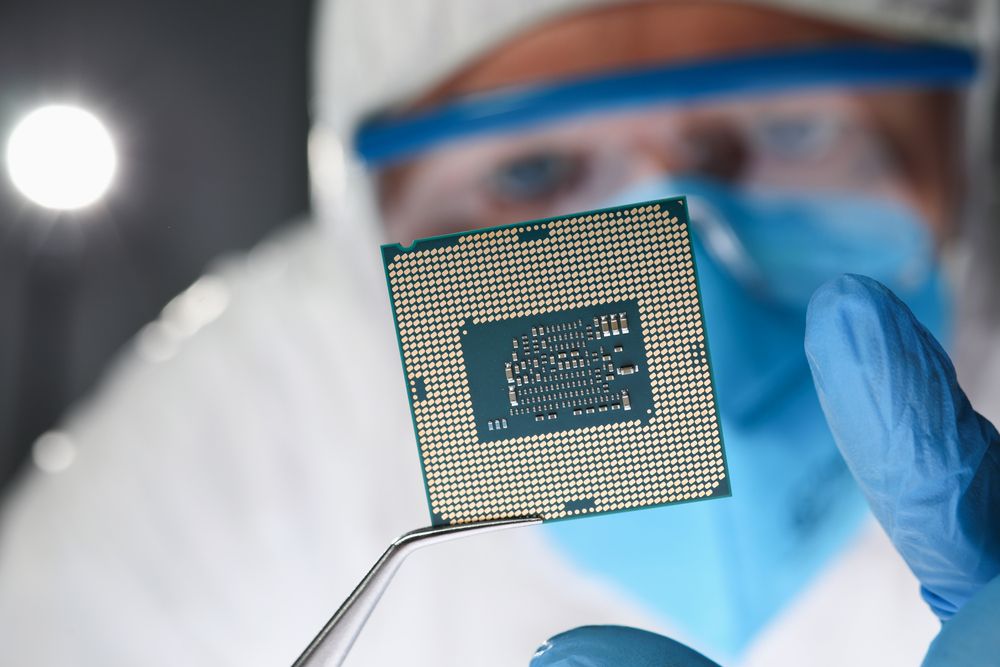
How are high-wage regions like North America and Europe staying competitive against traditionally lower-cost manufacturing hubs? The answer is AI-driven automation.
1. Design for Automation
Engineers are no longer designing purely for function. Instead, they are designing for regional manufacturing. Products are optimized for high-speed robotic lines rather than low-cost manual assembly, enabling a far more localized and efficient manufacturing process.
2. Agentic and Physical AI
Companies are deploying autonomous agents to manage the extreme volatility of component markets, making real-time procurement decisions that humans simply can't keep up with.
The rise of autonomous robotics on the factory floor is finally allowing Western regions to offset higher labor costs.
The Roadblocks: Humans and Utilities
Despite the trillions of dollars flowing in, we are hitting two significant bottlenecks: talent and power.
- The talent gap: While you can build a fab with capital, you can only staff it with time. The industry is facing a deepening global skills shortage, with an additional 1 million skilled workers needed to staff new mega-fabs by 2030.
- The energy crisis: In a Prologis report, 33% of industry leaders shared concerns about simply securing enough power to keep these massive facilities running. Modern manufacturing is incredibly energy-intensive, and the grid is struggling to keep up with the demand of both AI data centers and the fabs that build them.
The New Economic Reality: Paying for the Unsinkable Supply Chain
Let’s address the elephant in the room that every procurement officer and CFO is whispering about: domestic and regional electronics are often more expensive. For decades, the industry was addicted to the rock-bottom unit costs of offshore manufacturing. Now, the bill for that addiction has arrived.
The transition to a just-in-case model forces a difficult question: Is the global consumer actually ready to pay for supply chain stability? While a price hike is never an easy sell, the 2025/2026 investment surge proves that the world’s leading economies, and their biggest tech players, are finally willing to pay the premium.
Rather than being just a temporary phase or a reaction to a single bad year, it is a fundamental structural trend. Ultimately, the value proposition has shifted. Resilience is no longer a nice-to-have line item. It’s the best form of modern sovereignty. The ability to physically fabricate a circuit board on home soil means that, beyond purchasing a component, you are buying the certainty that your production line won't go dark because of a drought halfway across the world or a logistical bottleneck in a contested strait.
So, what’s the bottom line? Resilience has a price, but as the #ChipsDontFloat movement reminds us, a cheap part that never arrives is the most expensive part of all. This surge represents a return to tangible value, moving beyond the digital-only hype and back to the reality of physical fabrication. For those willing to invest in regionalization now, the insurance premium paid today will be tomorrow's competitive advantage.
Frequently Asked Questions
My BOM has 400 components. If 10% are offshore, am I still vulnerable?
Risk isn't binary; it's a gradient. The current trend toward just-in-case reality means prioritizing the most critical long-lead or high-value items for regionalization. While you may never achieve 100% regionalization, securing the core logic and power components locally significantly reduces your single point of failure risk.
How can I design for automation without ballooning my initial engineering costs?
Design for automation does require upfront optimization, but in 2026, the rise of physical AI on factory floors makes this a cost-saving measure in the long run. By designing products for high-speed robotic pick-and-place rather than manual touch-points, you offset the labor cost differentials that previously made offshore assembly the only option.
Is there actually enough electricity to power the fab I’m planning to use?
This is the utility bottleneck of the moment. With 33% of industry leaders concerned about power security, assessing your manufacturing partner's energy resilience is now as important as checking their yield. Forward-thinking fabs are increasingly integrating on-site renewable microgrids to ensure they aren't vulnerable to municipal grid failures.

About Author
Related Resources
Related Technical Documentation
Table of Contents
Solutions for Every Role and Team
- Discover and evaluate design options earlier
- Develop in one shared workspace
- Scale with control and compliance
- Connect every stage of hardware development
Learn More
Thank you, you are now subscribed to updates.