








The U.S.-Iran War and the Electronics Supply Chain: 5 Risks Sourcing Teams Should Watch

At a Glance
Learn which five supply chain risks sourcing teams should watch as U.S.-Iran tensions drive energy shocks, logistics disruption, and materials volatility.


On the surface, the electronics supply chain looks stable. Production lines are running, distributors have inventory, and most components remain available. Nothing seems dramatically different.
But experienced procurement teams know supply chains rarely break overnight. Instead, the pressure builds quietly in the background.
Energy prices start moving. Shipping routes become less predictable. Insurance premiums rise or become unattainable. Certain raw materials begin to tighten. None of these signals stops production immediately, but together they slowly push costs higher and make delivery timelines less certain. That is exactly where the electronics industry finds itself today as geopolitical tensions in the Middle East begin.
For sourcing leaders, the real question is not whether factories will shut down tomorrow. It’s where the early risks are building and how quickly they can turn into higher costs, logistics disruptions, and longer lead times.
Key Takeaways
- The electronics supply chain remains operational, but underlying pressures are building amid rising costs, logistics uncertainty, and material volatility.
- Five key risk areas are emerging: energy price shocks, freight disruption, helium and material exposure, metals inflation, and lead-time deterioration.
- Critical watchlist materials (helium, aluminum, and copper) are early indicators of tightening supply and cost pressure.
- Procurement teams can reduce exposure by acting early across five areas: single-source risk, BOM exposure, alternate validation, pricing signals, and logistics monitoring.
1. Energy-Price Shock
Energy is usually the first place geopolitical tension shows up.
Oil is a primary input for global fuel and energy markets. When conflict escalates in the Middle East, prices tend to react quickly. Oil prices have moved above $100 per barrel, reflecting roughly a 40-45% increase over the past year.
The cost impact begins to flow through several parts of the electronics industry. Semiconductor fabs are extremely energy-intensive. Running clean rooms, plasma etching tools, and wafer-processing equipment requires massive amounts of electricity. The same applies to materials used in electronics manufacturing, including:
- Aluminum smelting
- Copper refining
- PCB laminate production

When energy prices rise, those costs ripple across the electronics supply chain. Suppliers may absorb some of the pressure initially, but over time, it shows up in component pricing.
None of this stops production, but it slowly increases the cost base for electronics manufacturing.
2. Freight and Logistics Disruption
Shipping routes through the Middle East are central to global trade, so even small disruptions can quickly impact electronics supply chains.
Strait of Hormuz Instability
The Middle East sits at the center of global oil and gas flows, and the Strait of Hormuz is one of the most critical choke points connecting Gulf energy and industrial exports to global markets. Around 20 million barrels of crude oil pass through this narrow shipping corridor every day.
When security risks increase in the region, shipping companies often reroute vessels, reduce traffic through the area, or add war-risk surcharges to cargo moving through nearby waters. A shipment that moves from Asia to Europe in four weeks could suddenly take six or more.

Regional Airspace Restrictions
Regional airspace restrictions can cause similar disruption for air cargo. When airlines are forced to avoid high-risk zones, flights often take longer routes or add refueling stops. This increases both transit-time and shipping costs.
Insurance and Security Costs
During periods of conflict, shipping companies and their insurance carriers typically increase premiums, especially on higher-risk routes. Shipments don’t stop moving, but they become more expensive and less predictable.
For procurement teams, the impact is clear: higher freight costs, longer lead times, and less predictable deliveries, all of which increase pressure on production planning.
3. Helium and Semiconductor Material Exposure
One of the less obvious risks in the current conflict involves helium.
The chart below highlights how helium plays a critical role in applications such as semiconductor fabrication. Helium is used in wafer cooling systems, leak detection processes, and certain advanced fabrication steps. Unlike many industrial gases, helium cannot easily be replaced in these applications.

The conflict has already disrupted the helium supply. Qatar, one of the world’s largest helium producers, recently stopped LNG operations due to regional tensions, removing around 5.2 million cubic meters per month from the market.
Global helium supply is already fragile. Production is limited in a handful of locations. When disruption hits one region, the impact has been immediate:
- Helium spot prices have doubled
- Industrial users may face allocation
- Lead times are becoming unpredictable

Semiconductor suppliers may still be operating normally, but upstream materials such as helium, neon, and specialty chemicals can quietly begin to tighten in the background.
4. Metals Inflation: Aluminum and Other Materials
Metals are another area where geopolitical tension can quickly show up in the electronics supply chains.
Aluminum is widely used across electronics manufacturing, including:
- Heat sinks
- Electronic enclosures
- Connector housings
- Cable shielding
The Middle East is a major producer of primary aluminum. When supply from the region becomes uncertain, commodity markets often react before any actual shortage appears.
That reaction is already visible.
The LME three-month aluminum price increased to $3,372/t on 4 March. At the same time, a large commodities trader moved to withdraw nearly 100,000 tons of aluminum from London Metal Exchange warehouses, signaling growing concerns about Middle Eastern supply disruptions.
When aluminum prices rise, suppliers typically pass those increases through within a quarter. For sourcing teams, tracking metals markets is a key part of staying ahead of cost pressures before they fully hit the supply chain.
5. Delayed Lead Time Deterioration
One of the most misleading signals during geopolitical disruptions is the appearance of stable lead times.
Major electronics manufacturers, including Pegatron and GlobalWafers, have indicated they do not see immediate operational risk from the Middle East conflict. That’s largely because in the early stages of supply chain disruption, distributors and suppliers often continue to fulfill orders using safety stock. These buffers hide underlying supply pressure for weeks or even months.
At first, procurement teams may not see obvious changes in:
- Lead times
- Distributor stock levels
- Supplier production output
However, the early warning signs often appear, including:
- Less stable pricing
- Smaller allocation quantities
- Shorter quotation validity
- Higher freight surcharges
Tracking these indicators can help sourcing teams identify tightening conditions before the market reacts more broadly.
Watchlist Materials for Electronics Procurement Teams
Given the current geopolitical environment, sourcing teams should closely monitor materials that are highly sensitive to supply disruptions.
- Helium: Critical for semiconductor manufacturing with a limited global supply.
- Aluminum: Widely used in mechanical components and thermal management applications.
- Copper: Essential for PCBs, power electronics, and wiring.
Monitoring these materials can help procurement teams identify early pressure points in the electronics supply chain.
| Material | Key Use in Electronics | Exposure Level | Mitigation |
|---|---|---|---|
| Helium | Fab purging/cooling | High (25% supply risk) | Dual‑source, buffer Q1 2026 |
| Aluminum | Enclosures/PCBs | Medium‑High (price + logistics) | Regional shifts, futures hedges |
| Copper | Wiring/Plating | Medium (feedstock) | Inventory audits |
Practical Steps Procurement Teams Can Take Now to Reduce Supply Chain Risk
While the situation remains uncertain, sourcing teams can take several practical steps to reduce exposure.
1. Review Single-Source Components
Start by identifying components that rely on a single supplier or a specific geographic region. These represent the highest supply risk during geopolitical disruptions. Mapping this early gives teams time to qualify alternatives before shortages begin.
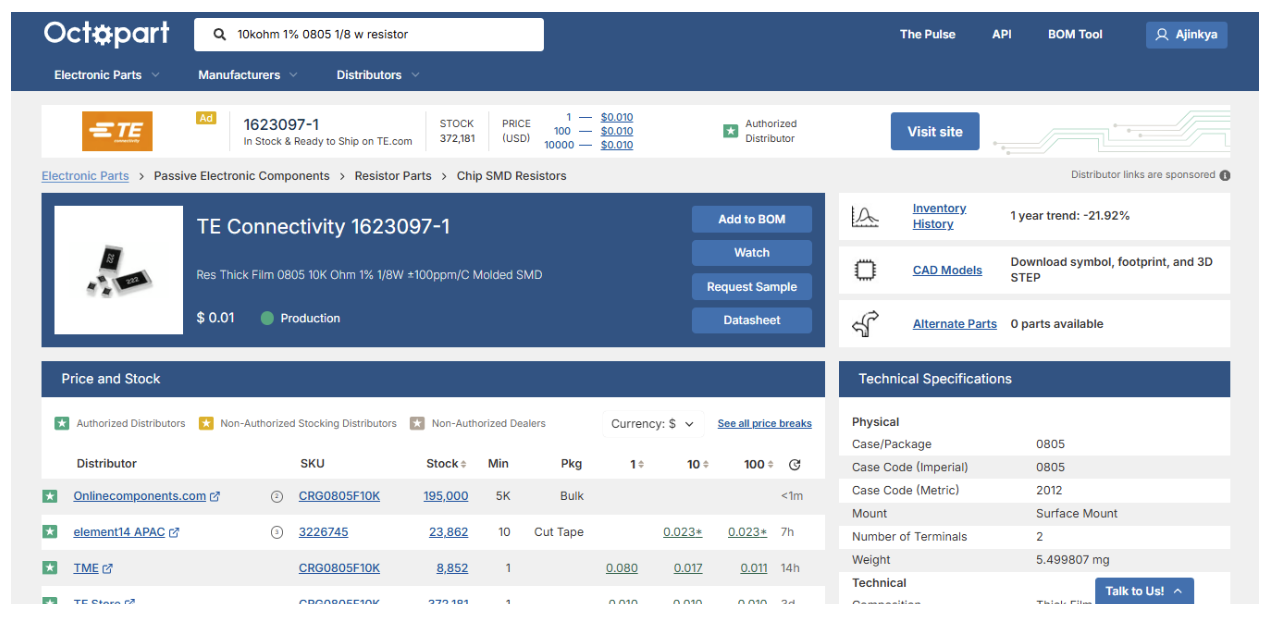
Tools like Octopart can help quickly surface equivalent parts, alternative manufacturers, and distributor availability across the global market.
2. Assess BOM Exposure
Take a closer look at your bill of materials.
Focus on components tied to energy-intensive processes or on raw materials such as aluminum, copper, and specialty gases. These are usually the first areas where cost pressure shows up when energy markets tighten.
Using Octopart’s parametric search, procurement teams can more easily compare specifications and identify compatible alternatives before lead times start shifting.
3. Validate Alternate Suppliers
If alternate sources are already listed, don’t assume they’re ready. Confirm the qualification status, check actual availability, and understand the current capacity. Many alternates exist on paper but haven’t been tested under real supply constraints.
Comparing manufacturers, packaging options, and compliance status through Octopart can help teams validate these options faster.
4. Track Pricing Signals
Keep an eye on early indicators like energy prices, aluminum premiums, and industrial gas costs. These tend to move before component pricing adjusts.
Use Octopart to check up-to-date pricing and compare distributor offers to spot early cost increases before they impact sourcing.
5. Monitor Logistics Indicators
Watch what’s happening in freight. Rising shipping costs, route changes, or longer transit times are often early signs of disruption. These shifts usually appear before suppliers formally update lead times.
At the same time, use Octopart to check distributor inventory levels to gauge how quickly stock may tighten as logistics conditions change.
Prepare Now or Pay Later
The electronics supply chain is not breaking, but it is clearly under pressure. Energy, logistics, materials, and metals are all early signals of disruption, even if lead times still appear stable today.
Procurement teams that monitor these shifts early, validate alternates, and leverage up-to-date market data through intelligent platforms like Octopart will be in a far stronger position to manage risk. In this environment, visibility and speed are no longer optional but are the difference between stability and exposure. Prepared supply chains bend under pressure; unprepared ones break.

About Author
Related Resources
Related Technical Documentation
Table of Contents
- Key Takeaways
- 1. Energy-Price Shock
- 2. Freight and Logistics Disruption
- Strait of Hormuz Instability
- Regional Airspace Restrictions
- Insurance and Security Costs
- 3. Helium and Semiconductor Material Exposure
- 4. Metals Inflation: Aluminum and Other Materials
- 5. Delayed Lead Time Deterioration
- Watchlist Materials for Electronics Procurement Teams
- Practical Steps Procurement Teams Can Take Now to Reduce Supply Chain Risk
- 1. Review Single-Source Components
- 2. Assess BOM Exposure
- 3. Validate Alternate Suppliers
- 4. Track Pricing Signals
- 5. Monitor Logistics Indicators
- Prepare Now or Pay Later
Solutions for Every Role and Team
- Discover and evaluate design options earlier
- Develop in one shared workspace
- Scale with control and compliance
- Connect every stage of hardware development
Learn More
Thank you, you are now subscribed to updates.