Design for manufacturing (DFM) is the process for design engineers to review the design of a product to optimize its dimensions, materials, tolerances and functionality through the most efficient manufacturing means possible.
Dr, Kunal generously gives us all a crash course on surface finishes and understanding different types of materials that could affect signal integrity, reliability and electronic shelf life.
Expert Tara Dunn discusses the significant benefit of the 3D additive manufacturing process in space savings associated with routing at 15 or 25 microns compared to the standard 75 microns. Read now and learn more about cost comparison with the subtractive process.
The business development manager of J.A.M.E.S., Alexandre Schafer talks about the organization’s vision to push the Additively Manufactured Electronic technology to become more accessible to the industry.
How to deal with nuances in PCB design and manufacturing? In today’s episode, Dave Young the owner of Young Circuits Design and founder of BlueStamp Engineering, and Zach talk about mitigating risk factors early in the stage of electronic design.
Expert Tara Dunn explores options that are more qualitative than D-Coupon and IST testing that will improve micro via reliability or reliability in general terms by making the printed circuit board easier to manufacture. Read this blog to learn more.
Don't forget to clean up the surface layers on your PCB before you send the design in for manufacturing. We've compiled a list of the points you can check before beginning production.
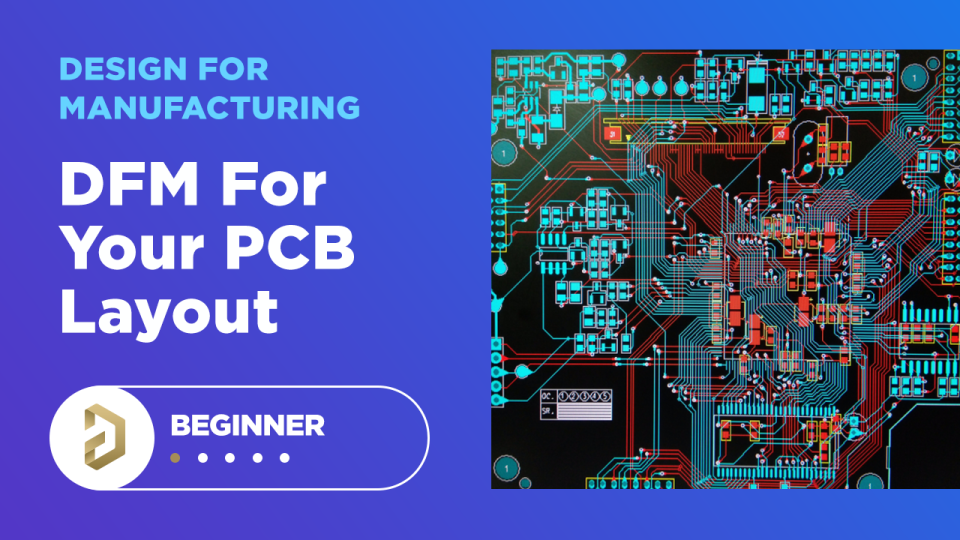
PCB design reviews should focus on DFM constraints to ensure a design will be manufacturable. Focus on these DFM requirements in your PCB layout.