Skip to main content
Mobile menu
Discover
Develop
Agile
Resources & Support
Free Altium 365 Tools
Gerber Compare
Online PCB Viewer
Resources & Support
Learning Hub
Support Center
Documentation
Webinars
Altium Community
Forum
Bug Crunch
Ideas
Education
Student Lab
Educator Center
Altium Education Curriculum
Search Open
Search
Search Close
Sign In
Main menu
Home
PCB Design
Collaboration
Component Creation
Data Management
Design Outputs
ECAD/MCAD
HDI Design
High Speed Design
Multi-Board
PCB Layout
PCB Routing
PCB Supply Chain
Power Integrity
RF Design
Rigid Flex
Schematic Capture
Signal Integrity
Simulation
Software
Develop
Discover
Agile
Altium 365
Altium Designer
Education
Programs
Altium Academy
Engineering News
Guide Books
Newsletters
Podcasts
Projects
Training Courses
Webinars
Whitepapers
What Will It Take For Japan to Dominate Chip Production Again?
These days the conversation surrounds three major companies: Taiwan Semiconductor Manufacturing Co. (TSMC), Samsung, and SK Hynix—the main providers of early-stage chips. However, as the industry evolved over time, many organizations had roles to play in the successful growth of semiconductor innovation and production. Japan was home to six of the top 10 semiconductor manufacturing companies in the world back in 1988—a time when the Asian island
Read Article
Chemical Processes Could Make Semiconductor Manufacturing More Sustainable
Although essential to modern life, semiconductor manufacturing is energy- and resource-intensive, demanding higher consumption of electricity, water, chemicals, and process gases, all of which contribute to greater energy use and environmental impact—an unfortunate reality that is further compounded by the increased complexity of advanced chip manufacturing and increased demand. "If the current growth path were to continue unchecked, carbon
Read Article
Edge Computing and Its Impact on Real-Time Data Processing
In an era when milliseconds matter, edge computing is changing how industries process data, creating unprecedented opportunities for real-time decision-making. Industries like healthcare, manufacturing, and transportation – where split-second decisions can mean the difference between success and failure – are reaping big benefits. With forecasters predicting that most enterprise data will soon be processed at the edge, the market is experiencing
Read Article
When Should Buyers Use a 3PL Platform?
In the fast-paced world of electronics manufacturing, sourcing components like printed circuit boards (PCBs) efficiently and cost-effectively is crucial. Buyers often face the challenge of managing complex supply chains, ensuring timely deliveries, and maintaining quality standards. One solution that has gained traction is the use of third-party logistics (3PL) platforms. But when should buyers consider using a 3PL platform? This article explores
Read Article
Top 10 Common Mistakes to Avoid in Flexible Circuit Design
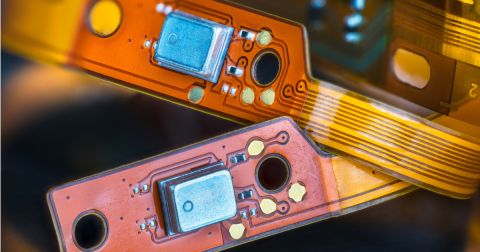
Designing flexible circuits presents unique challenges that even seasoned PCB designers can find difficult to navigate. While flexible circuits offer significant advantages—such as reduced weight, space savings, and the ability to conform to complex shapes—they also require careful attention to detail. This post will explore some of the most common mistakes in flexible circuit design and provide strategies to avoid them. 1. Ignoring the Bend
Read Article
Avoiding Costly Delays: Essential Tips for PCB Designers
Have you ever experienced the frustration of having your PCB design order placed on hold by your fabricator? This is a common issue that many PCB designers face, particularly with new flexible circuits or rigid-flex designs. When an order is placed, the anticipation of a smooth production process can be quickly disrupted by an unexpected hold, often due to engineering questions or clarifications. These holds are not just minor inconveniences—they
Read Article
Mastering EMI Control in PCB Design: Component Placement for EMC
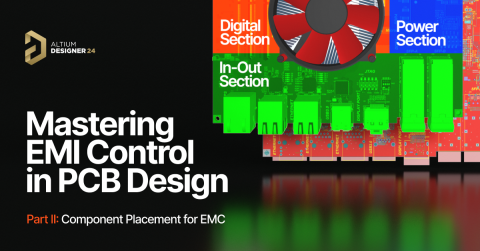
In this second article of the Mastering EMI Control in PCB Design series, we will dive deeper into one of the key concepts for maintaining low levels of electromagnetic interference (EMI). Board segregation, also known as board partitioning, is a method used to organize the different circuit parts of a Printed Circuit Board (PCB) to keep them separate. This improves the overall performance of the board, particularly in terms of EMI. This
Read Article
00:44:12
Mastering Design Complexity: How Altium Designer Outperforms Cadence in Solving Workflow and Engineering Challenges
Join our upcoming webinar to discover why engineers consistently choose Altium Designer as the standard in PCB design.
Watch Video
The Benefits of a Circular Economy for Electronics
The concept of a circular economy for electronics is a transformative approach to production and consumption. It emphasizes the reuse, repair, refurbishment, and recycling of electronic products to create a closed-loop system, minimizing waste and the use of finite resources. This article explores the key benefits of advancing a circular economy for electronics, and what this translates to in tangible measures (figure 1). It also covers actions
Read Article
When Does a Company Need to Start Using A PLM System?
Product Lifecycle Management (PLM) systems are integral to managing a product's lifecycle from inception through engineering design and manufacture to service and disposal. However, knowing when to implement a PLM system can be a challenge for growing companies. This article will explore five critical milestones (figure 1) in a company's growth that may indicate the need for a PLM system and four things to look for at each milestone. Figure 1
Read Article
Pagination
First page
« First
Previous page
‹ Previous
…
Page
40
Page
41
Page
42
Page
43
Current page
44
Page
45
Page
46
Page
47
Page
48
…
Page
50
Page
60
Page
70
Page
80
Page
90
Page
100
Page
110
Page
120
Page
130
Page
140
Page
240
Page
340
Next page
Next ›
Last page
Last »
Subscribe to