Skip to main content
Mobile menu
Discover
Develop
Agile
Resources & Support
Free Altium 365 Tools
Gerber Compare
Online PCB Viewer
Resources & Support
Learning Hub
Support Center
Documentation
Webinars
Altium Community
Forum
Bug Crunch
Ideas
Education
Student Lab
Educator Center
Altium Education Curriculum
Search Open
Search
Search Close
Sign In
Main menu
Home
PCB Design
Collaboration
Component Creation
Data Management
Design Outputs
ECAD/MCAD
HDI Design
High Speed Design
Multi-Board
PCB Layout
PCB Routing
PCB Supply Chain
Power Integrity
RF Design
Rigid Flex
Schematic Capture
Signal Integrity
Simulation
Software
Develop
Discover
Agile
Altium 365
Altium Designer
Education
Programs
Altium Academy
Engineering News
Guide Books
Newsletters
Podcasts
Projects
Training Courses
Webinars
Whitepapers
Successful ECAD/MCAD Collaboration Practices
In this article Zachariah Peterson, founder of Northwest Engineering Solutions, discusses how his company successfully collaborates with mechanical engineers outside of his firm. He shares practices and tools that have been most useful along the way. Judy Warner: Zach, as an engineer and the owner of Northwest Engineering Solutions (NWES), what challenges do you see as most prevalent and problematic for design engineers when it comes to
Read Article
Easy Schematics Creation for Elegance and Readability
Exemplary schematics will show you the circuits plus everything you need to know about them at a glance. Poor schematics will force you to decipher them to glean a sufficient understanding of what the circuits do.
Read Article
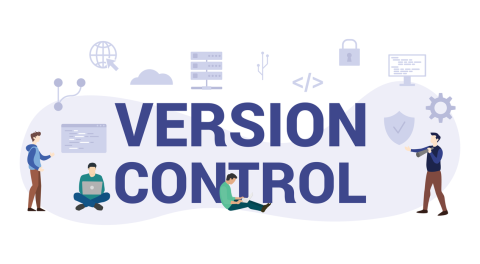
Guide to Choosing Version Control For Your PCB Design Projects
If you’re deciding on a version control system for your hardware projects, use the cloud-connected PCB design and management environment in Altium 365.
Read Article
ESD Protection: Preventing Static Electricity in the Workspace
Electro-Static Discharge (ESD) is essentially the sudden flow of current between two objects with a different electrical charge when there’s a conducting path between them. This could be lightning flowing from a charged cloud down to the ground via the dielectric breakdown of the air between them or that short sharp electric shock you feel when the static electricity that’s built up in your clothing flows to a metal door handle when you touch it
Read Article
Must Have Rapid Prototyping Tools
If your job involves rapidly iterating designs or creating a wide range of products, these indispensable tools will help you ship a higher quality product in less time.
Read Article
Types of PCB Soldering and the Assembly Process
There are multiple types of PCB soldering used in assembly, learn more about these types of solder and processes used to apply them.
Read Article
Designing High Integrity Systems
It was not long after the first electrical devices were conceived that they were being used in situations where their failure could have disastrous consequences. This could be delivering a fatal electric shock to the user or failing to apply the brakes on a speeding vehicle; electrical devices are used everywhere and for almost every conceivable purpose. Medical devices are now routinely embedded into a patient’s body to regulate their heartbeat
Read Article
Transmission Line Reflection Coefficient
View a numerical example of the transmission line reflection coefficient and how simulations can help you understand the results.
Read Article
IC Thermal Analysis: Thermal Management for Integrated Circuits
As anyone who designs and builds electronic devices knows, the device will generate heat when it’s switched on. Wherever current flows through an impedance, energy losses will manifest themselves as heat, thanks to thermodynamics laws, whether in components, connections, wiring, or the PCB. The greater the loss, the greater the excess heat generated. While components with thermally enhanced packages are available to help manage any heat generated
Read Article
Moisture Sensitivity Levels in Electrical Components
A range of materials used to construct electrical components can absorb moisture from the air over time. This initially became a problem with introducing reflow soldering, where the components are subjected to sudden high temperatures over a short period. This was then exacerbated with the switch to lead-free solder, which resulted in higher peak temperatures during the reflow process. Other factors that have increased the prevalence of moisture
Read Article
Pagination
First page
« First
Previous page
‹ Previous
…
Page
140
Page
141
Page
142
Page
143
Current page
144
Page
145
Page
146
Page
147
Page
148
…
Page
150
Page
160
Page
170
Page
180
Page
190
Page
200
Page
210
Page
220
Page
230
Page
240
Page
340
Next page
Next ›
Last page
Last »
Subscribe to