







Tariff Confusion Is Costing You: The Key Differences Between COO, COF, and COA

At a Glance
Learn the legal difference between COO, COF, and COA. Reduce audit risk and protect margins on every BOM.


New U.S. tariffs are projected to raise approximately $2.7 trillion in revenue between 2026 and 2035, with semiconductor- and electronics-intensive categories facing some of the highest exposure. But a quieter, and often more costly, problem continues to undermine margins: confusion around origin terminology.
Across electronics supply chains, Country of Fabrication (COF) and Country of Assembly (COA) are routinely mistaken for Country of Origin (COO). These labels appear on invoices, BOMs, and supplier documentation, giving teams a false sense of compliance. In practice, this confusion can invalidate USMCA claims, trigger Section 301 duties, or expose companies to audit risk long after products ship.
Key Takeaways
- Misunderstanding the Country of Origin (COO), Country of Fabrication (COF), and Country of Assembly (COA) is common and can invalidate trade preferences, trigger Section 301 duties, and increase audit risk.
- Legally, COO is set by where the last substantial transformation occurs (new name/character/use), not simply where a board is fabbed or assembled. In electronics, this can hinge on PCB etching, wafer processing, or even firmware installation.
- Enforcement and financial exposure are rising sharply. Higher semiconductor tariffs, UFLPA detentions, and penalties for origin errors now materially impact margins and project viability.
- Origin must be treated as a design constraint. Part selection, fab/assembly location, and firmware strategy should be aligned with trade rules from the start, supported by accurate, up-to-date supplier and origin data across the BOM.
The Cost of Non-Compliance
The cost of "getting it wrong" has reached an inflection point. According to the Federal Reserve, origin-related documentation and content rules now add the equivalent of 1.4% to 2.5% in extra costs for manufacturers, representing tens of billions of dollars in annual lost efficiency.
A gap that persists because origin compliance is often viewed as a procurement or legal concern, when in reality, design engineers can influence origin outcomes as much as sourcing teams do. Part selection, fabrication location, and firmware decisions can determine whether a product qualifies for free trade or carries a 50% tariff penalty.
The financial and operational risks that leak in through unaligned design choices can make or break a project, such as surprise duties, requalification costs, or fab relocation. Hence, bridging the engineering vs. procurement gap should by now be a strategic directive. If a design engineer specifies a part based solely on high-performance fabrication in one region without verifying the legal COO, they may inadvertently lock the company into a 50% tariff that procurement cannot negotiate away.
Octopart helps close this gap by providing early visibility into supplier data and manufacturing attributes. By mapping BOMs through the Octopart BOM Tool and validating sourcing paths against Customs and Border Protection (CBP) origin rules, teams can secure USMCA zero rates and avoid 50% Section 301 duties on Chinese semiconductors.
The Tariff Confusion Triangle: COO vs. COF vs. COA
At the center of many compliance failures is a misunderstanding of how COO differs from COF and COA. Understanding the legal and operational hierarchy of these terms is the first step toward compliance.
COO (Legal Anchor)
“Country of origin” is a legal designation defined by U.S. Customs and Border Protection as the country of manufacture, production, or growth of an article (19 CFR 134.1(b)). When goods are produced in more than one country, the COO is determined by where the last substantial transformation occurred.
COO governs:
- Tariff rates and free trade agreement eligibility
- Country-of-origin marking
- Section 301, IEEPA, and UFLPA enforcement
COF (Fabrication Country)
COF refers to where fabrication occurs, such as wafer etching or PCB layering. It is descriptive, not legally defined, and typically appears on invoices and BOMs for traceability. In electronics, COF is often critical for quality, yield, and reliability, particularly at the wafer level.
However, COF alone does not determine tariff treatment.
COA (Assembly Country)
COA reflects where final assembly takes place, such as SMT placement, soldering, or testing. While useful for logistics planning and lead-time management, COA rarely shifts COO on its own unless the assembly process meets the substantial transformation test.
For tariff purposes, however, COA can be a red herring. CBP duties hinge on COO via substantial transformation (19 CFR 134.1(b)), not descriptive assembly labels.
|
Term |
Definition |
Legal Status |
Docs Used In |
Tariff Impact |
Primary Stakeholder |
|
COO |
19 CFR 134.1(b): Substantial transformation |
Binding |
Entry summaries, marking |
Duties / FTAs |
Compliance / Legal |
|
COF |
Fabrication (etching, layering) |
Descriptive |
Invoices, BOMs |
Evidentiary |
Engineering / Quality |
|
COA |
Assembly (SMT, testing) |
Descriptive |
ASNs, declarations |
Rarely binding |
Procurement / Logistics |
Substantial Transformation: The Deciding Test
When products move across multiple countries, CBP applies the substantial transformation test to determine COO (19 CFR 134.1(b)). The analysis hinges on whether processing results in a new article with a different name, character, or use.
The Name, Character, and Use Criteria
- Name: Does the article emerge with a new commercial identity?
- Character: Has its essential nature changed, for example, raw silicon becoming a logic chip?
- Use: Does it now serve a fundamentally different function?
Meeting one factor alone is not always sufficient. CBP evaluates the totality of the transformation. For PCBs, etching/layering copper-clad laminate (COF) into a functional board often meets the test, shifting COO from substrate origin—unlike mere SMT population (COA), which rarely does.
Electronics Deep Dive: When Does It “Transform”?
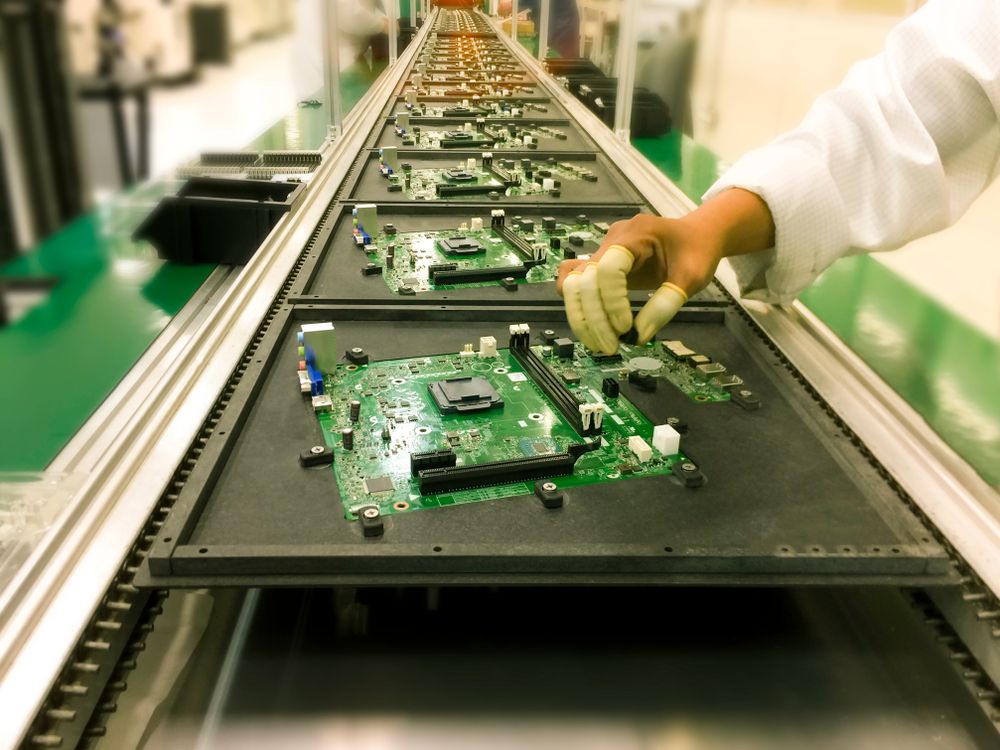
In the electronics sector, COO lines blur across global supply chains, often requiring customs brokers or trade consultants to parse CBP rulings on substantial transformation. For example, SMT placement can turn a Taiwan-etched PCB into a Vietnam-origin PCBA if it results in a functional module, but firmware flashing or wafer etching may override this.
The Firmware Pivot
CBP rulings increasingly emphasize the role of firmware. In CBP HQ H258960, flashing software that enables the primary function of a device was deemed to confer its “essential character.” This means firmware installation, often overlooked in origin analysis, can be decisive.
Wafer-Level Scrutiny
Semiconductors face heightened scrutiny during fabrication. CBP frequently focuses on where the wafer was etched, not merely where it was packaged or tested. This makes wafer-level COF critical for origin determinations involving Section 301 exposure.
|
Scenario |
Processing |
Transformation? |
COO Outcome |
|
PCB Fab |
Etching in Taiwan |
Yes |
Taiwan |
|
SMT Assy |
Soldering in Vietnam |
Often yes |
Vietnam |
|
Module Plug-in |
Inserting a card |
No |
Original COO |
|
Firmware |
Flashing in Mexico |
Yes (essential function) |
Mexico |
|
Packaging |
Boxing |
No |
Prior COO |
Pitfalls, Enforcement, and 2026 Risks
The consequences misclassification of origin have escalated sharply. Failure to distinguish between COO, COF, and COA no longer results in minor delays. It triggers aggressive enforcement actions, including audits, penalties, and retroactive duty assessments.
The Financial Toll
In FY2024, CBP collected $26.3 million in trade penalties and liquidated damages, with authority to assess penalties up to the full entered value of merchandise for origin marking violations. At the same time, Section 301 duties on Chinese semiconductors increased to 50%, magnifying liability for BOMs with unverified wafer origins.
The UFLPA Connection
COO documentation is now central to forced-labor enforcement. Detentions in the electronics sector rose from 1,460 in FY2023 (36% of total) to 2,623 in FY2024 (56%), nearly doubling sector exposure. CBP maintains a rebuttable presumption that goods linked to the XUAR region are inadmissible. Since the inception, electronics have accounted for approximately 90% of the total value of all UFLPA detentions.
Enforcement at Scale
In FY2024, CBP seized $5.4 billion MSRP worth of counterfeit and IPR-violating goods, a 95% year-over-year increase. Consumer electronics represented $125.6 million of seized value.
Electronics Under Scrutiny
Notably, nearly 99% of shipments detained from Thailand in 2024 were electronics, underscoring how COA alone no longer shields upstream risk.
Key Regulatory Context
CBP rulings, such as HQ H302801, reinforce that simple assembly does not automatically shift origin. However, installing proprietary firmware that enables primary device functionality is frequently recognized as the last substantial transformation.
As of mid-2025, Chinese electronics face a 55% tariff stack: 25% Section 301, 20% IEEPA fentanyl-related duty, and a 10% universal reciprocal tariff.
Meanwhile, USMCA benefits only apply when Regional Value Content (RVC) thresholds are met. Non-qualified imports from Canada or Mexico now face 25–35% tariffs under 2025 executive actions.
The August 2025 suspension of the $800 de minimis exemption (Section 321) means even prototype components from China are now subject to full 50%+ duties.
Proactive Strategy: Using Octopart for Compliance
The regulatory message is consistent even when the details change: origin, classification, and supplier location are now design constraints. Managing them requires current supplier data, rapid alternate sourcing, and BOM fields that remain accurate as sourcing shifts. That’s the role Octopart can play, turning compliance from a late-stage scramble into a continuous, design-adjacent workflow.
- Step 1: Map Supplier Data
Query Octopart by part number to pull COF and COA details. Monitor shifts in supplier footprints to ensure COO assumptions remain valid. - Step 2: Filter for Alternatives
Use Octopart filters to identify non-Chinese alternatives, insulating designs from 50% semiconductor tariffs. - Step 3: Use Octopart BOM Tool
Standardize HTS and origin fields using the Octopart BOM Tool, reducing clerical errors that drive millions in penalties annually. - Step 4: Automate via API
Integrate the Nexar API into PLM or ERP systems to flag origin risks whenever fabrication locations change.
Conclusion
COO determines tariffs. COF and COA provide context, but they do not confer compliance. Treat origin as a design constraint, not a paperwork exercise.
Frequently Asked Questions
What’s the difference between COO, COF, and COA in electronics supply chains?
COO (Country of Origin) is the legally binding designation used by U.S. Customs to determine tariffs and trade eligibility, based on where the last substantial transformation occurred.
COF (Country of Fabrication) and COA (Country of Assembly) are descriptive labels for where fabrication or assembly happened, but they do not determine tariff treatment on their own.
Does assembly location (COA) determine tariffs or USMCA eligibility?
Usually no. Simple assembly or SMT population rarely changes COO unless it qualifies as a substantial transformation. Tariffs and free trade benefits are determined by COO, not by the location of final assembly.
What counts as “substantial transformation” for electronics?
CBP looks at whether processing creates a new product with a different name, character, or use. In electronics, PCB etching, wafer fabrication, or firmware installation that enables core functionality may qualify, while packaging or basic assembly often does not.
Can firmware installation affect the Country of Origin?
Yes. CBP rulings increasingly recognize firmware that enables a product’s primary function as conferring “essential character,” meaning firmware flashing can be the last substantial transformation that sets COO.
Why should engineers care about origin, not just procurement or legal teams?
Design choices, such as component selection, fabrication location, and firmware strategy, can lock in COO early and determine whether a product faces zero tariffs or penalties as high as 50%. Treating origin as a design constraint helps avoid costly surprises later in the supply chain.

About Author
Related Resources
Related Technical Documentation
Table of Contents
- Key Takeaways
- The Cost of Non-Compliance
- The Tariff Confusion Triangle: COO vs. COF vs. COA
- Substantial Transformation: The Deciding Test
- Electronics Deep Dive: When Does It “Transform”?
- Pitfalls, Enforcement, and 2026 Risks
- Key Regulatory Context
- Proactive Strategy: Using Octopart for Compliance
- Conclusion
- Frequently Asked Questions
- What’s the difference between COO, COF, and COA in electronics supply chains?
- Does assembly location (COA) determine tariffs or USMCA eligibility?
- What counts as “substantial transformation” for electronics?
- Can firmware installation affect the Country of Origin?
- Why should engineers care about origin, not just procurement or legal teams?
Solutions for Every Role and Team
- Discover and evaluate design options earlier
- Develop in one shared workspace
- Scale with control and compliance
- Connect every stage of hardware development
Learn More
Thank you, you are now subscribed to updates.