







BOM Cost Optimization During Schematic Capture

At a Glance
The right time to start thinking about product cost is when you're selecting components, and that means doing BOM cost optimization during schematic capture.


As a freelancer or a contract engineer, there is a common question you may get asked by a client when you're starting a design: how much will this cost to build?
This question is always difficult to answer before you've started a design. The cost can't be determined until schematics are locked in and the target production volume is determined. Even then, you only know the BOM and assembly cost, but not the bare board cost.
Still, it is possible to take steps that account for build cost early in the design phase, and that must happen while selecting components. To balance parts cost versus electrical capability, the designer needs to see supply chain information inside their library, component search tools, and schematics. This is the fastest way to start counting the cost of components while building a new design and, ultimately, help avoid sticker shock.
How to Identify Major Cost-Driving Components
Major cost-driving components are the small set of BOM line items with high extended cost (unit price × quantity), constrained availability (low stock, long lead time), or lifecycle risk (NRND/EOL). In practice, these are commonly high-value ICs (processor/FPGA/ASIC, PMICs and power stages, memory, high-speed interface devices, precision analog, RF/front-end modules), plus any parts whose packaging or inspection requirements increase assembly cost.
The fastest identification method is to evaluate cost and risk while capturing the schematic, so alternate MPNs can be validated against footprint, ratings, and performance constraints before layout and procurement lock in. This is most effective when supply-chain intelligence is available inside the schematic editor and component libraries, rather than by manually checking distributor websites. Practical tool capabilities to rely on include:
- BOM rollup by extended cost with sortable line items to expose the top cost contributors
- Availability and lead-time information aggregated across multiple suppliers
- Lifecycle status and compliance attributes (e.g., NRND/EOL, RoHS/REACH) surfaced per MPN
- Include approved alternates in the parts library (sorted/named by same package/footprint, electrical ratings, etc.)
Should You Set a Cost Target for the BOM?
Obviously, it is possible to set whatever price target you want for a BOM, but there is a very high probability that this number turns out to be completely arbitrary. Cost targets set from on high rarely turn out to be realistic and are instead confronted by the realities of the electronics supply chain.
So instead of trying to blindly fit into a cost target, focus on a realistic process to select components that prioritizes value creation over cost reduction.
- Start with the value-creating parts and find the LPTA part that enables your product's functionality.
- The next-level peripheral parts are typically commodity parts, and these are often the best candidates for cost reduction.
- Mechanical parts like connectors are often selected for familiarity, but don't be afraid to look for lower-cost alternatives.
- Prototyping and SMD parts can be overlooked. In production, SMD part costs add up, creating cost reduction opportunities.
This process is much easier when you can see live price data or when you periodically run BOM reviews. That's why designers should leverage their CAD tool capabilities to capture this data earlier in the design process. This also aligns with the component selection decisions outlined in the video below.
Best Tools for Live Pricing Data in Schematic Capture
Imagine you're working in a schematic, but trying to evaluate total BOM cost. Some designers will keep their preferred distributor websites open to search for parts and compare costs between the two vendors. It's a ton of clicking between tabs and your web browser, and it just doesn't make sense. Unfortunately, without a comprehensive set of tools for addressing design-to-cost at multiple phases in schematic capture, this is what designers are stuck with.
Altium has developed multiple tools to solve this problem, including a free tool available through Octopart. These tools give you complete pricing visibility at the component level and in your BOM.
Part Choices lets a schematic symbol carry multiple approved manufacturer part numbers so cost and availability decisions are not deferred until the BOM export. Use it to encode real alternates at capture time, not “similar parts,” and constrain the list to package, ratings, and lifecycle requirements that keep the PCB and compliance intent intact. The practical win is that an engineer can swap to an equivalent sourced MPN inside the schematic without recreating footprints, parameter sets, or supplier documentation.

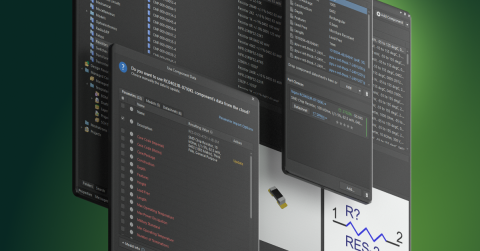
ActiveBOM is where schematic intent turns into a costed and risk-ranked BOM while the design is still fluid enough to change parts without a re-spin. It exposes unit price, extended price, stock, lead time, and lifecycle status per line item so designers can make the obvious fixes early: eliminate sole-sourced parts, replace long-lead items, and stop paying premiums for overspec commodity passives. Treat it as a design gate during capture and early layout, not a late-stage report, and the BOM stops being a surprise at release time.

BOM Portal is the collaboration layer that gets procurement, engineering, and management looking at the same BOM decisions with the same live data instead of emailing spreadsheets back and forth. Procurement can flag shortages or pricing spikes, engineering can approve alternates, and management can sign off on tradeoffs while the design is still in progress.

Octopart BOM Tool is a fast way to cost and source-check a list of parts when you need distributor coverage, current pricing tiers, and availability without building custom spreadsheets. Use it for early feasibility and for validating alternates, ideally at multiple stages in the design process. When paired with library Part Choices and ActiveBOM, it closes the loop between preferred parts, real market conditions, and what actually gets purchased.

Whether you need to build reliable power electronics or advanced digital systems, use Altium’s complete set of PCB design features and world-class CAD tools. Altium provides the world’s premier electronic product development platform, complete with the industry’s best PCB design tools and cross-disciplinary collaboration features for advanced design teams. Contact an expert at Altium today!
Frequently Asked Questions
How early in a PCB design can build cost be estimated?
A cost estimate can start as soon as the first component is added to a schematic sheet, but it will not be reliable until the schematics are completed and locked, and the target production volume must be known. Early estimates are subject to change.
What components usually drive the most cost in a BOM?
The biggest cost drivers are usually high-value ICs, power devices, memory, RF components, high-speed interface parts, and precision analog devices. Connectors, specialty electromechanical parts, and components with difficult assembly or inspection requirements can also drive cost upward even when their unit price does not initially look extreme.
Which parts are usually the best candidates for cost reduction?
Commodity passives, peripheral support components, connectors, and common mechanical parts are often the best places to reduce cost. These components often have many drop-in substitutes from multiple vendors which can often be procured at lower cost with minimal impact on functionality.

About Author
Related Resources
Related Technical Documentation
Table of Contents
Solutions for Every Role and Team
- Discover and evaluate design options earlier
- Develop in one shared workspace
- Scale with control and compliance
- Connect every stage of hardware development
Learn More
Thank you, you are now subscribed to updates.