







Breaking the Multiboard Bottleneck: How Unified Design Solves ECAD–MCAD Disconnects

At a Glance
Break ECAD–MCAD disconnects with unified multiboard design. Enable real‑time collaboration, prevent fit and clearance issues, and streamline complex electronics workflows.


Modern electronics demand agile design and pivot-ready procurement. Yet, many workflows still hinder progress, leaving teams overwhelmed by project evolution. Historically, the disconnect between ECAD and MCAD environments has forced engineers into silos that drain efficiency, but new platforms are bridging this gap.
In multiboard design, even a minor misalignment creates a catastrophic ripple effect. When a clearance issue surfaces late, the resulting rework drives up costs and impacts multiple interconnected components. While engineers are often left to decipher these failures, the true culprit is usually an outdated, fragmented workflow. This article will touch on ways to move beyond silos and master the complexities of multiboard integration.
Key Takeaways
- Break ECAD–MCAD silos to avoid costly rework. In multiboard systems, late‑found clearance/misalignment issues ripple across boards. Real‑time, system‑level visibility is essential to catch them early.
- Use true CAD interoperability and a digital twin. Virtual mating and shared views expose logical‑vs‑physical mismatches and spatial conflicts (overlaps, pinched cables) before prototyping.
- Adopt collaboration‑first CAD capabilities. 3D rendering, cross‑probing, in‑space markup/feedback, browser access, and robust version control enable continuous, faster co‑creation.
- Unify teams from day one. A connected platform (e.g., Altium Develop) brings design, mechanical, procurement, and manufacturing into a single workflow with real‑time updates, turning reactive handoffs into proactive, streamlined operations.
How to Stop Electronics Development in Its Tracks
If (for some reason) you are looking to impose roadblocks on your multiboard projects, the recipe for doing so is surprisingly simple:
- Silo your PCBs: Treat each PCB in your system as its own island. By avoiding system-level integration tools, you preserve the mysterious communication between Board A and Board B, only to reveal at the prototype phase.
- Keep the team separated: Ignore the fact that software synchronization can speed up projects and reduce the costs associated with poor data management. Siloing teams is a classic way to ensure more human errors that will disrupt a project in all stages.
- Wait to enforce the mechanical spec: It is ludicrous to think that mechanical engineers (MEs) should be privy to information that can be found in the electrical engineer’s (EE’s) grasp. Only when PCB designs are complete should they be documented and shared with the mechanical team.
Although this is the dramatized version of traditional workflows, the severity of following an incompatible system cannot be understated. Those looking to clear the fundamental hurdles of electronics development; to ship a product on time and cut the costs in doing so requires a more sophisticated and collaborative way of working.
Efficiency Through Design Interoperability
In multiboard design, the biggest time sink comes from manually checking that a change on one board does not violate the fit or functionality of another board. True CAD interoperability allows MEs to quickly perform this task on behalf of EEs by leveraging a synchronized software solution.
- Logical vs physical alignment: In disconnected workflows, an EE might change a connector on a power board, unaware that the connector mates to a daughterboard design which has already been locked. If the change is not inspected in a multiboard view, a mating connector mismatch won’t get caught until prototyping.
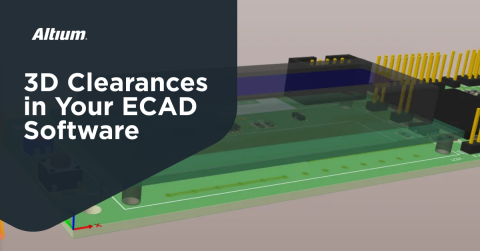
- Effect of Spatial Conflict: Without a shared CAD-based system, MEs and EEs often discover spatial conflicts, such as overlapping boards or a cable being pinched, only during physical assembly. Modern interoperability tools allow for “virtual mating” in the digital twin of the multiboard system.
To move from friction to flow, an integrated platform must provide specific functional windows into the design process.
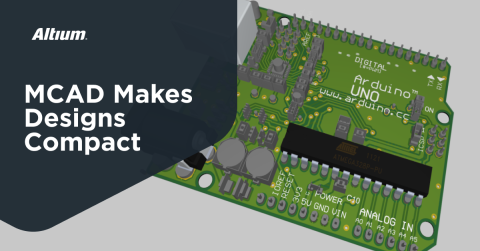
- 3D Rendering: This is now a staple function of CAD that is invaluable to both electrical and mechanical teams.
- Cross-Probing: A core function that supports co-creation, cross-probing allows for a swift change of view. For example, the view of a 2D schematic can be switched instantly to the 3D PCB layout.
- Zero-Installation: Reduce friction by using a browser-based interface with cloud access for all necessary parties—managers, but also clients, procurement and other external teams.
- Markup and Feedback: There is inherent value in any time-saving action, which is why it is necessary to allow commentary and markups within the CAD space.
- Version Control: This is mentioned extensively in relation to CAD collaboration. Those that simplify digital version control will often realize the benefit of real-time design visibility much sooner.
Altium Develop Turns Workflows Into Co-Creation
Altium Develop marks the beginning of a new era of co-creation. For decades, engineering teams have generated vast amounts of data that lived in isolation. This platform finally provides the infrastructure to turn that data into actionable intelligence.
By providing an all-encompassing ecosystem, Altium Develop allows design, engineering, procurement and manufacturing functions to converge on a multiboard layout from day one. Rather than waiting for manual handovers, cross-functional teams can inject real-time updates into their design files.
This level of insight transforms the development cycle from a series of reactive events to proactive cohabitation. When every stakeholder has access to this data, they can begin to play their roles in mitigating “roadblocks” and replace outdated procedures with streamlined operations.
Whether you need to build reliable power electronics or advanced digital systems, Altium Develop unites every discipline into one collaborative force. Free from silos. Free from limits. It’s where engineers, designers, and innovators work as one to co-create without constraints. Experience Altium Develop today!
Frequently Asked Questions
Why do multiboard designs fail so often during prototyping?
Multiboard failures typically stem from fragmented ECAD–MCAD workflows, where teams work in isolation and discover fit, clearance, or connector‑alignment issues only after fabrication. Without real‑time, system‑level visibility, even a small change on one board can cause misalignments across the entire assembly, resulting in costly rework and production delays.
How does real‑time ECAD–MCAD collaboration reduce rework in multiboard projects?
Real‑time collaboration ensures electrical and mechanical teams are always working from a shared, synchronized design source. With features like 3D rendering, virtual mating inside a digital twin, instant cross‑probing, and in‑context markup, engineers can identify spatial conflicts or mismatched interfaces before any prototype is built. This prevents late‑stage surprises and accelerates design closure.
What tools help engineers detect spatial conflicts in complex electronics assemblies?
Engineers rely on interoperable, CAD‑native multiboard environments that combine 3D visualization, mechanical fit checks, and digital‑twin simulations. These tools expose issues like overlapping boards, misaligned connectors, or pinched cables early in the process. A platform like Altium Develop enables teams to inspect and validate multiboard assemblies collaboratively rather than relying on manual checks.
How does Altium Develop improve workflows for teams working on multiboard systems?
Altium Develop unifies design, mechanical, procurement, and manufacturing data into a single collaborative ecosystem. It eliminates siloed handovers with browser‑based access, real‑time updates, built‑in version control, and centralized markup. This allows teams to co‑create multiboard layouts seamlessly, catch integration issues early, and streamline the entire electronics development lifecycle.

About Author
Related Resources
Related Technical Documentation
Table of Contents
- Key Takeaways
- How to Stop Electronics Development in Its Tracks
- Efficiency Through Design Interoperability
- Altium Develop Turns Workflows Into Co-Creation
- Frequently Asked Questions
- Why do multiboard designs fail so often during prototyping?
- How does real‑time ECAD–MCAD collaboration reduce rework in multiboard projects?
- What tools help engineers detect spatial conflicts in complex electronics assemblies?
- How does Altium Develop improve workflows for teams working on multiboard systems?
Solutions for Every Role and Team
- Discover and evaluate design options earlier
- Develop in one shared workspace
- Scale with control and compliance
- Connect every stage of hardware development
Learn More
Thank you, you are now subscribed to updates.