





Bookbinder Rigid-Flex: What It Is, Why It’s Different, and When It’s Worth the Cost

At a Glance
Learn what bookbinder rigid-flex is, why staggered lengths drive cost, and when unbonded layers are the smarter choice. Know your options before you get quotes.


I still vividly remember when I was first introduced to “bookbinder” rigid flex construction. In my mind, it was an elegant solution to the inherent challenges with higher layer count flex areas that are bonded together and create issues with bending and flexing due to the overall thickness. Much to my surprise, the fabrication engineer who was describing the fabrication technique to me was absolutely adamant that we would NOT entertain building a bookbinder design for this application, or really any application.
For many reasons, bookbinder construction doesn’t come up often anymore. Most designers have never specified one, and plenty of fabricators have never built one. That makes it easy to assume it’s just a fancier rigid-flex. It isn’t, and part of the confusion is the terminology. Bookbinder, loose-leaf, unbonded, and air-gap all get used as if they mean the same thing. They don’t, and the differences between them are exactly what drive complexity and cost.
Key Takeaways
- Bookbinder construction is unbonded flex layers cut to different lengths, so each layer follows its own path around the bend.
- The staggered lengths, not the unbonded layers, are what make bookbinder difficult and expensive to build.
- Unbonded layers of the same length are a middle ground that gives much of the flexibility benefit without the processing burden.
- Layer count, bend radius, static or dynamic bending, and required cycles determine which construction fits.
- Raise the construction question with your fabricator during layout, not after the quote comes back.
- Many fabricators do not build bookbinder construction. Understand the supplier options before committing to this construction method.
Three Ways to Build a Multilayer Flex Section
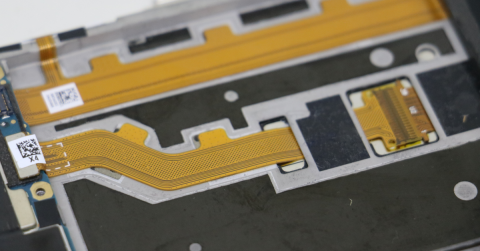
In a standard rigid-flex, the flex layers are bonded together through the bend region and move as one stack. That is the simplest to build, and it works well until the layer count goes up or the bend gets tight.
In an unbonded construction, the flex layers are the same length but are left unbonded through the flex region, so they can move independently of each other.
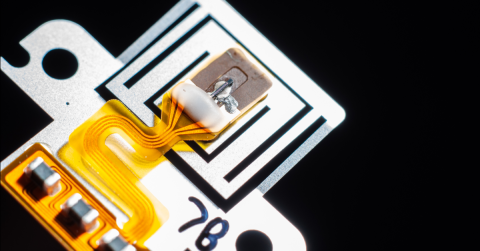
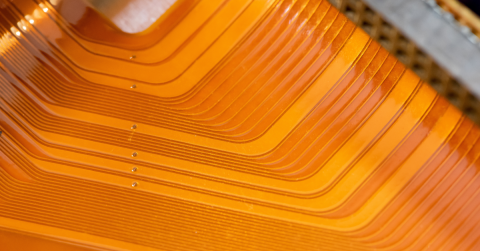
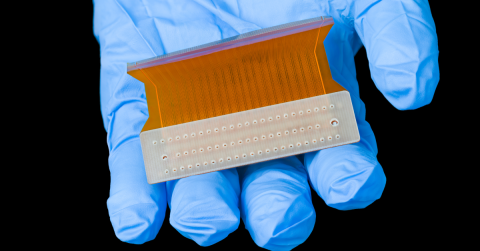
In a bookbinder construction, the layers are unbonded and also cut to different lengths. Layers on the outside of the bend are longer, layers on the inside are shorter, and each one follows its own path around the bend like the pages of a book.
What Bookbinder Brings to the Design
Bending a bonded stack puts the outer layers in tension and the inner layers in compression, and that stress grows with every layer added. Staggering the lengths lets each layer follow its own natural path through the bend. For a high layer count flex section with a tight bend radius, that can be the difference between a design that survives its bend cycles and one that cracks copper in the outer layers.
Why the Staggered Lengths Are So Hard to Build
The staggered lengths are what make bookbinder extremely difficult to fabricate. Each layer or sub-composite has a different length, which means the board is not flat when it is built. Different lengths mean different tooling and different handling for each piece. Loose layers have to be registered without the support a bonded stack provides. Lamination has to be sequenced so the free layers stay free while the rigid areas bond. Every one of those steps adds a place to lose yield, and very few fabricators run this process regularly, so there is less accumulated experience to draw on.

Why It Costs More
The cost follows the process. Additional tooling, additional handling, extra lamination steps, lower yield, and a small pool of qualified fabricators all accumulate and show up in the quotation. When a bookbinder quote comes back well above a standard rigid-flex, the staggered lengths are what you are paying for.
The Middle Ground: Unbonded, Same-Length Layers
Before committing to bookbinder, ask about unbonded layers of the same length. Leaving the layers unbonded through the flex region lets them move independently, which gives a meaningful share of the flexibility benefit. Because the layers are all the same length, the construction stays much closer to a standard rigid-flex process. There are no different-length sub-composites, no non-flat build, and far less special handling.
Other Alternatives to Ask About First
Fewer flex layers in the bend, splitting the design into two flex sections, or moving layers out of the flex region and into the rigid areas can all reduce what the bend has to handle and are viable options that don’t have a distinct cost impact.
What to Bring to Your Fabricator Early
How many layers pass through the bend, the bend radius, whether the bend is static or dynamic, and how many cycles it has to survive. With those four details, a fabricator can tell you quickly whether bonded, unbonded, or bookbinder fits, and what each will cost.

About Author
Related Resources
Related Technical Documentation
Table of Contents
Solutions for Every Role and Team
- Discover and evaluate design options earlier
- Develop in one shared workspace
- Scale with control and compliance
- Connect every stage of hardware development
Learn More
Thank you, you are now subscribed to updates.